 Vietnamnet.vn

 Podcast


Vietnam's government has proposed expanding compulsory social insurance coverage to workers without formal employment relationships, including those earning regular incomes through digital platforms.
Minister of Home Affairs Nguyen Tien Hai presented the proposed amendments to the Law on Social Insurance to the National Assembly on October 21, acting on behalf of the Prime Minister.
The proposal aims to extend social protection to workers in emerging employment models, particularly those whose jobs fall outside traditional employer-employee arrangements.
Expanding social insurance coverage to platform workers

Under the draft legislation, the National Assembly Standing Committee would be authorized to determine which categories of workers without formal employment relationships must participate in compulsory social insurance.
The provision would cover digital platform workers with stable, regular employment and income, subject to government proposals and the country's socioeconomic conditions at different stages of development.
This could include ride-hailing drivers, delivery workers and other people earning a living through digital platforms.
The government said the approach would allow compulsory social insurance coverage to expand gradually, with an implementation roadmap designed to be practical and appropriate for each group of workers.
Rather than immediately imposing the requirement on all gig workers, the proposed mechanism would allow authorities to identify eligible categories and determine when they should be brought into the system.
The government is also developing a new resolution on salary and social insurance policies for submission to the relevant authorities.
Once the Party Central Committee adopts the resolution, the government plans to direct responsible agencies to incorporate its provisions into legislation.
Lawmakers warn of implementation challenges
Reviewing the draft amendments, Nguyen Dac Vinh, chairman of the National Assembly's Committee on Culture and Social Affairs, said the committee broadly supported the government's objective of expanding social insurance coverage.
The proposed changes are intended to strengthen labor rights, social security and welfare protections while advancing the goals of Resolution 28 on social insurance policy reform.
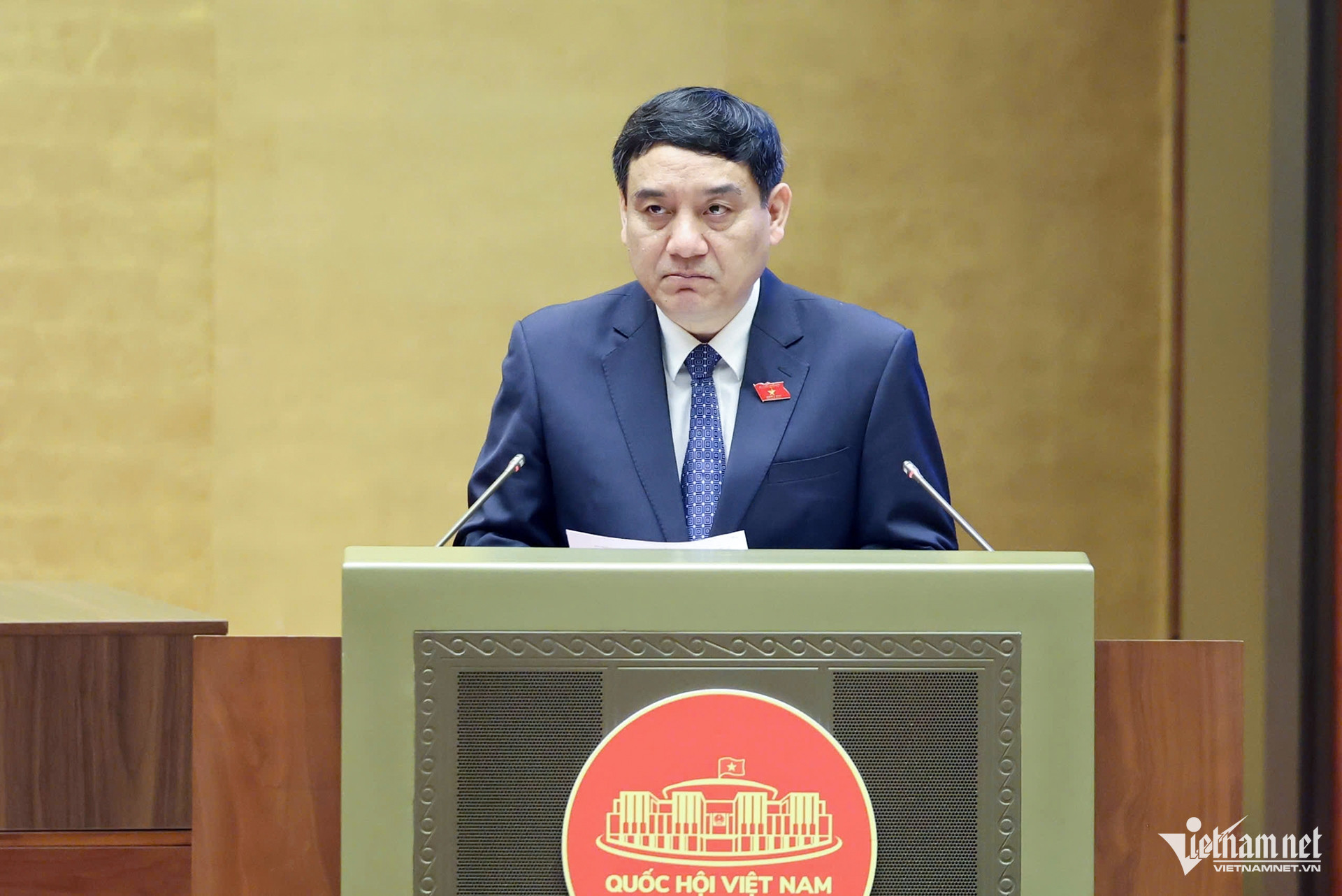
However, the committee warned that the proposed categories of workers without formal employment relationships and digital platform workers were too broadly defined.
It said the scope could create significant implementation difficulties and called for a comprehensive assessment of the potential economic and social impacts.
The committee recommended that the government further review the proposal and fully implement Conclusion 276 of the National Assembly Standing Committee.
It also urged the drafting agency to specify which groups would be subject to compulsory contributions and establish a clear implementation timetable.
If the government cannot adequately define the eligible groups and implementation dates, or if consensus has not been reached among affected workers, the committee recommended postponing the changes until a comprehensive revision of the Social Insurance Law.
The reviewing body noted that existing legislation already covers the cases identified in the government's proposal.
Changes proposed for supplementary pension insurance
The draft legislation also seeks to expand access to supplementary pension insurance.
Under the proposed amendment, individual workers would be allowed to participate directly in supplementary pension schemes on a voluntary basis, rather than relying primarily on arrangements made through employers.
The government argues that the change would create additional opportunities for workers to build retirement savings.
However, the National Assembly's reviewing committee recommended retaining the existing provisions.
It said expanding participation was inconsistent with the policy approach adopted when the 2024 Social Insurance Law was developed.
The committee also noted that the government had not adequately demonstrated the effectiveness of supplementary pension insurance arrangements in recent years.
According to the review, only 111 people had participated in supplementary pension insurance through arrangements involving individual workers alone.
The limited participation raised questions about whether expanding the legal framework would significantly improve uptake.
Proposed changes to retirement lump-sum benefits
Another provision in the draft addresses lump-sum payments for workers whose social insurance contribution periods exceed the number of years required to qualify for the maximum pension replacement rate.
The government proposes clarifying how these additional benefits are calculated for different retirement circumstances.
The amendments are intended to ensure consistent calculations and appropriate treatment of workers who have contributed beyond the period needed to receive the maximum pension rate.
The proposals form part of broader efforts to modernize Vietnam's social insurance framework as employment patterns evolve.
However, the debate highlights the challenge of extending compulsory contributions to workers outside conventional employment arrangements.
While policymakers aim to expand social protection, lawmakers are calling for clearer eligibility rules, realistic implementation schedules and detailed assessments before introducing new obligations for gig workers.
Tran Thuong

