 Vietnamnet.vn

 Podcast



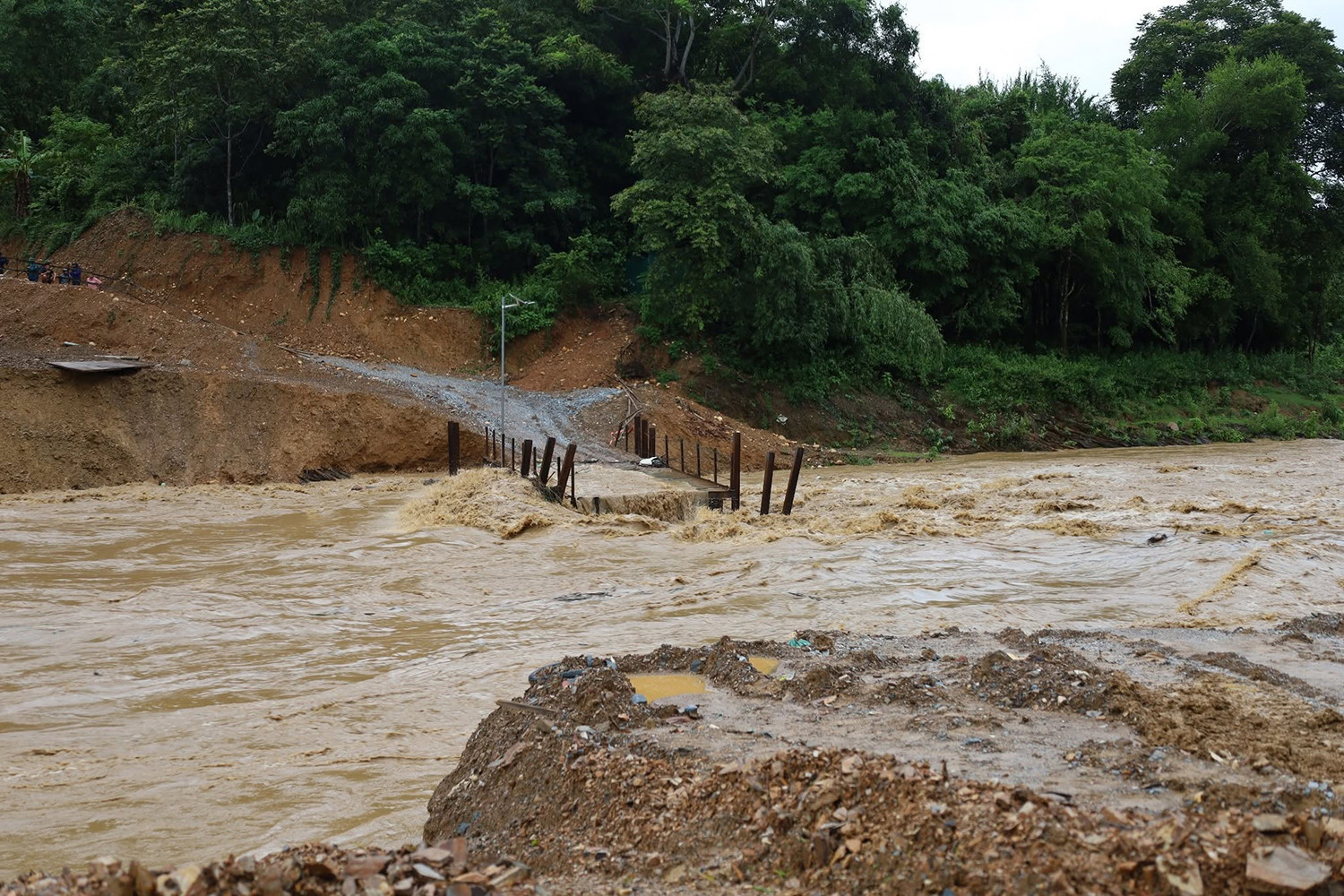
According to the National Center for Hydro-Meteorological Forecasting, from Sept. 14 through the night of Sept. 15, the southern part of the Red River Delta, southern Phu Tho Province, and areas from Thanh Hoa to Nghe An are forecast to experience heavy to extremely heavy rain and thunderstorms.
Rainfall is expected to range from 150-300mm, with some locations receiving more than 450mm.
Other parts of the Red River Delta and Ha Tinh are forecast to receive moderate to heavy rain and thunderstorms, generally ranging from 100-180mm, with localized rainfall exceeding 250mm.
From the afternoon of Sept. 14 through the night of Sept. 15, the northern midlands, northern Phu Tho and southern areas of Tuyen Quang, Lao Cai and Son La are expected to receive moderate to heavy rain and thunderstorms.
Rainfall in these areas is forecast at 50-100mm, with some locations receiving more than 150mm.
On Sept. 16, moderate to heavy rain and thunderstorms are forecast across the northern midlands and Red River Delta, as well as Phu Tho, Thanh Hoa and Nghe An and southern areas of Son La, Tuyen Quang and Lao Cai.
Rainfall is expected to range from 20-40mm, with localized totals exceeding 70mm.
Authorities prepare evacuations from high-risk areas
To prepare for heavy rain, flooding, flash floods, landslides, strong winds, lightning and hail, the National Civil Defense Steering Committee asked local authorities in the 13 provinces and cities to closely monitor weather forecasts and warnings.
Local governments were told to promptly communicate warnings to grassroots authorities and residents so appropriate preventive measures can be taken.
Authorities were also instructed to deploy emergency teams to inspect high-risk locations and prepare to relocate or evacuate residents living along rivers and streams, in low-lying areas, or in places vulnerable to deep flooding, flash floods and landslides.
Particular attention is to be given to areas that have already experienced heavy rainfall.
Localities were told to clear waterways and keep emergency personnel ready to assist residents and respond to any damage.
Authorities must also deploy personnel to monitor and control traffic at flooded crossings, spillways and roads where water is deep or fast-flowing, as well as locations affected by or at risk of landslides.
People and vehicles should not be allowed through areas where safe passage cannot be guaranteed.
Personnel, equipment and materials are also to be positioned to respond to incidents, keep major transport routes open and prevent flooding in urban areas and industrial zones.
Provincial and municipal authorities were instructed to inspect mines and tunnels, construction sites, reservoirs and downstream areas, with particular attention to small hydropower and irrigation reservoirs and other vulnerable facilities.
Teams must remain on duty to operate and regulate reservoirs and respond to emergencies.
Authorities were also told to review and put into practice plans to protect dikes, particularly vulnerable sections, locations where previous damage has yet to be fully repaired and dike projects still under construction.
Inspections and patrols along dike systems are to be strengthened throughout the rainy and flood season so problems can be detected and addressed as early as possible.
The steering committee also called for stronger public communication, particularly through local information channels, to provide residents with timely updates and guidance on responding to heavy rain, flooding, flash floods and landslides.
The 13 provinces and cities were instructed to maintain round-the-clock duty and regularly report developments to the National Civil Defense Steering Committee through the Department of Dike Management and Disaster Prevention and Control under the Ministry of Agriculture and Environment.
Kieu Oanh
.svg)
