 Vietnamnet.vn

 Podcast



Within the framework of the 2026 Spring Meetings of the World Bank and the International Monetary Fund, Vietnam has been honored as one of the five countries with the most outstanding achievements in human capital development.
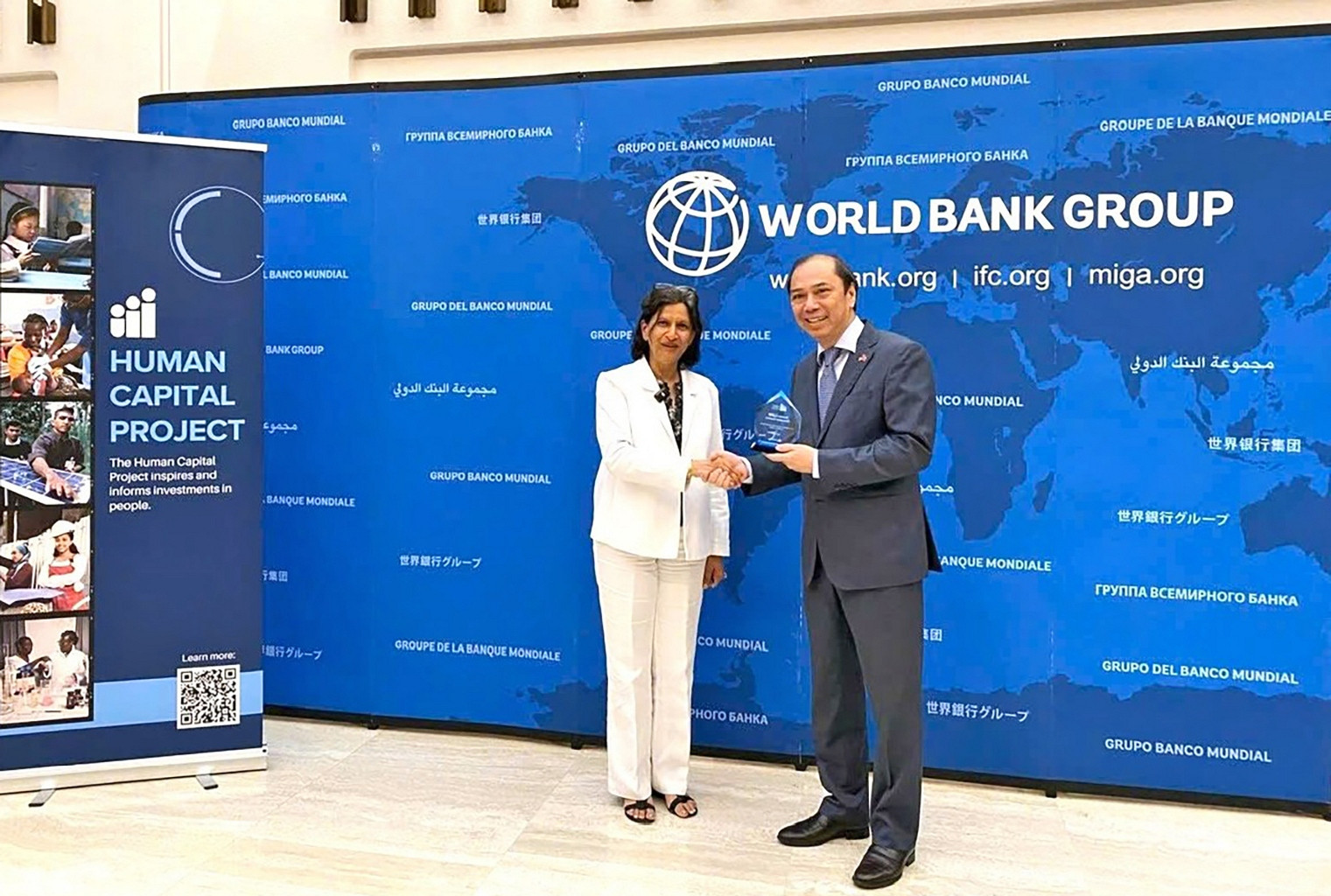
At the award ceremony recognizing top-performing countries under the expanded Human Capital Index (HCI+) 2026, held on April 16 at the World Bank headquarters in Washington, D.C., Nguyen Quoc Dung, Vietnam’s Ambassador to the United States, received the distinction on behalf of the country for its leading performance among nations with similar income levels.
The recognition acknowledges Vietnam’s sustained efforts to optimize its “human assets” in service of long-term, sustainable economic growth.
Vietnam’s inclusion in the top five stands as clear evidence of its growing competitiveness and the positive transformation of its labor market in a new development era.
This achievement reflects the concerted efforts of the Government, the Ministry of Finance, and various ministries, sectors and localities in implementing Resolution 72-NQ/TW of the Politburo on breakthrough measures to strengthen healthcare, as well as Resolution 71-NQ/TW focusing on advancing education and training high-quality human resources through 2030.
From the perspective of international economic experts, Vietnam’s performance in the HCI+ 2026 is not solely the result of progress in education and healthcare, but also bears the imprint of effective public financial management in converting investment resources into tangible outcomes.
Vietnam has been assessed as one of the countries most capable of transforming state budget investments in education and health into real economic growth, outperforming the global average.
Sustainable public spending, combined with strong educational outcomes, underscores the effectiveness of fiscal policies that prioritize investment in knowledge.
At the same time, the World Bank also noted significant improvements in wage employment in Vietnam, reflecting success in aligning financial resources for training with the actual demands of a high-productivity labor market.
Compared to countries in the same region and income group, Vietnam demonstrates higher efficiency in converting skills into employment opportunities and real income.
Being recognized in the HCI+ 2026 once again affirms the soundness of a development strategy centered on people, while also highlighting the effectiveness of allocating and utilizing national financial resources - a critical factor in enhancing competitiveness in the new era.
This achievement is not only a mark of international recognition but also a driving force for Vietnam to continue pursuing strong fiscal reforms, prioritizing the attraction and efficient management of resources, including ODA and concessional loans, to further improve human resource quality in the 2026-2030 period.
Nguyen Le
.svg)
