 Vietnamnet.vn

 Podcast



The proposal is included in the draft revised Housing Law recently submitted by the Ministry of Construction and released by the Ministry of Justice for appraisal.
According to the appraisal dossier, the draft revised Housing Law contains 13 chapters and 150 articles, reducing the current law by 48 articles, or around 25%.
One of the most notable provisions is the introduction of time-limited ownership for apartment units.
Under the proposal, ownership rights would be established once the State recognizes ownership and would terminate when an apartment building reaches the end of its approved service life or, even before then, if the building is required to be demolished under applicable regulations.
If an apartment building reaches the end of its service life or becomes damaged, structurally unsafe or at risk of collapse before that point, provincial People's Committees would be responsible for directing inspections and quality assessments to determine whether the building's service life and ownership period could be extended. If the building does not qualify for an extension, it would have to be demolished.
The draft also states that when an apartment building is demolished, apartment owners would retain the right to continue using the land to redevelop the property collectively by contributing reconstruction costs in proportion to their ownership shares.
If owners choose not to contribute to rebuilding, the land would be handed over to the State, which would appoint a developer to carry out a new project. In that case, owners would receive compensation for land-use rights based on their proportional share of the common land area, determined under Vietnam's land legislation at the time compensation is paid.
If the approved urban planning no longer permits a new apartment building on the site, owners would likewise receive compensation for their land-use rights based on the same proportional calculation under prevailing land regulations.
In addition to these rights, owners of apartment units subject to demolition would be required to comply with relocation, demolition, compensation, resettlement, site clearance and other legal obligations.
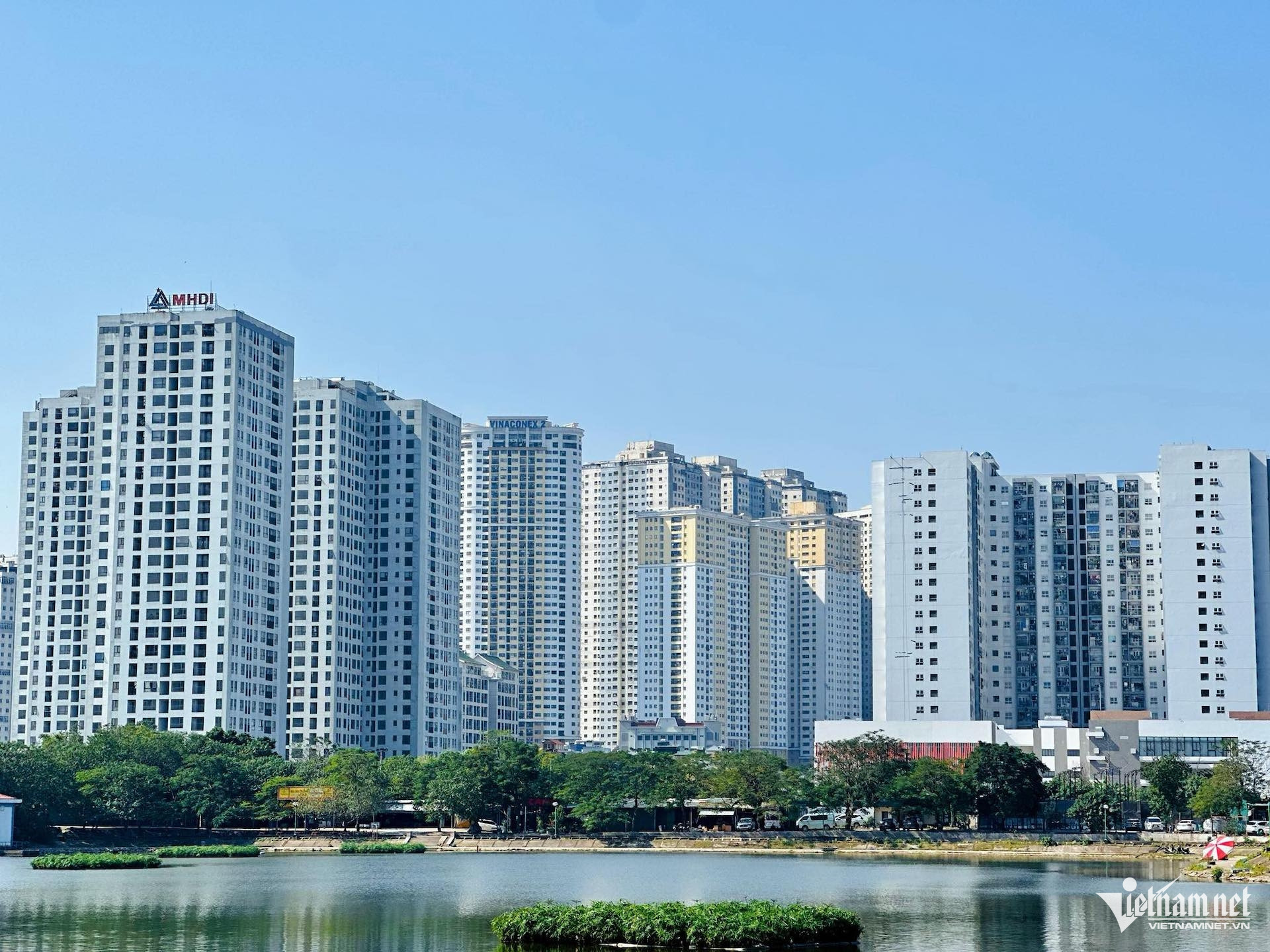
The draft also specifies how the service life of apartment buildings would be determined. It would be based on the building's approved design documents together with the actual condition established through official inspections.
The design service life must be clearly stated in the appraisal documents issued by the competent authority and would be calculated from the date the building is accepted for operation.
The service life officially begins once the completed building is accepted and put into use in accordance with construction regulations.
When a building reaches the end of its design life or suffers severe deterioration, structural damage or safety risks before that time, provincial authorities would be required to organize inspections and quality assessments.
The draft also introduces clearer rules on mandatory demolition. In addition to buildings that have reached the end of their service life, apartment blocks severely damaged by fire, explosions, natural disasters or serious deterioration, or those posing a collapse risk or failing to meet safety standards, would also be subject to demolition.
To protect residents' interests, the Ministry of Construction proposes allowing on-site resettlement where the land remains designated for apartment redevelopment under approved planning.
If the site is no longer zoned for apartment construction, owners would receive monetary compensation or be offered resettlement at another location within the same commune, ward or a nearby area.
Industry group warns of public concern
Responding to the proposal, the Ho Chi Minh City Real Estate Association (HoREA) has submitted recommendations to the Prime Minister and relevant ministries, urging them not to adopt provisions that terminate apartment ownership when buildings reach the end of their service life and must be demolished.
According to HoREA Chairman Le Hoang Chau, the proposal would gradually change public perceptions by recognizing that apartment buildings are structures with finite service lives rather than assets that exist permanently.
However, the association argued that the proposal could create uncertainty among homebuyers and does not ensure consistency within Vietnam's legal framework.
HoREA noted that the proposal effectively revives an idea previously put forward during the drafting of the 2023 Housing Law.
The association cited conclusions reached by the National Assembly Standing Committee during deliberations on the 2023 Housing Law. At that time, lawmakers did not support imposing time-limited apartment ownership, arguing that doing so would affect citizens' property rights. Instead, they favored provisions granting the State authority to require the relocation, demolition and redevelopment of unsafe apartment buildings to protect public safety.
HoREA also pointed out that current legislation already distinguishes between permanent housing ownership linked to long-term residential land-use rights and fixed-term ownership in cases where it is agreed by the parties or where the underlying land itself is subject to a fixed term.
The association therefore proposed maintaining the provisions of the 2023 Housing Law, under which apartment ownership remains indefinite and attached to stable, long-term residential land-use rights.
HoREA further suggested retaining fixed-term housing ownership only in cases where it is voluntarily agreed in purchase contracts or applies to homes built on land with limited land-use terms, rather than imposing the model on all apartment buildings.
Hong Khanh
.svg)
