 Vietnamnet.vn

 Podcast



Vietnam’s Ministry of Ethnic and Religious Affairs and Russia’s Federal Agency for Ethnic Affairs have signed a memorandum of cooperation covering ethnic solidarity, people-to-people diplomacy and the preservation of minority languages, cultures and traditions.
The memorandum was among the bilateral cooperation documents exchanged at the Kremlin on Sept. 9 during Vietnamese Party General Secretary and President To Lam’s state visit to Russia. To Lam and Russian President Vladimir Putin witnessed the exchange of the documents.
Vietnamese Minister of Ethnic and Religious Affairs Nguyen Dinh Khang and I.V. Barinov, head of Russia’s Federal Agency for Ethnic Affairs, exchanged the memorandum on behalf of the two agencies.
Building a mechanism for exchanges on ethnic affairs
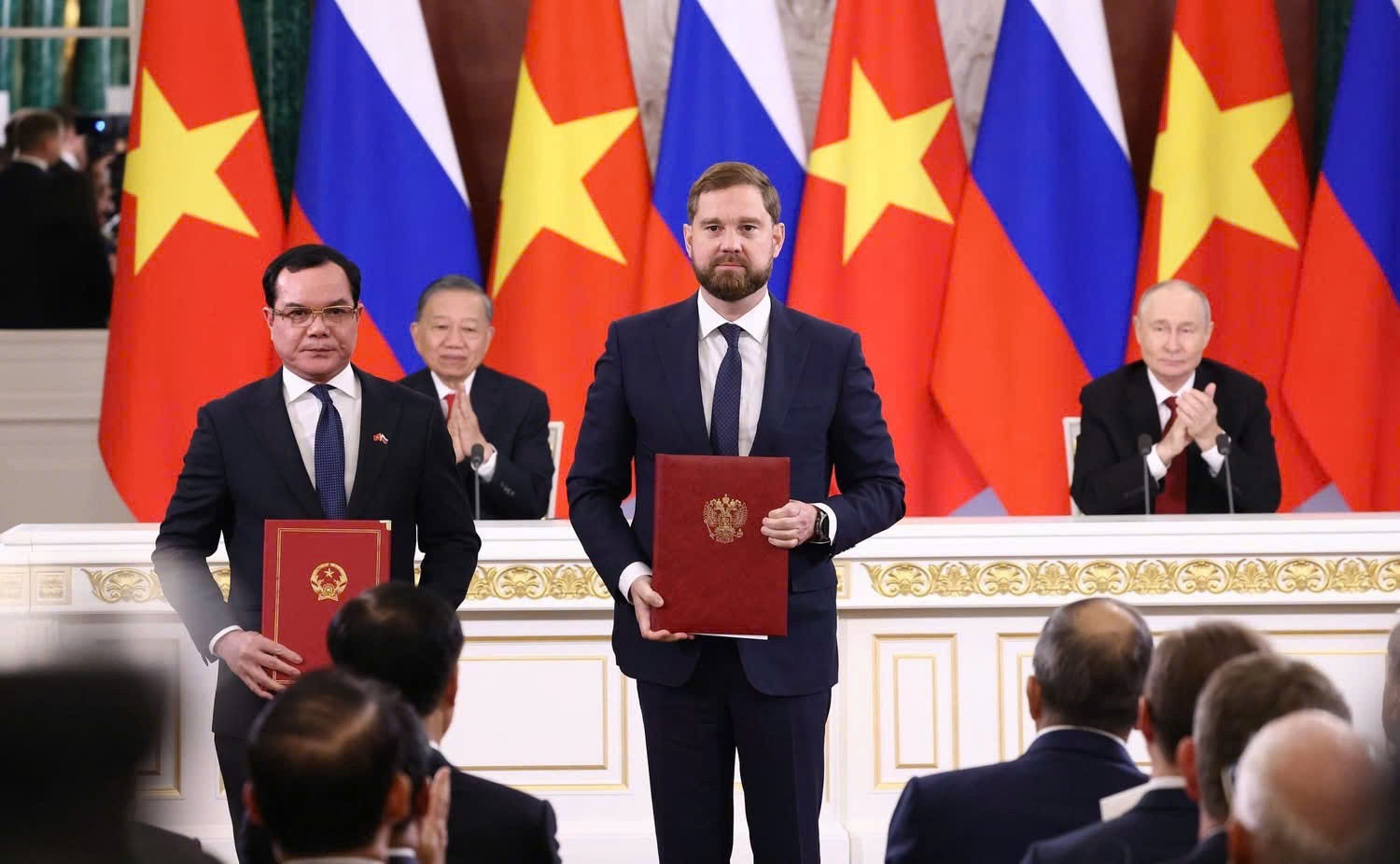
Under the memorandum, the two sides will establish a mechanism to exchange experience in implementing state policies on ethnic affairs, operating cultural institutions serving ethnic minority communities, and developing effective forms of intercultural dialogue.
They will also promote cooperation between their respective agencies and affiliated bodies in areas including social cohesion, information, culture, science and education.
The areas of cooperation are intended to provide practical opportunities for the two countries to share approaches to balancing cultural preservation with development, while maintaining the distinct identities of individual communities alongside broader national values.
A regular exchange mechanism could allow the two sides to study relevant models and practices while jointly examining emerging issues associated with globalization, digital transformation and growing international exchanges.
The memorandum also calls for conditions to be created to promote people-to-people diplomacy, expanding cooperation beyond government agencies to communities, officials, specialists and younger generations in both countries.
The initiative adds a new dimension to the longstanding relationship between Vietnam and Russia, creating opportunities for closer connections among people working directly on ethnic, cultural and social issues.
Promoting stability while respecting diversity
When conditions permit, the two sides may jointly organize cultural activities, conferences, festivals, forums, consultations, seminars, roundtables and other events.
They may also participate in activities organized by either country and exchange delegations of officials, young people and experts on the basis of equality.
Against a global backdrop in which questions of ethnicity, religion, identity and social cohesion receive growing attention, the memorandum places emphasis on social consensus, intercultural dialogue and the preservation of cultural identity.
Its stated approach is to strengthen friendship between the peoples of Vietnam and Russia while respecting ethnic, cultural, linguistic and religious identities and diversity.
The memorandum also establishes an implementation mechanism, with each side designating a focal point responsible for coordination.
This is expected to provide a foundation for turning the agreed areas of cooperation into specific programs, activities and practical outcomes.
From the initial framework, the two sides can gradually identify priority areas, develop annual exchange programs and strengthen connections among research organizations, educational institutions, cultural bodies, experts and officials directly involved in ethnic affairs.
Turning the agreement into practical cooperation
The memorandum followed talks between Minister Nguyen Dinh Khang and Stanislav Bedkin, deputy head of Russia’s Federal Agency for Ethnic Affairs.
Khang held talks with Bedkin on Sept. 8 while accompanying To Lam on the state visit to Russia. Vietnam’s Ministry of Ethnic and Religious Affairs said the meeting formed part of preparations for strengthening bilateral cooperation in ethnic and religious affairs.
During the talks, Khang praised the coordination between the two agencies in preparing the memorandum.
He said the agreement was significant because it established a framework for the two agencies to strengthen exchanges and cooperation in areas of shared interest.
The memorandum is expected to provide the institutional basis for the two sides to turn those areas into practical and effective cooperation, while adding ethnic affairs, cultural preservation and people-to-people engagement to the broader Vietnam-Russia relationship.
Thanh Huyen
.svg)
