 Vietnamnet.vn

 Podcast



Vietnam's Railway Project Management Board has provided the latest update on the Lao Cai-Ha Noi-Hai Phong railway, confirming that while construction has begun on several components, the overall project is currently behind schedule.
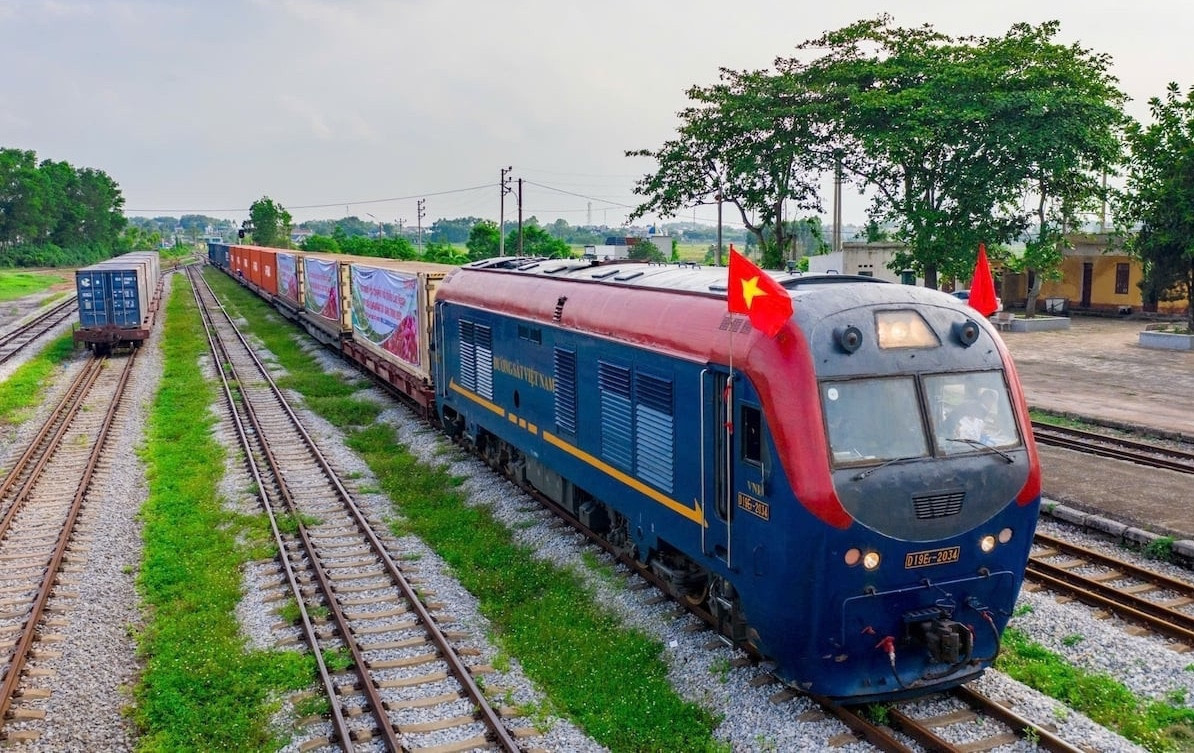
Speaking to VietNamNet, representatives of the Railway Project Management Board under the Ministry of Construction said work on several components of the railway project began on December 19, 2025. However, implementation has encountered significant challenges, particularly land clearance in several localities.
According to the board, the initial works belong to Component Project 1, which covers access roads to railway stations and station forecourts. During the first phase, construction was planned at five locations under the same contract package.
So far, only two of the five sites - Lao Cai Station and Nam Hai Duong Station - have been handed over for construction. Work at the remaining three locations, Phu Tho, Bac Hong and Luong Tai, has yet to begin because land clearance has not been completed.
For the remaining stations along the route, the project management board is working with consultants to finalize detailed engineering designs. Necessary procedures are expected to be completed in July before contractors are selected and construction expands to additional sites.
According to the board, the pre-feasibility study originally proposed 21 stations. Following further technical reviews and route optimization, the number has been reduced to 20.
Chinese consultants submitted the initial feasibility study report to the Vietnamese side at the end of March. The Ministry of Construction, together with relevant Vietnamese agencies and Chinese counterparts, subsequently reviewed and assessed the report.
On April 10, the preliminary appraisal was completed and returned to the consultants for revisions. Once the feasibility study receives final approval, authorities can proceed with determining the total investment, funding structure and detailed engineering designs.
At the same time, land acquisition boundary markers are being installed across the provinces and cities along the route. Several local authorities have begun receiving documentation to carry out land surveys, asset inventories and compensation plans.
Project running behind schedule
The Railway Project Management Board acknowledged that implementation is behind the timeline set out in Government Resolution No. 127, which guides implementation of the National Assembly's resolution on the project.
Officials attributed the delays primarily to unexpected technical challenges uncovered during field surveys, including complex geological conditions, fault lines and difficult construction terrain along the route. These issues have extended the time needed to complete technical documentation, engineering designs and related procedures.
"The Railway Project Management Board is coordinating with ministries and relevant agencies to report to the Government and seek adjustments to certain implementation milestones," the board said.
The railway will adopt Chinese railway technology and technical standards under the special mechanism approved by the National Assembly. The line is designed for operating speeds of up to 160 km/h on many sections and will carry both passengers and freight.
According to the board, the new railway will significantly improve transport capacity along the Lao Cai-Ha Noi-Hai Phong economic corridor, shorten travel times, strengthen logistics connectivity and support long-term socio-economic development as well as national defense and security.
The Lao Cai-Ha Noi-Hai Phong railway will extend nearly 391 km, with an additional 27.9 km of branch lines, using the standard 1,435 mm gauge. The route will pass through six localities, linking the Lao Cai border gate with Lach Huyen Port in Hai Phong.
The project has a total investment of more than VND203.2 trillion (US$7.8 billion) and is scheduled for completion by 2030.
Component Project 1, covering station infrastructure and connecting public spaces, began construction in late 2025 with an investment of VND3.298 trillion (US$126.8 million). Component Project 2, which covers construction of the main railway line, has an estimated investment of VND155.503 trillion (US$6.0 billion).
Despite current delays, authorities said the overall completion target of 2030 remains unchanged.
Vu Diep
.svg)
