 Vietnamnet.vn

 Podcast



Vietnam have finalized their squad for the ASEAN Cup immediately after returning from their training camp in South Korea, where head coach Kim Sang Sik appeared to conclude that he does not necessarily need a fixed strongest lineup for Southeast Asia's premier football tournament.
No need to settle on a strongest lineup
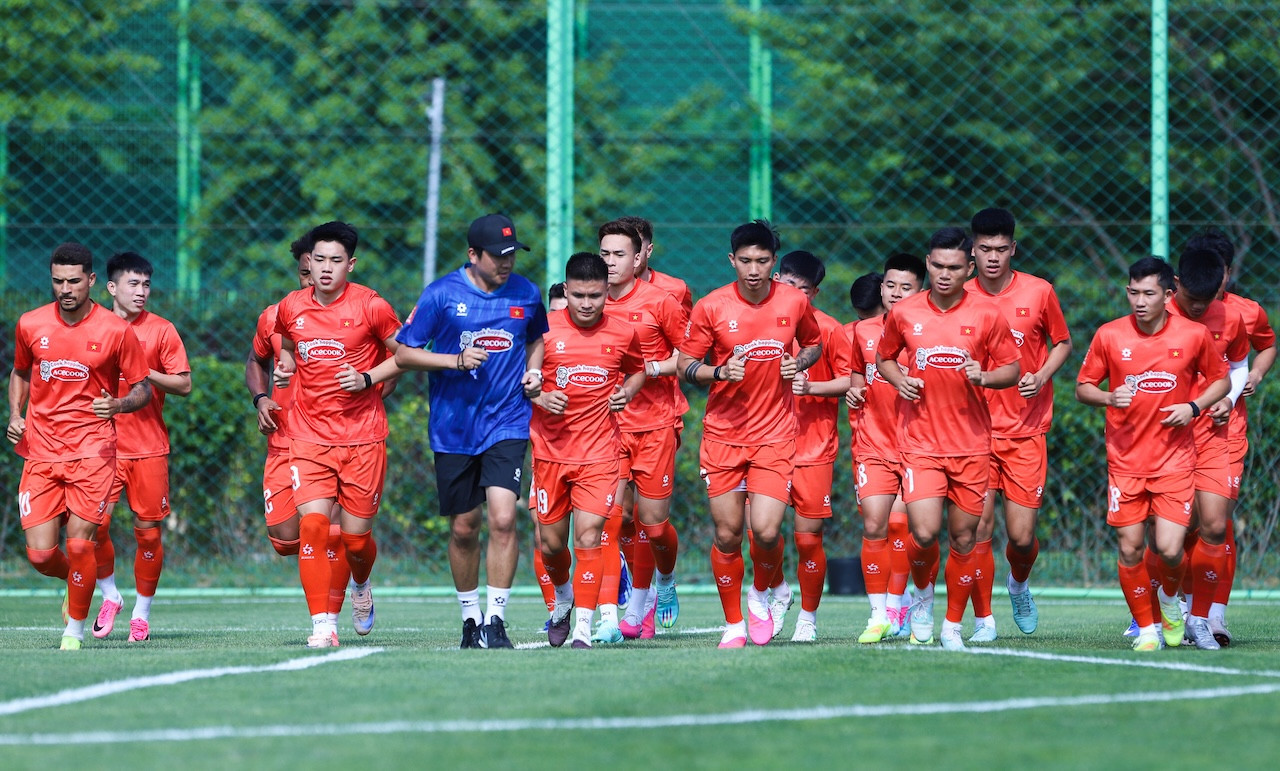
After three friendly matches in South Korea against opponents from three different competitive levels, Kim now appears to have gained a comprehensive understanding of his squad, tactical approach and the team's ability to execute different game plans.
Upon the team's return to Vietnam, defender Ngoc Bao's injury effectively resolved the final selection dilemma. With 26 players remaining, Vietnam now have exactly the number permitted for registration at the 2026 ASEAN Cup.
The injury also spared Kim the difficult task of making last-minute cuts, allowing him to shift his focus away from identifying an undisputed first-choice starting eleven.
His approach in South Korea offered a clear indication of that philosophy. Across all three matches, the South Korean coach experimented with different lineups and personnel combinations, ensuring every player had an opportunity to impress. The result was three victories against clubs representing the K League 3, K League 2 and K League 1 levels.
That is why having exactly 26 players available does not necessarily mean Vietnam are searching for one ideal lineup. Rather than identifying 11 automatic starters, Kim returned from South Korea with valuable information that will help him select the most suitable team for each individual opponent.
Tactical flexibility comes first
The ASEAN Cup features a demanding match schedule, while every opponent presents different tactical challenges. Singapore play differently from Cambodia, Indonesia require a different approach altogether, and Timor-Leste bring their own unique style.
Under those circumstances, relying on one lineup throughout the tournament would be difficult.
The tournament regulations also support greater flexibility. While teams may register 26 players, only 23 can be included in the matchday squad for each game, giving coaches additional freedom to rotate players and tailor selections to specific opponents instead of sticking to a permanent core.
As a result, a player left out against Myanmar could become a key figure against Malaysia or Indonesia. Likewise, someone who starts during the group stage is not guaranteed to keep that role in the knockout rounds.
With a deep and balanced squad, Kim Sang Sik can build multiple competitive lineups capable of delivering victories rather than relying on a single preferred eleven.
That may ultimately be the biggest takeaway from Vietnam's training camp in South Korea. Instead of discovering one definitive strongest lineup, Kim has assembled a range of tactical options. In a short tournament such as the ASEAN Cup, that flexibility could prove more valuable than maintaining an unchanged starting team from beginning to end.
Duy Nguyen
.svg)
