 Vietnamnet.vn

 Podcast


A scientific conference marking 100 years of Caodaism was held on November 15 at Chau Minh Holy See, the headquarters of the Cao Dai Tien Thien Church in Tien Thuy Commune, Vinh Long Province, southern Vietnam.
The event, themed "100 Years of Caodaism: Achievements, Contributions to the Nation and Directions for the New Century," was jointly organized by the Association of Cao Dai Churches and Organizations and the Institute of Ethnology and Religious Studies under the Vietnam Academy of Social Sciences.
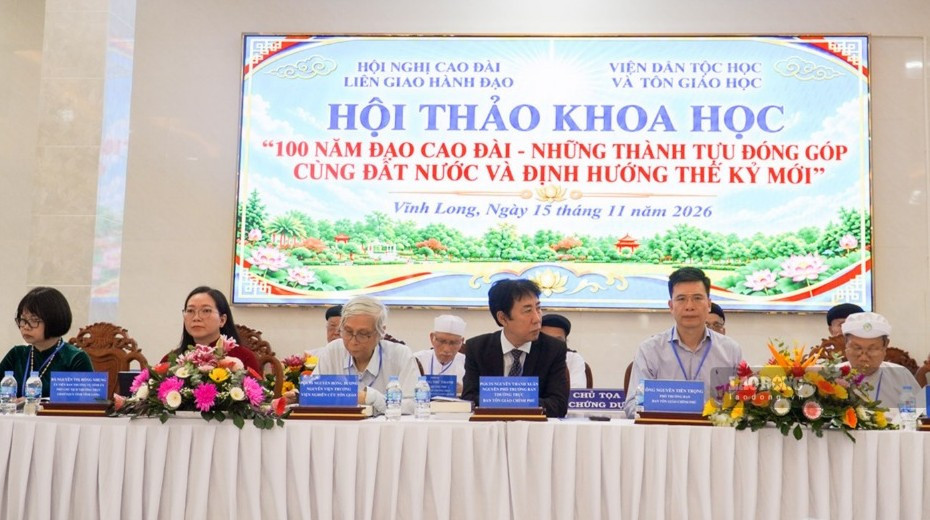
Delegates chair the scientific conference marking the 100th anniversary of Caodaism at Chau Minh Holy See. Photo: TD
Participants included Nguyen Tien Trong, deputy head of the Government Committee for Religious Affairs under the Ministry of Ethnic and Religious Affairs, representatives of Vinh Long provincial authorities, Cao Dai churches and organizations, scholars, researchers, religious dignitaries and other delegates.
A century of Caodaism alongside Vietnam's development
Speaking at the conference, Thuong Phong Thanh, head of the Standing Committee of the Cao Dai Tien Thien Church, recalled that Caodaism was founded in 1926 as an indigenous Vietnamese religion deeply rooted in the country's cultural identity.
Its guiding principle, "Tam giao quy nguyen, Ngu chi hiep nhut," emphasizes the unity of three major religious traditions and the convergence of five spiritual branches, encouraging followers to pursue morality, compassion, love and harmony.
Over the past century, Caodaism has gradually established and strengthened its religious institutions through different historical periods while contributing to Vietnam's cultural, ethical and social development, as well as national construction and defense.
Tran Quoc Khai, a researcher from the Cao Dai Tien Thien Academy, said the religion's relationship with Vietnamese society had been shaped by a longstanding commitment to community responsibility.
From its earliest days, Caodaism did not develop as an isolated religious community detached from wider society, he explained.
Instead, personal cultivation, good deeds, helping others and religious practice have remained closely connected with obligations to the community.
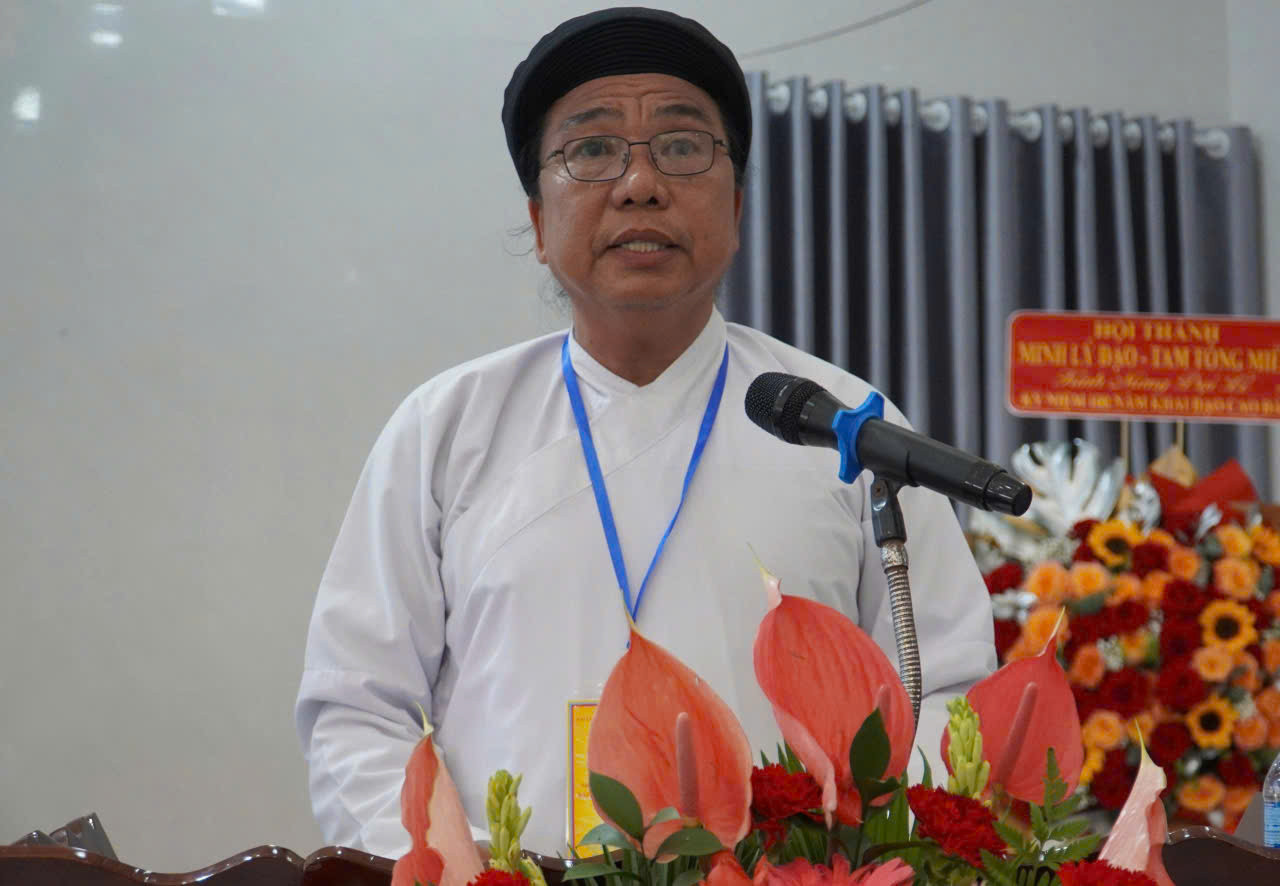
Thuong Phong Thanh, head of the Standing Committee of the Cao Dai Tien Thien Church, addresses the conference. Photo: TD
According to Khai, historical studies of southern Vietnam have documented the involvement of Cao Dai individuals and communities in political and social activities during periods of national struggle, defense and reconstruction.
Beyond participation in public affairs, the religion's commitment to society is also reflected in its teachings on serving humanity, relieving suffering and practicing charity.
Followers are encouraged not only to cultivate their own moral character but also to contribute to the well-being of others.
Religious service, therefore, extends beyond ceremonies and internal church activities to practical actions that benefit society.
Across many localities, Cao Dai congregations, temples and religious establishments have participated in poverty relief, assistance for disadvantaged families, healthcare support, disaster relief and educational initiatives.
Looking back over the past century, Khai said the relationship between Caodaism and the Vietnamese nation had evolved in different ways depending on historical circumstances.
At certain times, this connection was expressed through political choices and social participation. At others, it was demonstrated primarily through the preservation of moral values, mutual assistance and humanitarian activities.
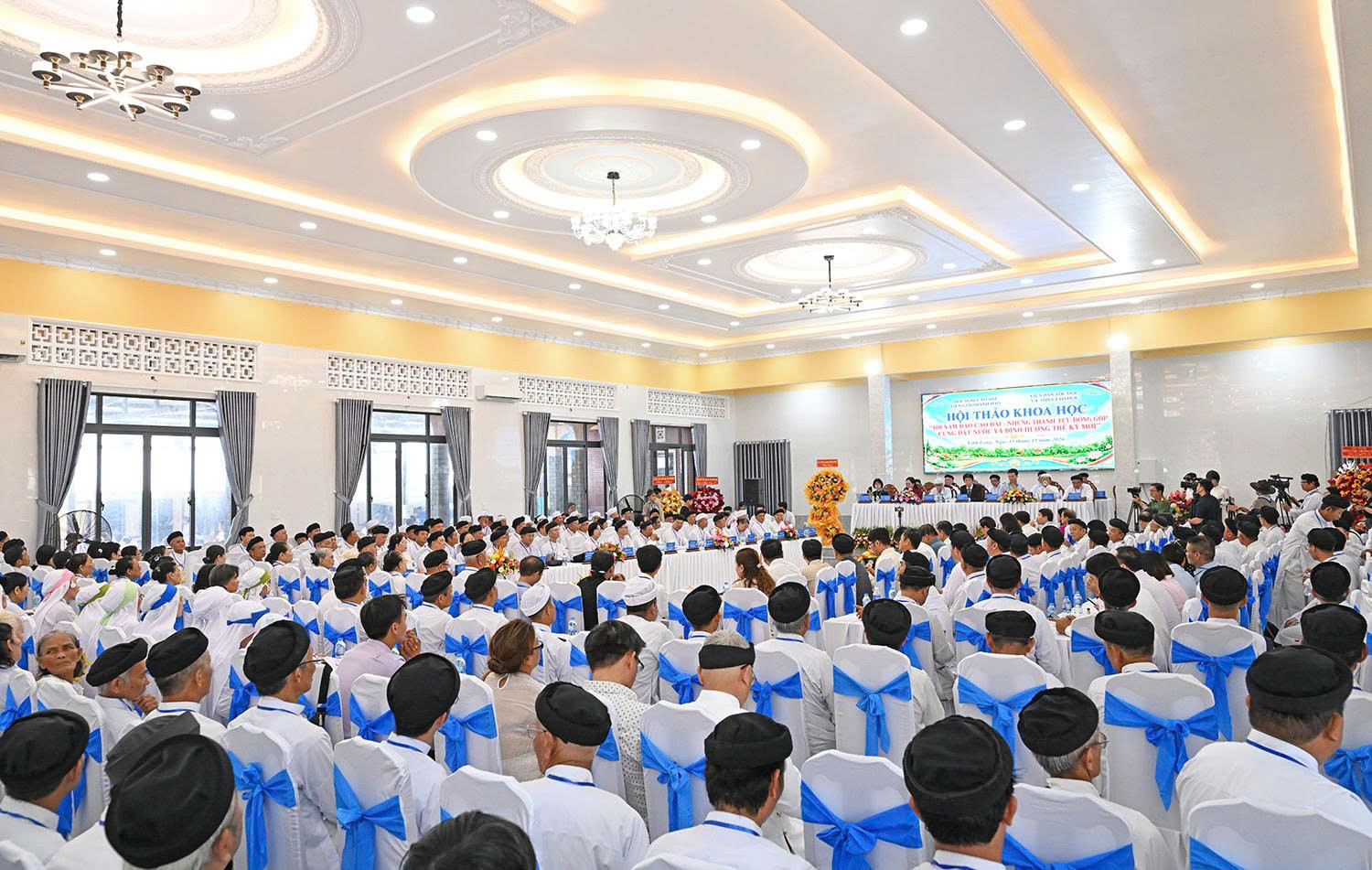
The scientific conference, themed "100 Years of Caodaism: Achievements, Contributions to the Nation and Directions for the New Century." Photo: Tran Thuong
He emphasized that the religion's contributions should not be measured solely by the number of events organized or the extent of its political involvement.
Instead, attention should be paid to the community's ability to adapt to historical circumstances, preserve ethical values and translate religious beliefs into social responsibility.
This continuing process, he said, has helped make Caodaism an integral part of modern Vietnam's cultural and social life.
Preserving traditions while embracing a new century
Discussing how Caodaism could further contribute to Vietnam's development, Mai Thuy Anh from the Institute of Ethnology and Religious Studies called for a shift from simply preserving religious traditions to actively applying their values in contemporary society.
She said principles such as compassion, kindness, charitable service, harmony and social responsibility should be translated into practical activities that respond to present-day needs.
Achieving this would require a combination of preservation, inheritance, creativity and adaptation, maintaining the religion's core values while updating how they are expressed in modern life.
One priority is improving the knowledge and capabilities of religious personnel.
Alongside religious teachings, dignitaries, church officials and younger followers should receive additional training in law, social affairs, community healthcare, environmental protection, information technology and the organization of social activities.
Younger generations, in particular, should be encouraged to participate in community projects, volunteer programs, education, environmental protection and digital transformation.
Such involvement would help prepare them to carry forward and develop the religion's traditions.
Expanding charitable work, healthcare and education
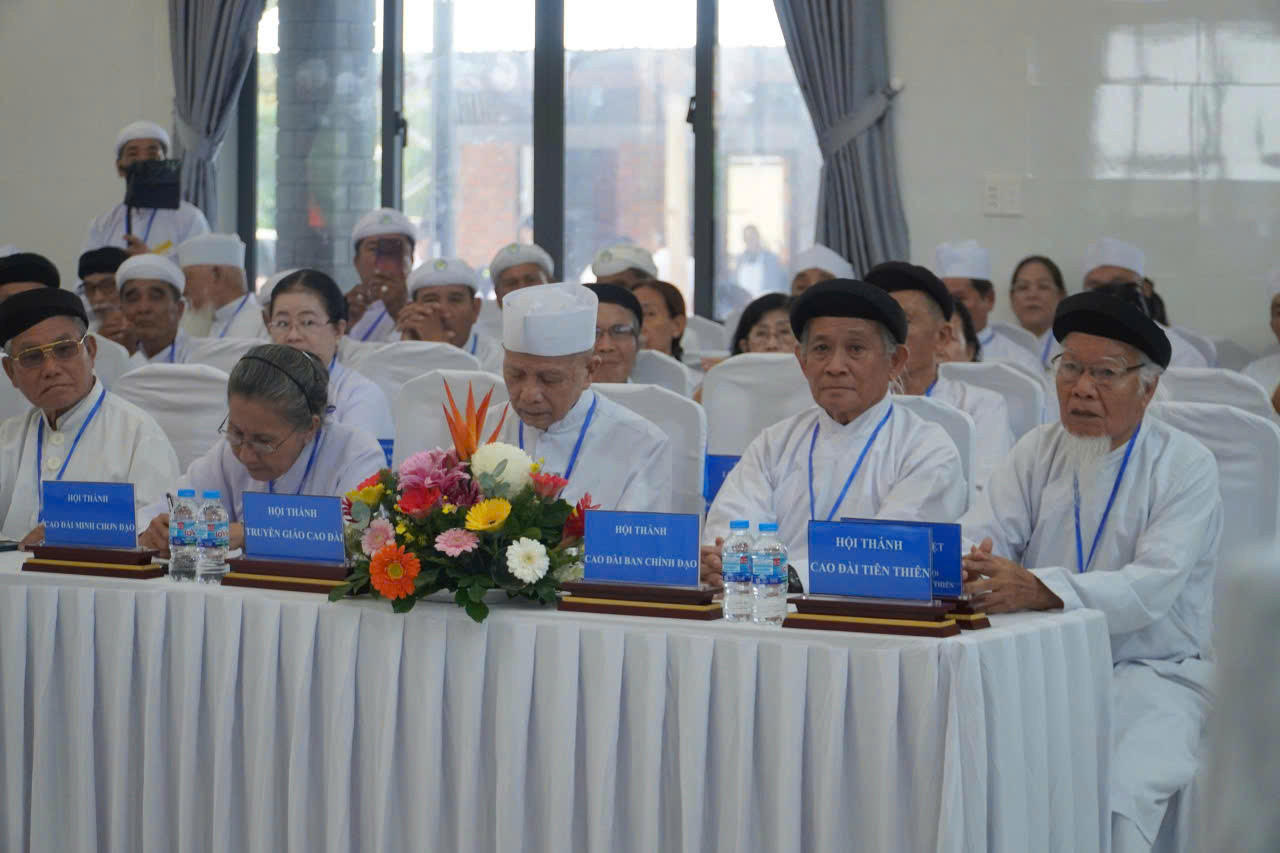
Over its 100-year history, Caodaism has gradually established and strengthened its religious institutions through different historical periods. Photo: TD
Charitable activities remain one of Caodaism's longstanding contributions to Vietnamese society.
According to Mai Thuy Anh, the religion established its Phuoc Thien charitable organization in 1938 to carry out social assistance and humanitarian work.
In today's context, she suggested that these activities should become more professional and focus on elderly care, poverty relief, assistance for people with disabilities, healthcare, disaster response, educational support and environmental protection.
Traditional medicine is another area with considerable potential.
Caodaism has a history of using Vietnamese herbal medicine, providing treatment, caring for older people and supporting disadvantaged communities.
Preserving this traditional medical knowledge while integrating modern healthcare practices and meeting professional and legal requirements could help improve community health services.
In education, scholarship and learning-support activities should expand beyond financial assistance to include knowledge sharing, skills development and career guidance.
Traditional religious values could also be more closely connected with environmental protection and sustainable development, creating new opportunities for community participation.
Digital transformation could bring Cao Dai heritage to younger generations
As younger generations increasingly consume information through digital platforms, technology is emerging as an important means of preserving and sharing Caodaism's cultural and spiritual heritage.
Mai Thuy Anh suggested that the religion's history, moral teachings, architecture, rituals, cultural traditions and social activities could be documented and digitized.
These resources could then be developed into digital databases, electronic libraries, documentary films, online lectures and multimedia content designed for younger audiences.
Such initiatives would help make Cao Dai heritage more accessible while creating opportunities for younger followers to engage with their religious and cultural traditions in new ways.
According to Anh, technology should not replace tradition. Rather, it should serve as a means of broadening access and communicating longstanding values through formats and language that resonate with younger generations.
The centenary conference thus highlighted both the historical contributions of Caodaism and the opportunities for the religion to continue serving Vietnamese society through charitable work, education, healthcare, environmental protection and technological innovation in the century ahead.
Tao Dat

