 Vietnamnet.vn

 Podcast



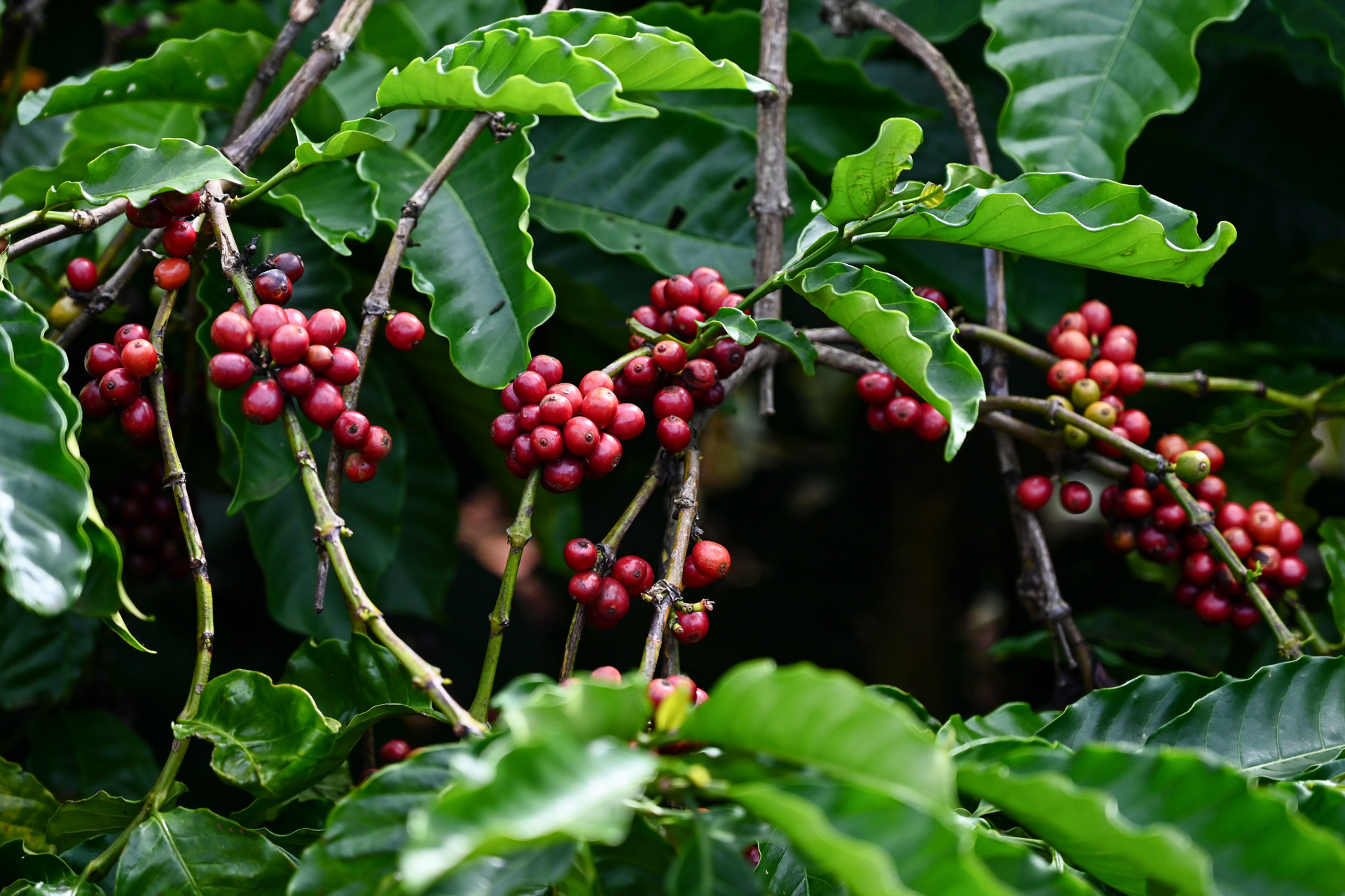
Preliminary data from the General Department of Customs shows that over 89,000 tons of coffee were shipped abroad during this period. Compared to the same time last year, export volume rose by 20.6%, while value increased by 8.6%.
Coffee has now overtaken seafood exports ($417 million) to become Vietnam’s second-highest earning agricultural product so far this year, trailing only wood and wood-based products ($657 million).
In 2025, coffee exports soared to a record-breaking $8.92 billion - up 58.8% from the previous year - earning a spot among the top three agricultural exports by value, alongside seafood and wood products.
For the 2024–2025 crop year, Vietnam accounted for just 18% of global coffee export volume. However, the country retained its lead in robusta exports, making up 43% of global robusta shipments.
In the Central Highlands, Vietnam’s coffee heartland, the harvest season is in full swing. Raw coffee beans are being purchased at an average of 99,100 VND per kilogram (approx. $4). While this is notably lower than last year’s peak of 135,400 VND per kilogram, farmers are still enjoying profits of around 50,000–60,000 VND (about $2–2.5) per kilogram sold.
According to the Vietnam Coffee and Cocoa Association (VICOFA), Vietnam’s coffee output for the 2025–2026 crop year is expected to rise by 5–10% compared to the 1.8 million tons (approximately 30 million bags) recorded in 2024–2025.
Globally, coffee production is also recovering. The World Bank’s Commodity Markets Outlook projects global output to grow from 175.4 million bags in 2024–2025 to 179 million bags in the following crop year.
As global markets shift from recent price surges to a phase of adjustment and rebalancing, Vietnam’s coffee sector remains resilient.
However, VICOFA warns that the market continues to face challenges such as climate change, rising production costs, tariffs, and stricter requirements for supply chain transparency.
More importantly, global demand for coffee remains strong - especially in the premium and specialty coffee segments. As a result, although prices are likely to decline in 2026, they are not expected to return to past lows.
The World Bank forecasts that arabica coffee prices will drop by 13% in 2026 and another 5% in 2027, supported by production recovery in Colombia. Robusta prices are also expected to cool, though more slowly, with a projected decrease of around 2% per year.
Tam An
.svg)
