 Vietnamnet.vn

 Podcast



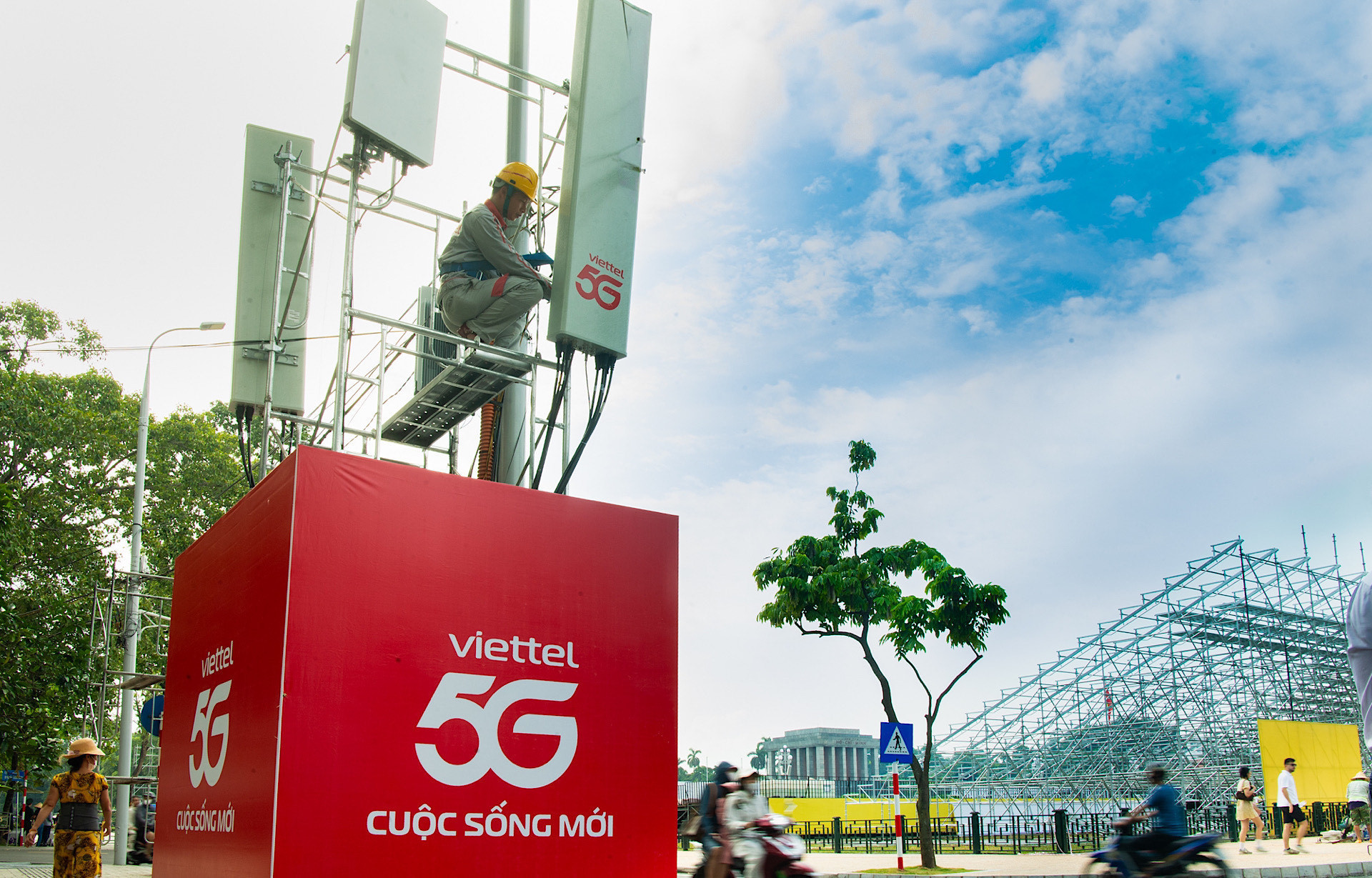
Vietnam is striving to put itself on par with advanced countries in digital infrastructure, with mobile broadband speeds reaching 170 Mbps and fixed broadband up to 300 Mbps, and with 99 percent of the population covered by 5G and 40 percent able to access 1Gbps broadband.
By 2026, the Authority of Telecommunications under the Ministry of Science and Technology aims to bring Vietnam's digital infrastructure to the level of advanced countries: mobile speeds reaching 170 Mbps, fixed broadband at 300 Mbps, 5G coverage for 99 percent of the population, and 40 percent of citizens having access to 1Gbps broadband.
2025: breakthrough year
Le Van Tuan, Director of the Radio Frequency Department under the Ministry of Science and Technology, described “2025 as a breakthrough year for Vietnam’s digital infrastructure, in terms of speed, scale, and coverage.”
Fixed broadband internet speeds reached 280 Mbps, up 1.7 times compared to 2024, ranking 11th globally and rising 49 places since the beginning of the term; and mobile broadband internet speeds reached 160 Mbps, double that of 2024, ranking 17th worldwide.
4G infrastructure now covers 99.48 percent of the population, while 5G coverage expanded from 0.93 percent in 2023 to 90.2 percent in 2025, with the number of 5G base stations increasing from 184 to more than 35,000.
Last year, Vietnam was recognized by Gartner as one of the first five countries to manufacture 5G equipment.
In the field of radio frequency, two successful auctions were held in 2025, triggering explosive growth in mobile broadband speeds in Vietnam. The establishment of the timeline to switch off 2G and 3G signals marked a major milestone, transitioning from voice-centric infrastructure to data-centric infrastructure. An additional 500MHz was added, increasing Wi-Fi bandwidth by 75 percent and improving broadband Internet access for citizens.
Regarding resource and Internet infrastructure, Vietnam currently manages over 16 million IPv4 addresses with 917 ASNs and 1,174 members, ranking 2nd in ASEAN.
The IPv6 deployment rate reached 67.68 percent, ranking seventh in the world. The ".vn" domain name reached over 683,000, ranking third in ASEAN with an annual growth rate of 3-6 percent.
The iSpeed Internet speed measurement system developed by VNNIC currently collects 2.3 million samples per month, a 230 percent increase compared to 2023, with 1.3 million app installations. Data is standardized, analyzed, and published down to the ward/commune level.
“Overall, the national Internet infrastructure has reached technical maturity, ready to move into the phase of optimization, automation, and IPv6 Only in the next period,” Tuan stated.
With the KT1 postal network, the entire process for KT1 mail—from reception and processing to transport and delivery at the commune level—has been digitized and monitored online, ensuring seamless, accurate, and absolute safety in all situations.
The postal sector recorded rapid and stable development in 2020-2025, with an average revenue growth of 18.6 percent/year and average volume growth of 31.5 percent/year. Revenue reached VND87,000 billion, with a total volume of 4.2 billion items.
Public postal services play a vital role in implementing full-process online public services. Every year, about 18-20 million administrative records are sent through public postal services.
Shaping modern digital infrastructure
Le Van Tuan said that 2026–2030 will be a phase in which telecommunications shape modern digital infrastructure, focusing on ultra-wide bandwidth, ultra-large capacity, and universal access.
In 2026, the Telecommunications Authority aims to bring Vietnam’s digital infrastructure on par with advanced countries. It is expected to complete the construction of two digital platforms to evaluate coverage and enterprise competitive behavior in the market, and restructure its organizational model toward becoming the national digital infrastructure regulator.
For the Radio Frequency Department, in 2026 it will organize auctions of the 900 MHz band and the remaining portion of the 3.5 GHz band and consider frequencies for unmanned aerial vehicles. In the 2026–2030 period, the Department will transform the operation of regional frequency centers from a rigid model to a flexible 1-1-3 model (one unified force, one command center, and three flexibilities in tasks, personnel, and equipment), operating on a shared platform.
The Vietnam Internet Network Information Center will focus on: developing the internet ecosystem associated with the national domain name ‘.vn’, targeting one million domain names by 2026 and 1.2 million by 2030; ensuring safe and stable operation of critical systems, with the goal that 100 percent of VNNIC’s technical systems and services are managed and operated safely and stably; and achieving an IPv6 rate of 72-74 percent, and 90-100 percent by 2030.
Du Lam
.svg)
