 Vietnamnet.vn

 Podcast



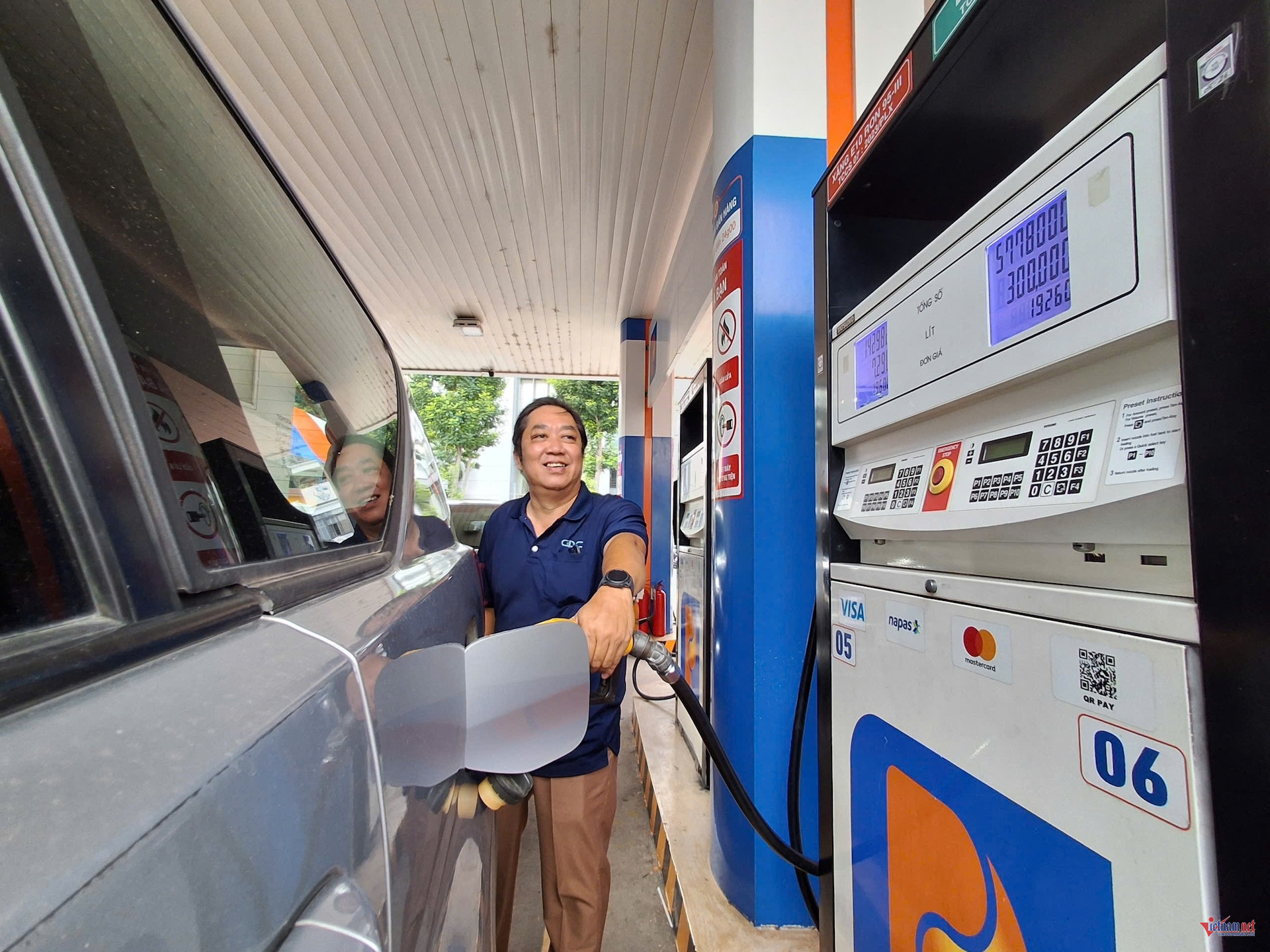
Ngo Ngoc Nga, manager of Petrolimex Saigon’s Fuel Station No1 in HCMC, said the station began selling E10 in late July. Daily consumption is only about 1,000 liters, a modest figure compared with the 30,000 liters of RON 95 gasoline sold daily. E10 consumption is just equal to less than 5 percent of RON 95.
However, Nga noted that the situation has improved as some customers have heard about E10 and asked for information.
Tran Van Huong at fuel station No1, a representative of a transport company, said his company has been using E5 for many years and had shifted to E10.
“With a total fuel cost of VND500 million/month, our fleet uses E5 and finds the engines operate normally,” he said, adding that producers and state agencies must have thorough studies on this type of fuel before launching it into the market.
“Few people use E10 due to a lack of information. If the price of this new gasoline drops, equivalent to E5 previously, it will attract more users,” he said.
Dinh Thanh Cuong (Nhon Trach, Dong Nai) said he used a 2010 Wave RSX and previously fueled it with E5, also a type of biofuel, but he still hesitates to use E10.
“I saw on TikTok that E10 might affect engines, so I’m hesitant to use it. It needs more time for verification,” he said.
The representative of the filling station No53 belonging to Petrolimex SaiGon told VietNamNet that previously 2,000 liters of E5 had sold each day, while only 1,000 liters of E10 are consumed now.
Petrolimex Sai Gon has announced that from August 1, 36 out of 80 fuel stations in HCMC will stop selling E5 and switch entirely to E10.
Days earlier, these 36 stations sold off remaining E5 stock to get E10 from Nha Be Fuel Depot.
Do Van Dung, former rector of HCMC University of Technology and Education, said E10 is a biofuel, comprising 90 percent mineral gasoline and 10 percent ethanol—a bio-alcohol produced from plants like corn, cassava, or sugarcane through fermentation and distillation.
In Vietnam, ethanol comes from domestic factories and imports from the US. Biofuel is widely used in countries like the US and Europe, contributing to reduced carbon emissions.
Biofuel use in Vietnam is not new. Since 2017, the government has encouraged E5 (5 percent ethanol), but faced challenges with supply and public awareness. Now, E10 has a higher ethanol ratio.
Bui Ngoc Bao, chair of the Vietnam Petroleum Association, said, “When the state mandates E10 sales, it means E10 has been comprehensively evaluated for quality, meeting vehicle needs with specific recommendations.”
E10 has had national standards since 2022.
Petrolimex and PVOil, major players in Vietnam’s fuel market, are piloting E10 sales to gauge market response, not to assess its quality.
“Public hesitation is understandable due to unclear information about fuel quality,” Bao said.
However, he noted that E10 is not a product name. Like mineral gasoline, E10 is classified by quality levels from I to V, indicating purity, additives, and engine compatibility.
He noted that many consumers mistakenly believe higher RON92 or RON95 mean better fuel for engines. This is partly true. RON92 and RON95 indicate octane ratings. Fuel quality doesn’t lie in these numbers (92 or 95), but in the Roman numeral at the end of the product name.
For example, with E10RON95-III, E10 means 10 percent ethanol, RON95 means an octane rating of 95, and III indicates quality (purity) level, with higher Roman numerals meaning greater purity.
Level III is common, suitable for vehicles made before 2017. Since 2017, most vehicles are recommended to use level IV or V.
Currently, Vietnam’s technical standards cap fuel quality at level V, while globally, level VI is used, and level VII is under research.
Thus, whether E5 or E10, the Roman numeral in the product name determines compatibility with a vehicle’s engine.
For cars recommended to use level V fuel, using level II or III is incompatible and may affect engine durability.
He advised checking the vehicle’s manual, manufacturer’s documents, or dashboard to confirm recommended fuel types and requirements.
In Vietnam, biofuel was introduced in 2017, blending 5 percent ethanol with RON92 mineral gasoline to create E5RON92.
The Ministry of Industry and Trade is drafting a roadmap for E10 use to reduce greenhouse gas emissions, aligning with Vietnam’s net-zero commitment by 2050, expected to roll out nationwide from January 1, 2026.
Hoang Hiep
.svg)
