 Vietnamnet.vn

 Podcast



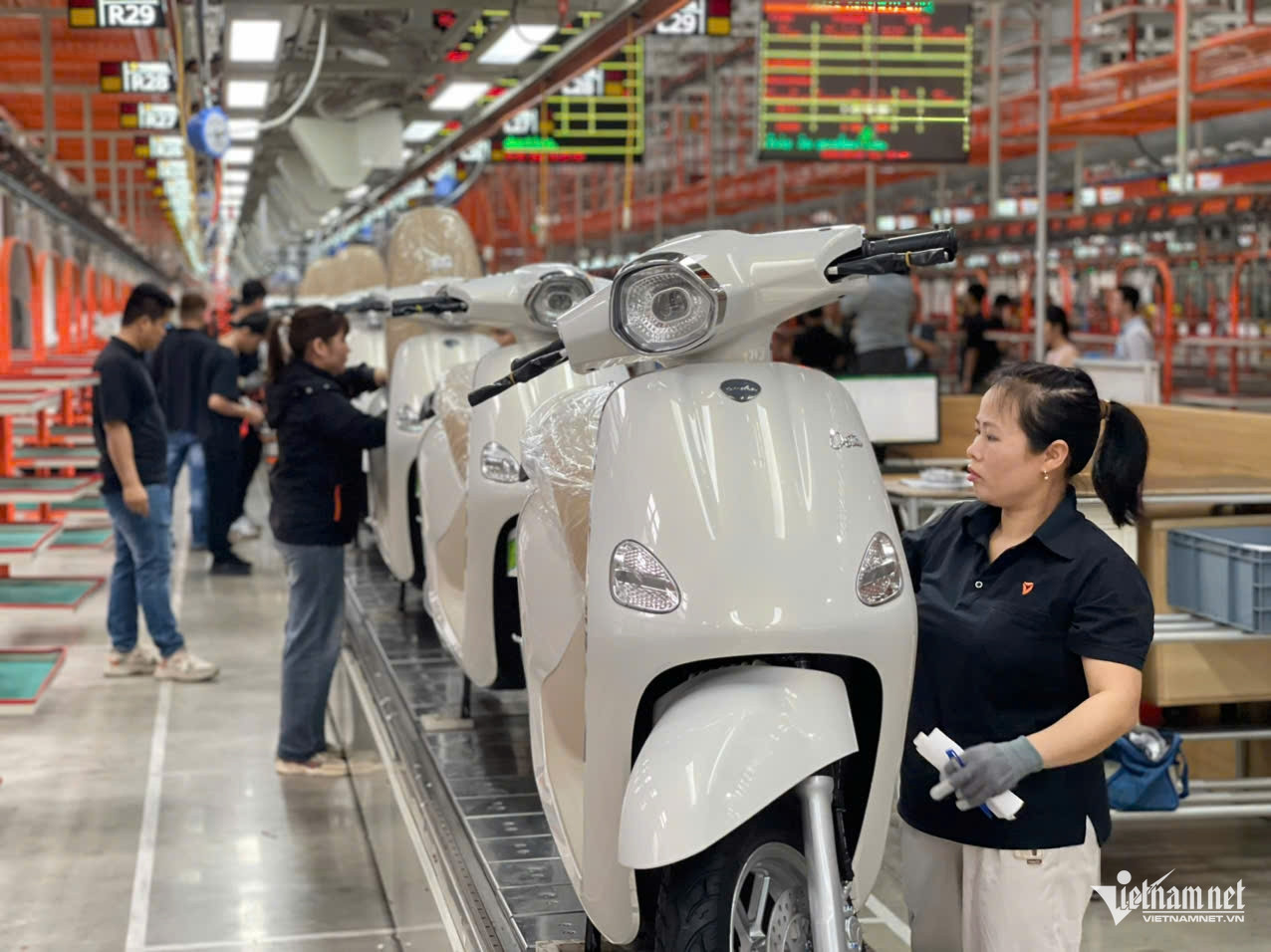
Electric motorbike production at the Yadea factory. Photo: Hoang Hiep.
Vietnam’s motorbike market, particularly the electric segment, has entered 2026 with significant changes as major players begin competing more directly, triggering noticeable shifts in consumer behavior.
A series of new policies encouraging green transportation are also coming into effect, making the race for market share increasingly intense.
Electric motorbike market expected to surge in 2026
In 2025, members of the Vietnam Association of Motorcycle Manufacturers (VAMM) sold approximately 2.6 million motorcycles, down 1.5 percent compared with the previous year.
Honda Vietnam continued to dominate the market with nearly 2.25 million units sold, mostly gasoline-powered models. Although the company introduced several electric models such as ICON:e and CUV e: in 2025, electric vehicles still accounted for only a modest share of its total sales.
By contrast, 2025 marked the beginning of a new growth phase for electric motorbikes.
According to published data, VinFast recorded sales of 406,453 electric motorbikes in 2025, nearly five times higher than in 2024. The figure illustrates an exceptional expansion of the market.
Within that total, the Evo series alone sold more than 250,000 units, accounting for nearly half of the company’s production and highlighting strong demand for compact, affordable models.
Other models including Feliz, Klara, Vento, Vero X and Theon, along with license-free compact models such as Motio, Zgoo and Flazz, also contributed significantly to VinFast’s overall electric motorbike sales in 2025.
Beyond VinFast, many other electric motorbike brands accelerated their expansion throughout the year. Although specific sales figures have not been disclosed, companies such as Yadea, Dat Bike, Pega, Selex Motors and Before All continuously introduced new models while expanding manufacturing, distribution and after-sales networks across the country.
This competition is gradually forming a multi-layered electric vehicle ecosystem within the market.
The year 2026 is widely expected to be a crucial milestone as new green transport policies begin to directly affect users.
In Hanoi, a low-emission zone will take effect within Ring Road 1 starting July 1, restricting or banning gasoline motorbikes during certain hours or in specific areas. The zone will expand to parts of Ring Road 2 from January 1, 2028, and extend to Ring Road 3 by January 1, 2030.
These policies are already influencing consumer behavior. Riders who previously relied on gasoline motorbikes are increasingly considering electric alternatives thanks to affordable prices, lower operating costs and diverse charging or battery-swapping options.
More importantly, some users may be required to adopt electric vehicles in order to continue commuting within certain urban areas.
Many manufacturers have therefore begun launching new electric motorbike models in early 2026 in anticipation of rising demand.
Manufacturers race to capture market share
Speaking with VietNamNet, Nguyen Manh Thang, director of WhatcarVN, said policies encouraging green mobility are the strongest force driving the shift from gasoline-powered vehicles to electric ones.
“This will create a powerful momentum that could cause the electric motorbike market to boom starting in 2026,” Thang said. He added that sales this year are likely to rise sharply, especially in the affordable segment.
He believes the user base for electric motorbikes will expand rapidly beyond students to include adult commuters. In the near future, the market could also see stylish electric models capable of replacing today’s premium scooters.
According to Thang, 2026 may become a decisive turning point because electric motorbikes represent an entirely new market opportunity.
Unlike the gasoline motorbike market, which has remained relatively stable for decades, the electric segment has not yet established a clear hierarchy of market share.
“Whoever moves fastest will likely secure the largest portion,” he said.
Manufacturers have therefore begun positioning themselves early to capture the market. Even companies that dominate the gasoline motorbike sector, such as Honda, are accelerating their transition by introducing electric models in Vietnam to anticipate changing consumer habits.
Thang also highlighted battery-swapping infrastructure as a critical factor for the electric motorbike industry.
Demand varies greatly depending on location. In rural areas, home charging is relatively convenient. However, in urban environments with apartment buildings, dormitories or rental housing, charging can be more challenging. As a result, infrastructure and battery-swapping networks will play a decisive role in determining market share.
“Electric motorbike users prioritize low operating costs, so battery-swapping systems must be flexible, widely available and affordable,” Thang said.
“A well-designed battery-swapping network will determine which brands can accelerate fastest in Vietnam’s electric motorbike race over the next one to three years.”
VinFast currently holds an advantage with about 4,500 battery-swapping stations already deployed and plans to expand to 45,000 battery cabinets early this year.
Meanwhile, Japanese manufacturer Honda is also increasing investment in charging infrastructure through Honda Motor Charger Hub and Honda e:Swap Battery Station systems, which are being installed at authorized HEAD dealerships selling electric motorbikes, initially in major cities.
Yadea is also expanding rapidly. After inaugurating the first phase of its electric motorbike factory in Bac Ninh with a capacity of one million units per year, the company is upgrading charging and battery-swapping facilities across its network of more than 700 dealerships.
The brand has also introduced flexible battery-swapping policies integrated into a smartphone application.
Notably, Yadea has partnered with Grab to strengthen connections between manufacturers, vehicle rental services and charging or battery-swapping operators, aiming to create comprehensive solutions for ride-hailing drivers.
Experts say that fierce competition among VinFast, Honda, Yadea and other companies will not only offer customers more choices but also accelerate price reductions, ecosystem expansion and improvements in after-sales service.
At a broader level, Vietnam’s motorbike market is entering what may be its most significant restructuring phase yet - and the ultimate winners will likely be those who move first.
Hoang Hiep
.svg)
