 Vietnamnet.vn

 Podcast



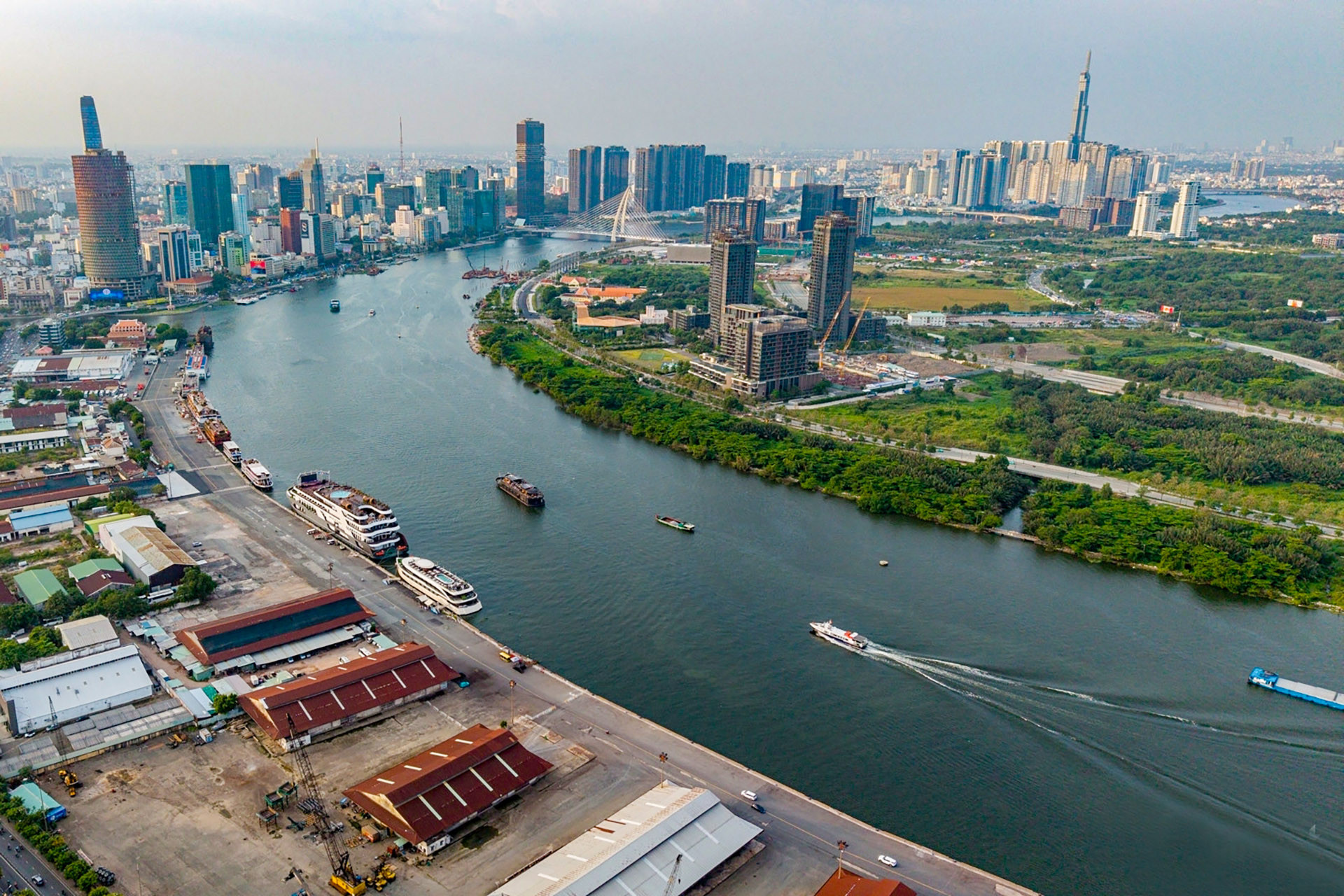
GDP accelerates as public investment enters decisive phase
Vietnam is entering the final quarter of 2026 with strong economic momentum, supported by accelerating growth and encouraging indicators across several key sectors.
Gross domestic product (GDP) expanded 9.95% year-on-year in the third quarter, lifting growth for the first nine months to 9.01%, the highest rate recorded for the corresponding period since 2011.
The performance stands in sharp contrast to the global economic outlook, with worldwide GDP growth projected at just 2.9% for 2026.
Other major economic indicators also point to the country's resilience.
Industrial production increased by more than 12% during the January-September period, while total import-export turnover reached $888 billion.
Registered foreign direct investment (FDI) approached $50.4 billion, and disbursed FDI exceeded $21 billion.
Meanwhile, state budget revenue reached approximately $84.7 billion (VND2.19 quadrillion), equivalent to nearly 90% of the annual target.
Despite these encouraging results, achieving the Government's full-year growth target of at least 10% remains a formidable challenge.
Vietnam's GDP would need to expand by more than 12% in the fourth quarter, requiring a substantial acceleration in the country's main growth drivers.
Against this backdrop, public investment has emerged as one of the most important engines for maintaining economic momentum.
The Government has instructed ministries, agencies and local authorities to make full use of available growth opportunities while working toward disbursing 100% of the annual public investment budget.
By the end of September, public investment disbursement had reached nearly $24.9 billion (VND643 trillion), equivalent to approximately 63% of the allocation assigned by the Prime Minister.
That leaves a considerable amount of funding to be disbursed during the remaining months of the year.
In many localities, the pressure to accelerate disbursement is being passed down to individual agencies, with responsibility increasingly tied to their leaders.
Quang Tri Province, for example, has established specific milestones for October.
The province aims to disburse at least 55% of its allocated capital by October 15 and 65% by October 30.
Projects financed by funds carried over from 2025 to 2026 are required to complete 100% of their disbursement, except in cases of force majeure.
If public investment disbursement accelerates in the fourth quarter, the benefits could extend well beyond the infrastructure projects themselves.
Spending on roads, airports and other infrastructure can generate broader economic activity in construction, steel, cement, transportation, logistics, real estate, tourism and other service industries.
This is why Vietnam's ambition to achieve double-digit GDP growth carries significance beyond the headline figure.
Success would provide greater scope for expanding the country's economic scale and advancing its long-term ambition of joining the world's 30 largest economies.
Which stocks could benefit from faster public investment?
In Vietnam's stock market, the benefits of increased public investment generally spread across sectors in stages rather than appearing simultaneously.
Construction contractors and building-material producers are typically among the first to benefit, followed by logistics companies, property developers and related service businesses.
Transport infrastructure is at the center of the new investment cycle.
Major projects include the North-South Expressway, regional ring roads, Long Thanh International Airport, the North-South high-speed railway, the Hanoi-Quang Ninh metro project and urban metro networks.
Among building-material producers, Hoa Phat Group (HPG) stands out because of its large steel manufacturing capacity and its ability to supply major infrastructure projects.
Faster infrastructure development could generate additional demand for construction steel and other steel products used in large-scale projects.
Recent stock market movements suggest investors are again paying attention to the steel sector.
During the October 5 trading session, HPG shares rose 2.24% to approximately $0.79 (VND20,500) per share.
Several other steel-related stocks, including TLH, VCA, TIS, TVN, NKG and VGS, also recorded gains.
In the real estate sector, the impact of public investment is largely indirect.
Rather than benefiting directly from government spending, property developers stand to gain from improved transport connections and potential increases in land values around new infrastructure.
Vingroup (VIC) and Vinhomes (VHM) are particularly noteworthy because their business ecosystems span several areas related to urban development and infrastructure.
The completion of ring roads, metro systems and other transport links could enhance the value of large-scale residential developments built around improved connectivity.
For Vinhomes, better transport infrastructure could support property sales and strengthen real estate values in major urban projects.
Vingroup, meanwhile, could benefit from the expansion of infrastructure development and growing demand for large-scale investment.
Tourism represents another potential beneficiary of improved infrastructure.
Better road and air transport connections can shorten travel times, make destinations easier to reach and create opportunities to attract more visitors.
Accelerating public investment disbursement in the final quarter, while maintaining construction quality and ensuring efficient use of funds, could also generate additional employment, stimulate production and encourage private investment.
Together with domestic consumption, exports and other growth drivers, public investment is expected to play a significant role in helping Vietnam pursue its double-digit economic growth target for 2026.
Beyond the immediate boost to GDP, effective infrastructure spending could strengthen the country's economic foundations and improve its capacity for growth in the years ahead.
Manh Ha
.svg)
