 Vietnamnet.vn

 Podcast



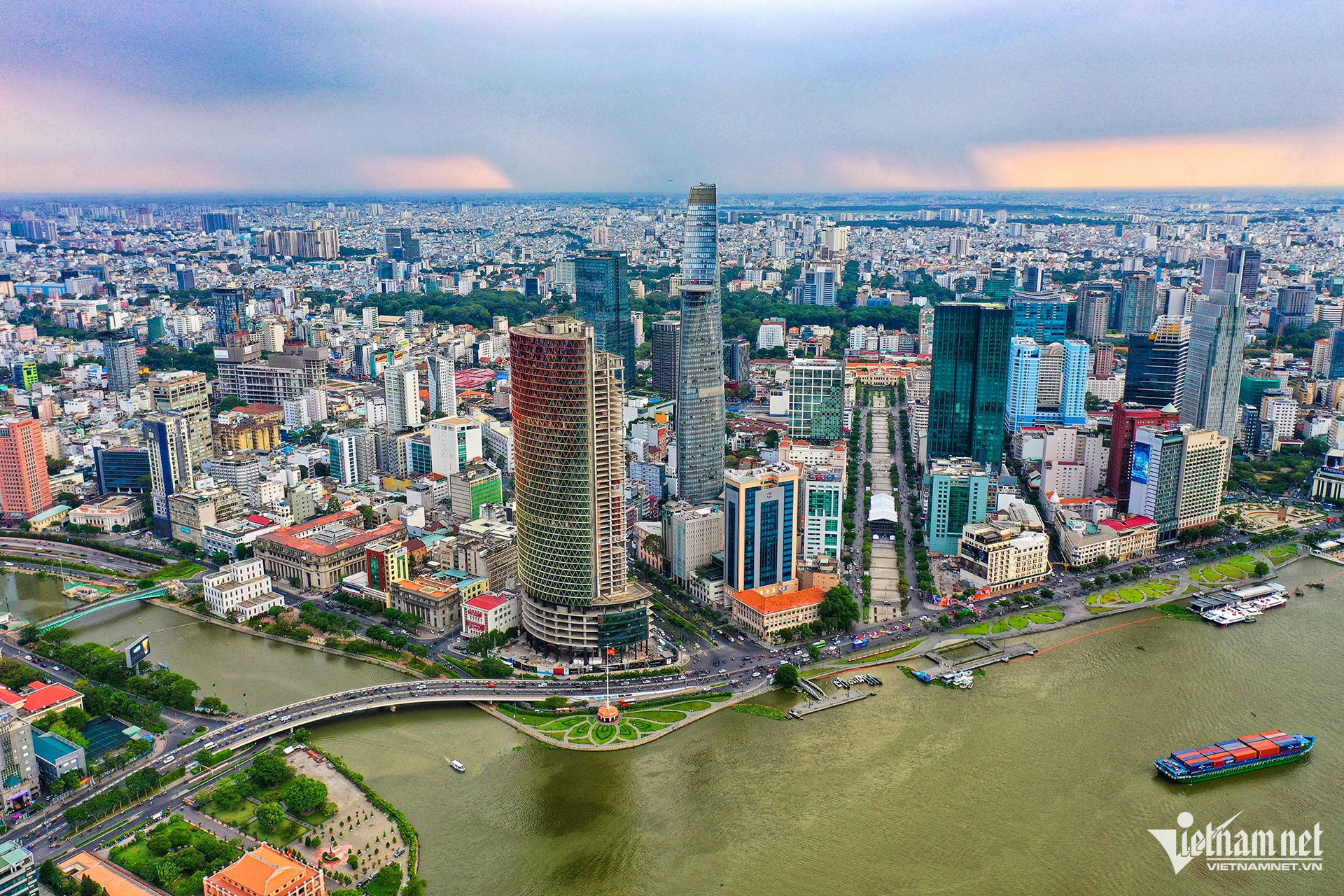
Few would have imagined just over three decades ago that Vietnam, then among the world’s poorest countries, would eventually overtake the Philippines, once regarded as a development model in Southeast Asia.
In 1990, Vietnam’s GDP stood at only around $6.5 billion, close to one-eighth of the Philippines’ roughly $50.5 billion economy. Vietnam’s per capita income was then about $120, only around one-sixth to one-seventh of the Philippines’ level of more than $800.
The gap remained substantial in 2000, when Philippine GDP reached nearly $84 billion, almost three times Vietnam’s figure of more than $31 billion.
From the early 1990s, however, Vietnam began a period of strong growth driven by the Doi Moi reforms, economic opening and deeper international integration.
The gap steadily narrowed until the two economies were almost level in size by 2020.
A turning point came in 2022, when Vietnam’s GDP surpassed that of the Philippines for the first time.
According to IMF estimates, Vietnam’s GDP reached around $514 billion in 2025, compared with approximately $487 billion for the Philippines.
That same year, Vietnam officially entered the World Bank’s upper-middle-income group, with gross national income per capita reaching $4,970, providing a foundation for its ambition to become a high-income country by 2045.
The transformation is even more striking in trade.
While the Philippines was once one of Southeast Asia’s leading exporters, its merchandise exports reached nearly $84.5 billion in 2025, compared with $473 billion for Vietnam.
According to the WTO, Vietnam accounted for around 1.8% of global merchandise exports in 2024, ranking 18th worldwide and second in ASEAN. The Philippines accounted for about 0.3%, ranking 44th.
Notably, Vietnam generates only around 0.5% of global GDP but accounts for nearly 1.8% of the world’s merchandise exports.
The figures underscore how the Vietnamese economy has become an important link in global supply chains and one of the world’s most trade-oriented economies.
Compared with other countries in the region, Vietnam ranked fourth in Southeast Asia by GDP in 2025, with an economy of more than $514 billion and steadily closing the gap with Thailand and Indonesia.
Its GNI per capita ranked sixth in the region and was also approaching Indonesia’s level, at $4,970 compared with $5,120.
Behind that rise has been a series of market-opening reforms, Vietnam’s transition toward a market economy, political stability, strong inflows of foreign direct investment, expansion of manufacturing and processing industries, and one of the world’s broadest networks of free trade agreements.
As multinational corporations restructure their supply chains, Vietnam has also emerged as a new manufacturing hub in Asia.
From upper-middle income toward escaping the middle-income trap
In 2025, the Financial Times observed that, given its current trajectory, a reform-minded government and a dynamic workforce, Vietnam was among the relatively few countries with a chance of escaping the middle-income trap, something many developing economies have struggled to achieve.
After officially entering the upper-middle-income group in 2025, with GNI per capita rising from $4,490 to $4,970, Vietnam has set its sights on becoming a high-income country by 2045.
The road ahead, however, has never been easy.
Economies including Thailand, Brazil, Argentina, South Africa and Malaysia have remained caught in the middle-income trap for decades.
Thailand, once described as a new Asian tiger, has still not entered the high-income group.
In an earlier interview with VietNamNet, economist Le Duy Binh said Vietnam’s institutional and economic reforms had helped the country identify an appropriate growth model, laying the groundwork for subsequent waves of reform.
From an economy operating under a centrally subsidized system, Vietnam gradually shifted toward a market economy while opening both its domestic market and its economy to the world.
According to Binh, this created an important foundation for expanding production, attracting investment and generating momentum for growth.
Alongside market expansion, he said, Vietnam diversified the participants in its economy, creating greater opportunities for the private sector as well as domestic and foreign investors to play a stronger role.
“When there is a market, there will be production, and production will drive investment,” Binh said.
Nguyen Huu Huan, associate professor at the University of Economics Ho Chi Minh City, said Vietnam first needs to continue making breakthroughs in institutional reform, creating a transparent business environment with fair competition, protecting property rights and more effectively unlocking resources across society.
The state, he said, needs to accelerate its shift from a management-oriented mindset toward one focused on enabling development, with businesses and citizens at the center.
Vietnam must also improve labor productivity and the quality of its human resources, focusing on training highly skilled workers in areas such as technology, artificial intelligence, data, semiconductors, logistics, green energy and international management.
Greater priority should be given to higher education, vocational training, applied research and stronger links between educational institutions and businesses.
The trajectories of Vietnam and the Philippines show that an early advantage does not guarantee lasting success.
Thailand’s experience offers another lesson.
In the late 1980s, Thailand recorded annual GDP growth of more than 13% in one year and was regarded as an emerging Asian tiger. Nearly four decades later, however, it has yet to join the high-income group, due to factors including slow productivity growth, an aging population and reliance on industries that have yet to generate sufficiently high added value.
For Vietnam, rapid growth will be necessary to become a high-income country by 2045, but it may not be enough.
To sustain its momentum, the country will need to continue institutional reforms, develop science and technology, raise labor productivity, build globally competitive businesses and maintain macroeconomic stability.
Only by improving the quality of growth alongside its pace can Vietnam avoid the middle-income trap that has held back many economies before it.
Manh Ha
.svg)
