 Vietnamnet.vn

 Podcast



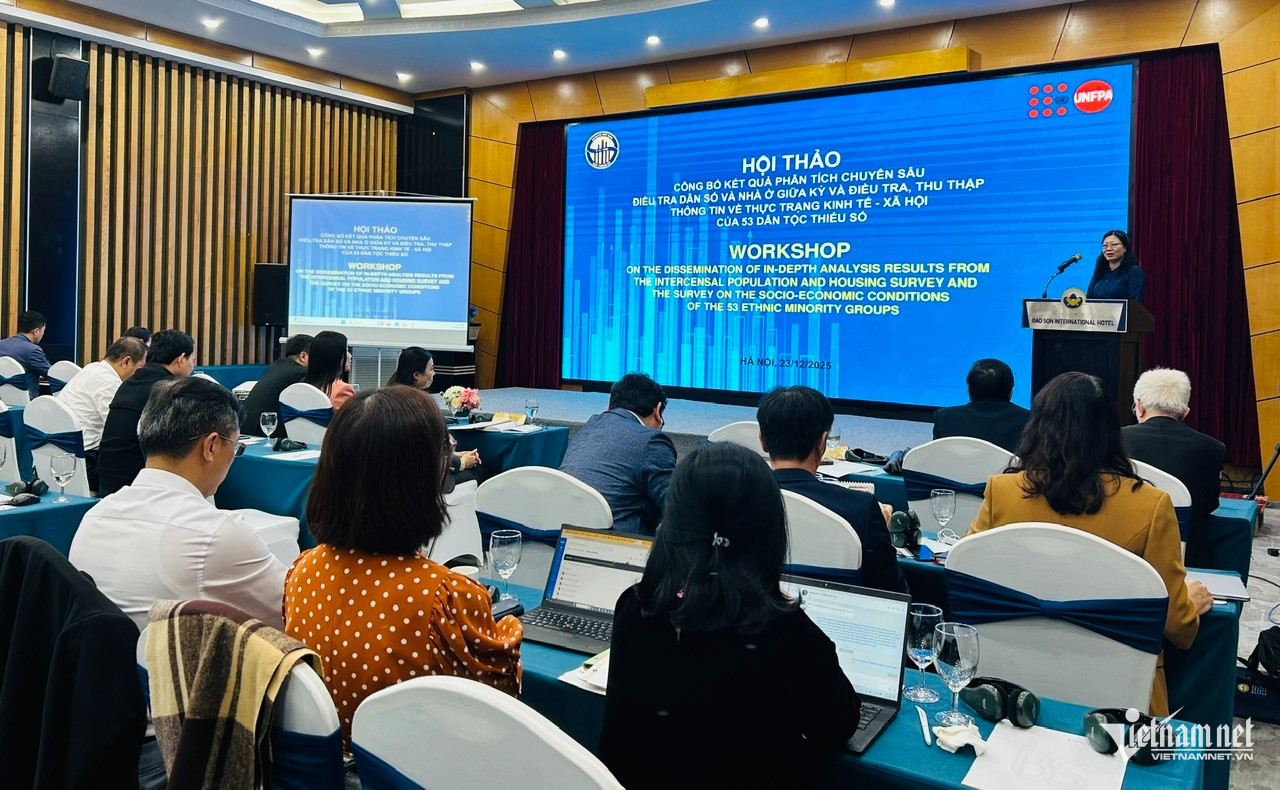
Additionally, prolonged gender imbalance at birth is expected to persist through mid-century, further influencing demographic structure.
Urbanization will continue but at a slower pace as Vietnam’s urban population approaches the 50% threshold.
Internal migration remains a key factor reshaping population distribution among regions, reflecting disparities in socioeconomic development and the capacity of localities to attract and utilize labor.
Deputy Director General of the General Statistics Office, Do Thi Ngoc, emphasized that effectively leveraging the golden population is critical to enhancing economic growth and competitiveness.
She urged stronger investment in skill development for the workforce - particularly digital skills, technical training, and technological adaptability.
Equally important, she said, are efforts to improve job conditions and foster safe, flexible workplaces that retain young workers and strengthen the economy’s resilience.
Another report presented at the workshop, “Socioeconomic characteristics and multidimensional child poverty among ethnic minorities in Vietnam,” provided in-depth insights into living conditions and access to essential social services in ethnic minority communities, focusing on children’s multidimensional poverty.
The third report, “Internal Migration in Vietnam 2009–2024,” analyzed 15 years of internal migration, highlighting patterns, scale, structure, and drivers of movement.
Findings show a sharp decline in internal migration in recent years - from 6.4 million people during 2014–2019 to about 3.8 million in 2019–2024.
Urban-to-urban migration remains dominant, accounting for over 70% of total internal migration. This indicates that most migrants are moving from one urban area to another.
There is also a clear rise in short-distance migration, reflecting people’s desire to stabilize their living conditions and reduce relocation costs.
Notably, while overall migration has decreased, the number of ethnic minority migrants has dropped only slightly, making this group’s share of total migrants rise significantly.
This shift reflects the initial effectiveness of socioeconomic policies in rural areas, suburban zones, and satellite towns in generating jobs.
However, experts stress the need for more flexible, inclusive policies that broaden access to employment and social services at the local level.
Such policies should support short-term and inter-regional migration and implement targeted interventions to ensure ethnic minorities can equitably access essential services during their relocation and resettlement process.
Nguyen Le
.svg)
