 Vietnamnet.vn

 Podcast



Profits recover as HAG invests after years of debt repayments
After more than a decade of restructuring and strenuous efforts to repay debt, Hoang Anh Gia Lai JSC (HAG), chaired by Doan Nguyen Duc, widely known in Vietnam as Bau Duc, is showing notable improvements in both its business performance and financial position.
According to its consolidated financial statements for the first half of 2026, HAG generated revenue of $144.2 million, up slightly from a year earlier. Net profit attributable to the parent company exceeded $81.9 million, a sharp increase from nearly $32.2 million in the same period last year.
Its reviewed interim financial statements put first-half net revenue at $143.2 million, of which fruit sales contributed more than $104.1 million. Fruit remains the company’s main source of revenue, underscoring the importance of bananas and other fruit crops, particularly durian, to its recovery.
Another encouraging development is the substantial reduction in borrowings. At June 30, 2026, HAG had more than $332.3 million in financial debt, well below approximately $1.08 billion in 2018. Nevertheless, the remaining debt is substantial at a time of high market interest rates.
Against that backdrop, Duc is continuing to expand investment, adding coffee as a new focus alongside bananas and durian.
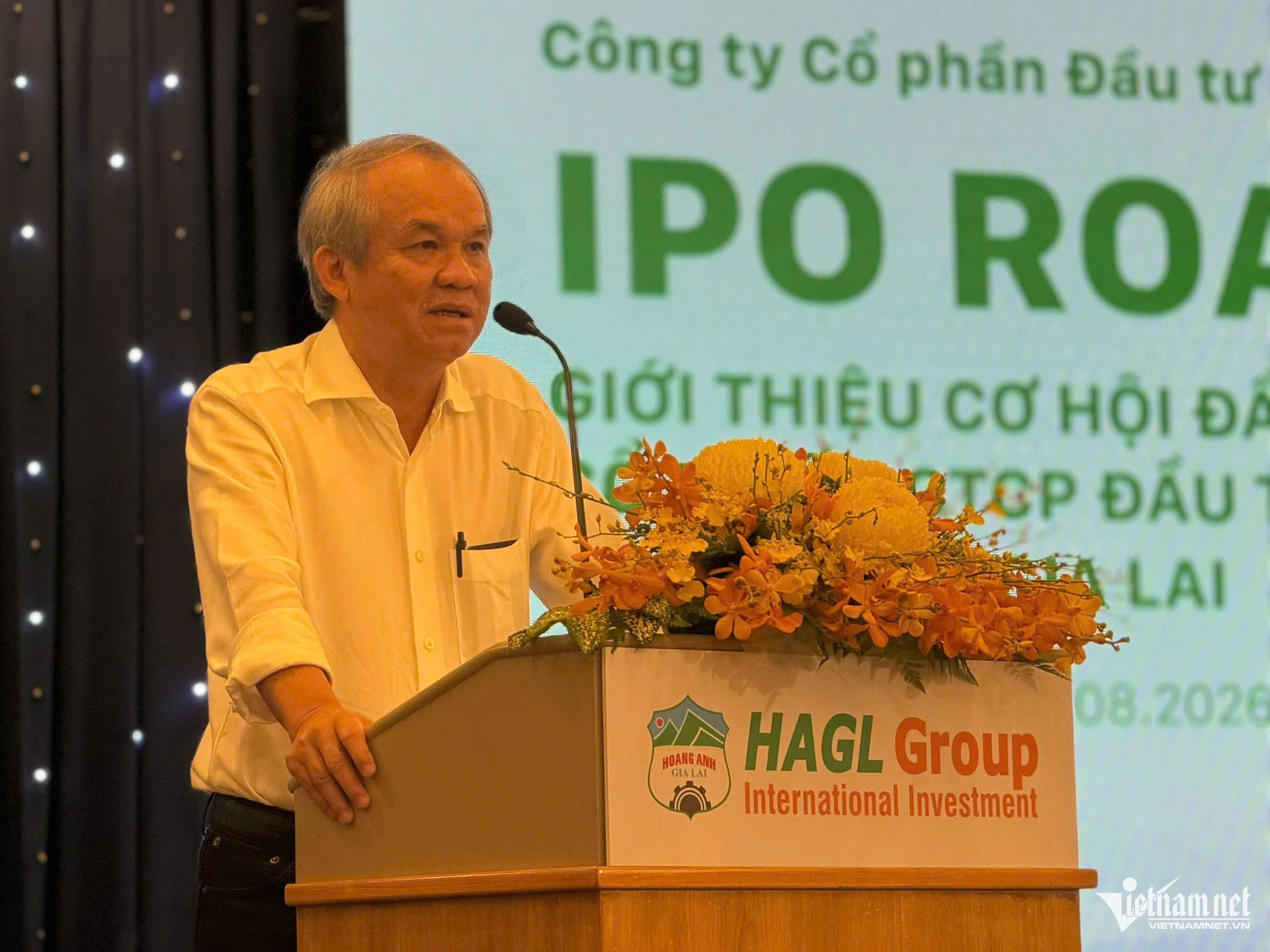
Speaking at an event presenting investment opportunities in HGI shares on August 18, Duc acknowledged that the business had lacked sufficient capital to develop coffee plantations two or three years earlier. He expects coffee to become HGI’s largest revenue contributor within the next two years, followed by durian and bananas.
At the 2026 Vietnam-Laos Investment Promotion Conference in Vientiane, a project to develop coffee plantations and build a processing plant in Savannakhet province received an outward investment registration certificate. With total investment exceeding $29.2 million, the project envisages 2,083 hectares of coffee in Nong district and a processing plant with a designed annual capacity of 9,470 tonnes.
HAG also aims to expand its coffee acreage to 20,000 hectares by 2028. The company said it developed around 3,000 hectares in 2025, plans to plant another 7,000 hectares in 2026 and intends to add approximately 5,000 hectares annually over the following two years.
Its plans for 2026-2028 require an estimated $549.5 million. HAG expects to raise the money through several sources, including bonds, retained earnings and other fundraising initiatives.
On the sales side, Hoang Anh Gia Lai International Investment JSC (HGI) has signed a memorandum of understanding for long-term cooperation with Shanghai-based MQ Coffee. HGI aims to supply 1,000 tonnes of green Arabica coffee beans in 2026 before increasing deliveries to 5,000 tonnes annually, with supplies expected to come from its growing areas in Laos.
These moves suggest Duc is returning to large-scale agricultural investment, this time with improved finances and a clearer focus on core production activities.
From a rubber gamble to a business revival
HAG’s recovery cannot be separated from the crisis that once brought it close to bankruptcy.
Around 15 to 20 years ago, Hoang Anh Gia Lai was one of Vietnam’s prominent private conglomerates, with interests spanning timber, property, hydropower and agriculture. Duc was known for bold investment decisions and a willingness to commit large sums to opportunities he believed would deliver a future advantage.
Yet that ambition to expand rapidly may also have come at a heavy cost.
Expecting rubber prices to remain high, HAG invested in extensive rubber and oil palm plantations, using borrowed money to fund projects that would take years to generate cash. The market moved against it. Rubber prices plunged, long-term investments failed to deliver commensurate revenue, and interest costs continued to weigh on the company.
By the end of 2016, HAG’s total liabilities exceeded $1.39 billion. These included nearly $200.9 million in short-term borrowings and more than $828.5 million in long-term borrowings. At times, the company faced severe liquidity pressure. Duc has recalled periods when it lacked enough money to pay employees.
The mistake was not simply choosing rubber or oil palm. The larger problem was committing too many resources to a single market scenario, relying heavily on debt and accepting long payback periods while having limited capacity to withstand adverse conditions.
When the crisis struck, Duc had to confront reality and accept painful decisions. HAG sold most of its stake in HAGL Agrico, scaled back numerous operations, disposed of assets and restructured businesses that no longer matched its financial capacity. Property developments, hydropower projects, hotels and hospitals that had once symbolised the group’s ambitions were also restructured or sold.
Cooperation with Thaco during the agricultural restructuring marked an important turning point. Rather than trying to preserve a diversified empire at any cost, Duc accepted a smaller operating footprint, shared resources and concentrated on the core businesses still capable of generating cash.
Notably, he did not abandon agriculture after the rubber setback. Instead, he chose to rebuild around crops and business models whose revenue potential better matched funding requirements, harvest cycles and market conditions.
Bananas became a mainstay capable of generating revenue relatively quickly. Durian offered room for growth as more plantations entered substantial production. Coffee was added as a longer-term investment, while pig farming and related activities had also helped diversify revenue.
At a conference on coffee development strategy on March 16, 2026, Duc said his successes and failures had made him more careful about investment decisions.
“I am a very stubborn person, someone who took reckless risks. But let me tell you, I no longer dare to do that,” he said.
Duc’s ability to recognise opportunities, make decisions and persist in pursuing his goals can be seen as strengths. But HAG’s experience also shows that market vision is not enough without financial discipline, risk management and sound capital allocation.
Agriculture, meanwhile, remains far from a low-risk business. Banana, durian and coffee prices fluctuate. Weather, pests and diseases, product quality, export standards and demand in destination markets can all directly affect profits.
The coffee expansion requires substantial funding, while the company still carries more than $332.3 million in financial debt and faces considerable investment needs in the coming years.
A sharp rise in profit therefore does not necessarily mean HAG has fully regained its financial health. The more important question is whether it can maintain steady cash flow, make lasting reductions in debt and generate sustainable profits across market cycles.
For Duc, the hardest challenge may be more than reclaiming the standing of an entrepreneur who once reached the top. It is also proving that, after those setbacks, he has learned how to build a more sustainable business.
HAG has an opportunity to recover. Its ultimate success will depend on whether it can turn the costly lessons of the past into management principles for the future.
Manh Ha
.svg)
