 Vietnamnet.vn

 Podcast



Surging housing prices have made it increasingly difficult for the average buyer to access the real estate market. While supply continues to rise rapidly, buyer interest is waning, raising the risk of an oversupply crisis.
Rising supply amid declining demand
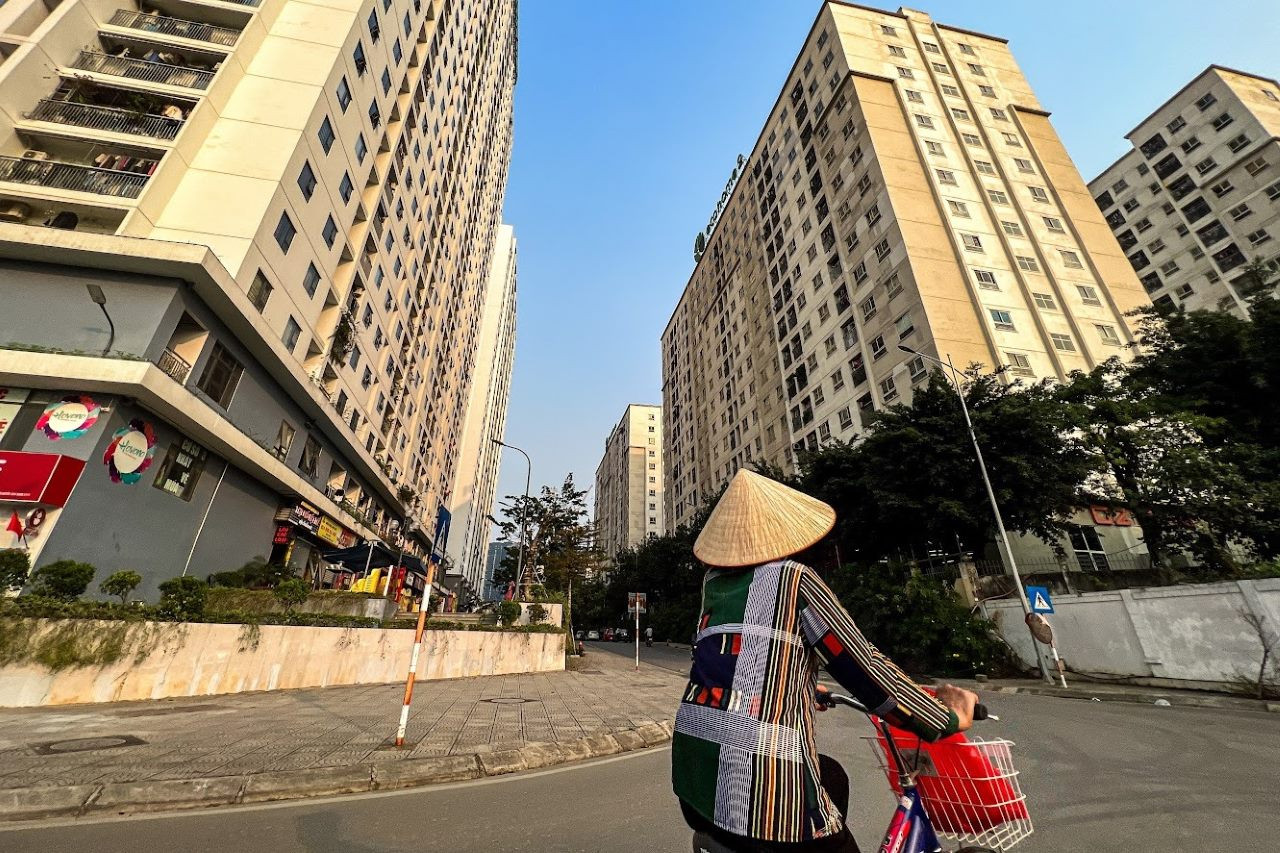
More housing options are needed to match the financial capacity of most citizens.
In the first half of 2025, Hanoi added 21,951 new housing units approved for sale, nearly 75% of which were condominiums. In Ho Chi Minh City (formerly), CBRE reported that 1,400 condos and 132 low-rise homes were newly launched, with about 1,000 condos and 74 low-rise units launched in Q2 alone.
Despite this growing inventory, interest in housing has declined. According to CBRE Vietnam, new supply in Ho Chi Minh City for the second half of 2025 is expected to remain limited, with only 6,000 apartments and 800 low-rise homes projected.
The primary market price for apartments reached 82 million VND per square meter (approx. USD 3,230) in Q2, up 7% from the previous quarter and 29% year-on-year.
Most new launches came from ongoing phases of previously launched projects, with price increases of 10%-13% from earlier phases.
Despite the price hike, the absorption rate of newly launched apartments in the first half dropped to 74%, down from 86% in the same period last year.
To boost sales, developers offered incentives such as discounts ranging from 9%-16%, mortgage grace periods up to 10 years, and interior furnishing packages.
The recent merger of Binh Duong and Ba Ria - Vung Tau with Ho Chi Minh City is expected to ease home prices by expanding land supply.
However, some experts predict the opposite: property prices in these areas could soar due to the prestige of being part of a "mega city."
Independent real estate expert Tran Khanh Quang noted that the merger positively influences buyer psychology in Binh Duong and Ba Ria - Vung Tau. Bordering areas like Di An and Thuan An could see a 15% short-term price increase due to favorable locations and growing population demand. Binh Duong continues to cater to mid-range apartments for young workers.
Echoing this view, Duong Thuy Dung emphasized that land expansion could drive the growth of satellite cities, spurring demand for higher-quality housing. This would raise home prices in areas like Binh Duong and Ba Ria - Vung Tau as demand grows for modern living standards and amenities.
In Hanoi, Savills estimates that 25,200 new condominiums will be launched this year, with another 70,000 units from 91 projects expected from 2026 onward, primarily in suburban districts like Dong Anh, Hoai Duc, and Hoang Mai (formerly).
Despite abundant supply, home prices in Hanoi continue to rise. Savills reported that the average condo price last year reached 75 million VND/m² (approx. USD 2,955), up 9% quarter-on-quarter and 29% year-on-year. By the end of Q1/2025, prices had climbed to 79 million VND/m² (approx. USD 3,110).
Nguyen Quoc Anh, Deputy CEO of Batdongsan, noted a more than 30% drop in property interest in Hanoi in May and June compared to March. In provinces that previously experienced price surges due to merger rumors, interest has also declined by 36%.
Risk of oversupply looms
Social housing (NOXH) is witnessing a revival, with numerous projects under development. The Ministry of Construction forecasts that Hanoi will exceed its target with over 4,700 units from six NOXH projects, including a 1,980-unit development in Bo De Ward (formerly), with 600 units scheduled for completion this year and full completion by Q4/2027.
However, prices for social housing are also rising. Once capped below 20 million VND/m² (approx. USD 785), many new projects now range between 25-27 million VND/m² (USD 980-1,060). For example, the Kim Hoa project in Me Linh (formerly), 30 km from downtown Hanoi, is expected to cost over 20 million VND/m².
According to the Housing and Real Estate Market Management Department (Ministry of Construction), this price increase is driven by infrastructure and land clearance costs.
Many developers bear the cost of compensation, resettlement, and infrastructure, which are factored into sale prices. Rising construction material and labor costs also contribute to the increase.
Notably, Decree 192, effective July 1, allows developers to set social housing prices without prior approval from local construction authorities, raising concerns about possible price inflation and accessibility issues.
Nguyen Trung Vu, Chairman of Cen Group, explained that in the past decade, a severe shortage of housing supply, particularly in the condominium segment, has led to spiraling prices.
He cited a project on Lang Ha Street in Hanoi that maintained a price of 40 million VND/m² (approx. USD 1,575) for many years, which has now soared to over 100 million VND/m² (approx. USD 3,940) due to supply constraints.
Vu warned that persistent price hikes amid oversupply could lead to market illiquidity, making it harder for young buyers to afford homes. He pointed to ghost cities in China and Vietnam as cautionary tales of overbuilt but uninhabited developments.
Nguyen Van Dinh, Chairman of the Vietnam Association of Realtors (VARS), criticized the current market quality, calling it easily manipulated and prone to speculative bubbles. Poor planning and abandoned urban zones further waste resources while driving prices out of reach for genuine buyers.
Dr. Truong Anh Tuan, Vice Chairman of the Vietnam Real Estate Association, said the key solution is to increase supply of affordable housing. To meet urgent demand from middle- and low-income urban residents, the government should implement strong, timely policies to promote low-cost housing development and encourage reasonably priced rental housing.
Cen Group Chairman Nguyen Trung Vu cautioned that unchecked mega-project expansion may flood the market. In the past, projects of a few hundred hectares were considered large, but today, giant urban zones spanning several thousand hectares are becoming common, shifting the competitive landscape and concentrating power in the hands of large developers.
PV
.svg)
