 Vietnamnet.vn

 Podcast



On October 12, the Vietnamese government issued Resolution 325/NQ-CP introducing a pilot visa exemption for Chinese citizens holding ordinary passports who travel to Vietnam on group tours, as part of the Vietnam-China Tourism Cooperation Year 2026-2027.
The policy runs until December 31, 2027, and applies to groups of at least two people taking package tours organized by Vietnamese travel companies, for stays of up to 30 days. Visitors must hold valid passports; Hong Kong and Macau passports are excluded.
Travel is restricted to Khanh Hoa province. Visitors must fly directly from China to Cam Ranh International Airport and enter and leave Vietnam through that airport. Khanh Hoa was once a favorite destination among Chinese travelers.
Thai Thi Le Hang, a member of the provincial Party Committee and director of Khanh Hoa’s Department of Culture, Sports and Tourism, spoke to VietNamNet about the challenges and preparations involved in reviving this key market.

How does the visa exemption change the outlook for Chinese tourism in Khanh Hoa?
Before COVID-19, China was Khanh Hoa’s largest international source market, with more than 2.5 million arrivals in 2019, accounting for 70% of all international visitors.
The market has recovered slowly since the pandemic. Chinese arrivals reached nearly 797,000 in 2024 before falling to 677,000 in 2025. In the first nine months of 2026, arrivals were estimated at more than 469,000, down over 6.48% year on year. China now ranks behind South Korea and Russia.
The main reasons include changing travel habits, with visitors moving from group tours toward independent travel and more varied experiences, competition from destinations with more favorable visa policies, and difficulties with air connectivity.
The visa exemption under Resolution 325/NQ-CP, effective from October 12, 2026, through December 31, 2027, marks a breakthrough. It covers groups of at least two people flying directly to Cam Ranh and staying in Khanh Hoa for up to 30 days. We expect it to encourage a stronger return of Chinese visitors in the closing months of 2026 and throughout 2027.
What specific preparations and plans has the province made to attract Chinese visitors back after the disruption?
The province and its tourism sector have introduced a coordinated range of measures to bring Chinese visitors back. In 2026, we have organized familiarization trips for airlines and travel companies to explore tourism products, alongside business-to-business networking events. These activities will continue to expand.
Under our 2026-2030 plan, we are focusing on rebuilding, sustaining and expanding the market. This includes strengthening connections with major Chinese cities such as Beijing, Shanghai, Changzhou, Nanning, Guiyang, Wuhan, Xiamen, Ningbo and Quanzhou, while broadening our network of airlines and partners. We are prioritizing higher-value tourism and more effectively reaching independent travelers, families, younger visitors and high-spending guests.
The province is also working to make greater use of domestic air routes and charter flights, strengthen cooperation with airlines, travel companies and online travel platforms, and refine incentive policies. Digital tourism promotion, including outreach through Chinese social media and online platforms, is also being stepped up.
We are developing products that reflect emerging trends, including luxury resorts, family holidays, wellness, golf, meetings, incentives, conferences and exhibitions (MICE), dining, shopping and nighttime activities. At the same time, we are strengthening environmental management and improving service quality to build Khanh Hoa’s reputation as a safe, welcoming and attractive destination.
What promotional offers are being planned to attract Chinese visitors?
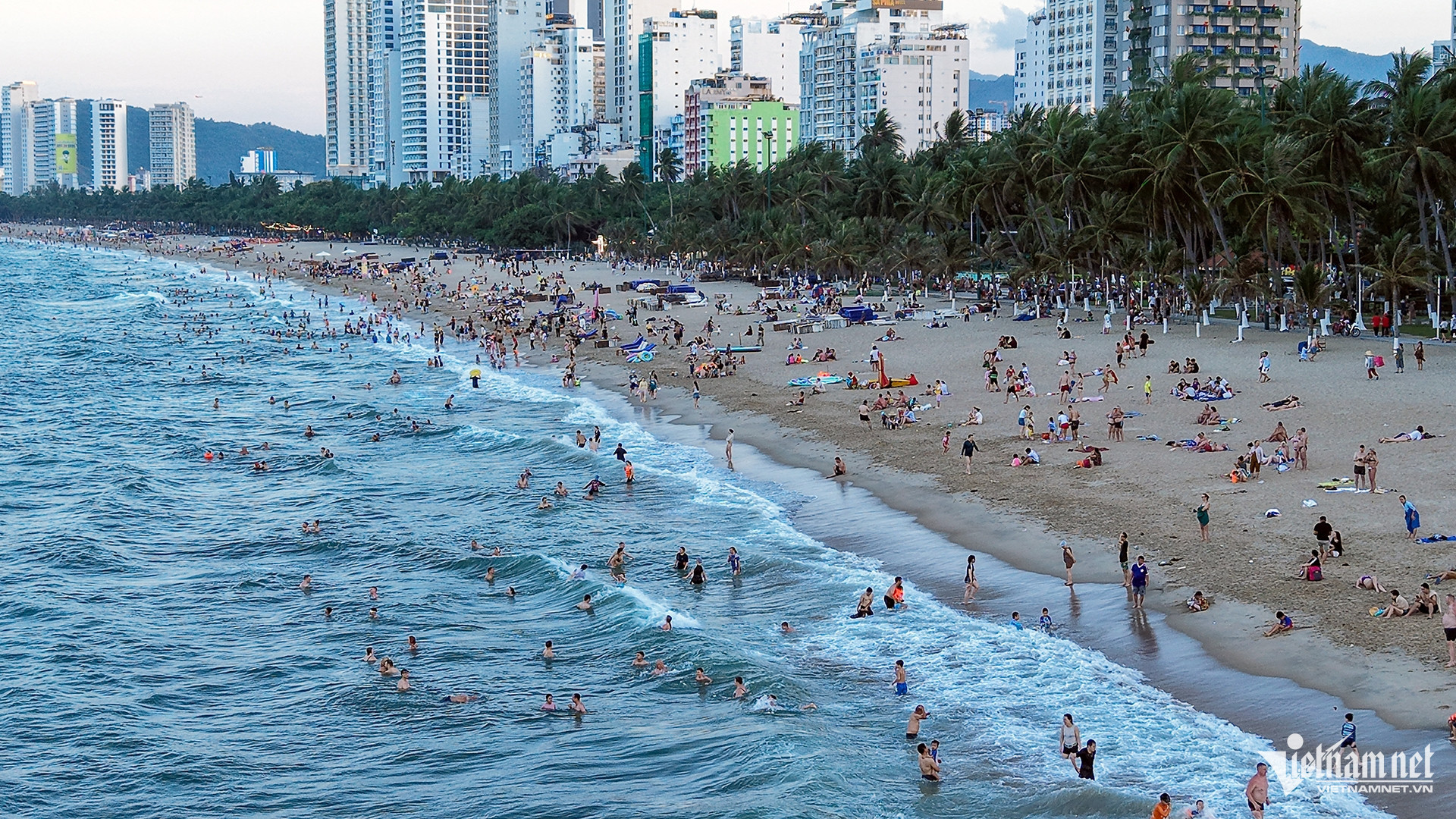
We are working closely with the Tourism Association, travel companies, hotels and airlines to develop packages specifically for the Chinese market. Proposed offers include discounts on package tours; accommodation combined with experiences involving beaches and islands, Cham culture, food and entertainment; incentives for travel agents; and gifts and complimentary experiences at destinations.
We are also drawing on major provincial events, including the Sea Festival and cultural and sporting festivals, to give visitors more reasons to come. The new visa exemption will be incorporated into tourism packages to make them more competitive. Programs will be announced and introduced in stages, particularly in the fourth quarter of 2026 and during 2027.
Which tourism businesses, hotels and airlines does Khanh Hoa plan to work with to increase Chinese arrivals?
Khanh Hoa maintains close cooperation with the provincial Investment, Trade and Tourism Promotion Center, industry associations and businesses to expand connections with Chinese airlines such as 9 Air, West Air and Spring Airlines, while developing suitable tourism packages.
The department is also establishing criteria to assess travel companies’ capacity and building linked service networks covering flights, tour operations, accommodation and visitor experiences. These efforts will help increase arrivals while improving service quality.
Visitor safety is another major priority. We are coordinating security measures and disease prevention, improving staff skills, and applying digital technology to management and communications to create an environment visitors can trust and encourage Chinese travelers to return.
How have Chinese visitors’ needs and preferences changed, and is Khanh Hoa adapting its tourism products accordingly?
There have been clear changes in the needs and preferences of Chinese visitors returning to Khanh Hoa. Younger travelers are moving away from low-cost group tours toward independent travel and smaller groups. They place greater emphasis on personal experiences and sharing them on social media, and are interested in wellness, shopping, culture and safety.
Previously, our tourism products centered largely on beach holidays and did not fully meet these emerging preferences. We are therefore diversifying our offerings through nighttime activities, Cham and Raglai cultural tourism, community-based tourism, wellness, premium entertainment, shopping and ecotourism. Businesses are encouraged to design flexible products for both group and independent travelers, while expanding digital promotion on Chinese platforms.
What is the outlook for Chinese arrivals, what will determine the pace of recovery, and what is the province’s long-term vision for this market of more than one billion people?
Provincial authorities forecast a positive recovery in the Chinese market from the fourth quarter of 2026 and through 2027, supported by the new visa exemption, stronger promotional efforts and improved air connectivity.
However, the pace of recovery will depend on how quickly direct flights expand, how well tourism products match changing preferences, regional competition, and economic conditions and consumer sentiment in China.
In terms of infrastructure, Khanh Hoa is ready, with more than 70,500 hotel rooms. Over 40% are in the three- to five-star segment, which includes many established international brands. Plans are being drawn up to expand Cam Ranh International Airport’s capacity to around 19 million passengers annually by 2030.
Meanwhile, services, entertainment facilities and tourism products are becoming increasingly diverse. The province continues to invest in quality improvements so it can accommodate returning visitors sustainably.
Our long-term vision is to develop the Chinese market around quality, sustainability and higher value, rather than simply pursuing visitor numbers. Khanh Hoa aims to diversify its visitor segments, align its efforts closely with the Vietnam-China Tourism Cooperation Year, and build lasting partnerships so it can become a preferred destination for Chinese travelers in Vietnam and the wider region.
Xuan Ngoc
.svg)
