 Vietnamnet.vn

 Podcast



Vu Mung
More than scenic landmarks, they are vital lifelines for communities facing harsh dry seasons.
Scattered across the Dong Van Karst Plateau, these mountainside reservoirs provide precious water reserves in a landscape where much of the rainfall disappears through porous limestone.
They collect water during the rainy season, helping local communities survive months of drought when natural water sources become scarce.
Yet despite years of investment in water storage infrastructure, ensuring a reliable year-round supply remains a major challenge.
Nguyen Van Dung, Director of the Tuyen Quang provincial Department of Ethnic and Religious Affairs, said addressing seasonal water shortages requires more than constructing new reservoirs.
Authorities must also reassess how effectively existing water supply facilities are managed and operated, while updating assessments of local demand to identify the most suitable solutions for water collection, storage and distribution.
According to Dung, water supply planning must take into account the region's scattered settlements, population growth and expanding tourism industry.
For the Dong Van Karst Plateau in particular, provincial authorities have proposed bringing together government agencies, irrigation specialists, scientific institutions and the Dong Van Karst Plateau UNESCO Global Geopark Management Board.
Their task would be to jointly assess geological conditions and water resources, helping identify sustainable solutions to the plateau's long-term water security challenges.
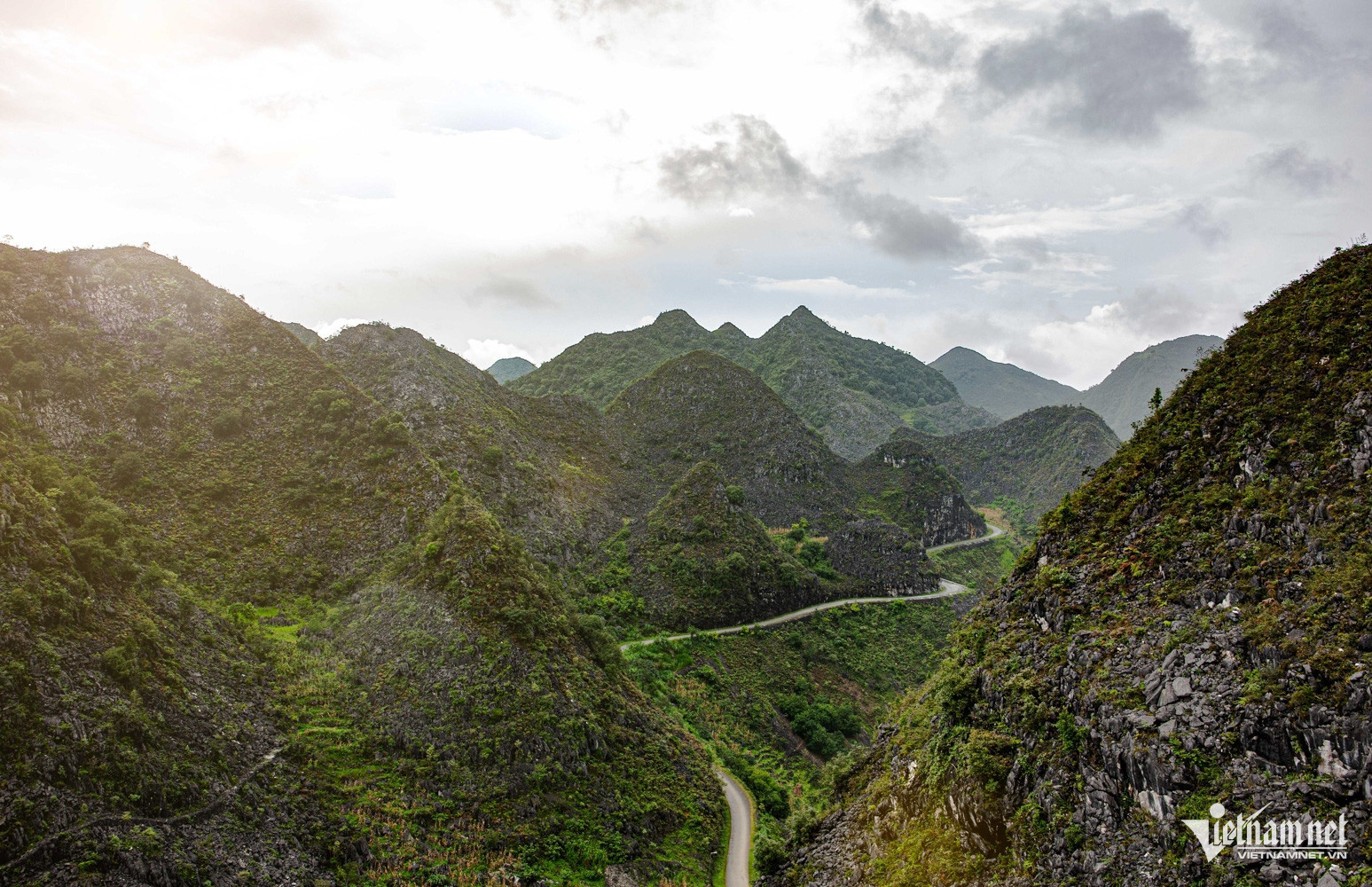
The Dong Van Karst Plateau, also known as the Dong Van Plateau, stretches across the four former districts of Quan Ba, Yen Minh, Dong Van and Meo Vac in what was previously Ha Giang Province, now part of Tuyen Quang Province.
Covering approximately 2,356.8 square kilometers at an average elevation of 1,000-1,600 meters above sea level, the region is dominated by limestone mountains and rugged, deeply dissected terrain.
Its climate has two distinct seasons: a rainy season from May to October and a cold, dry season from November to April.
Although annual rainfall averages around 1,198-1,235mm, the porous limestone makes it difficult to retain water, leaving many communities facing recurring shortages during the dry months.
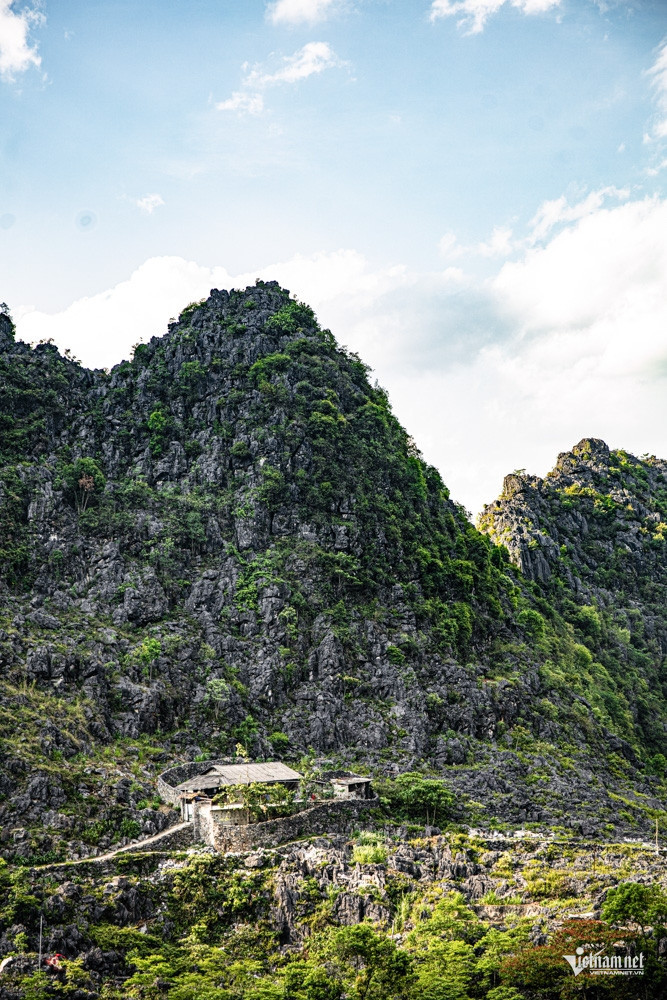

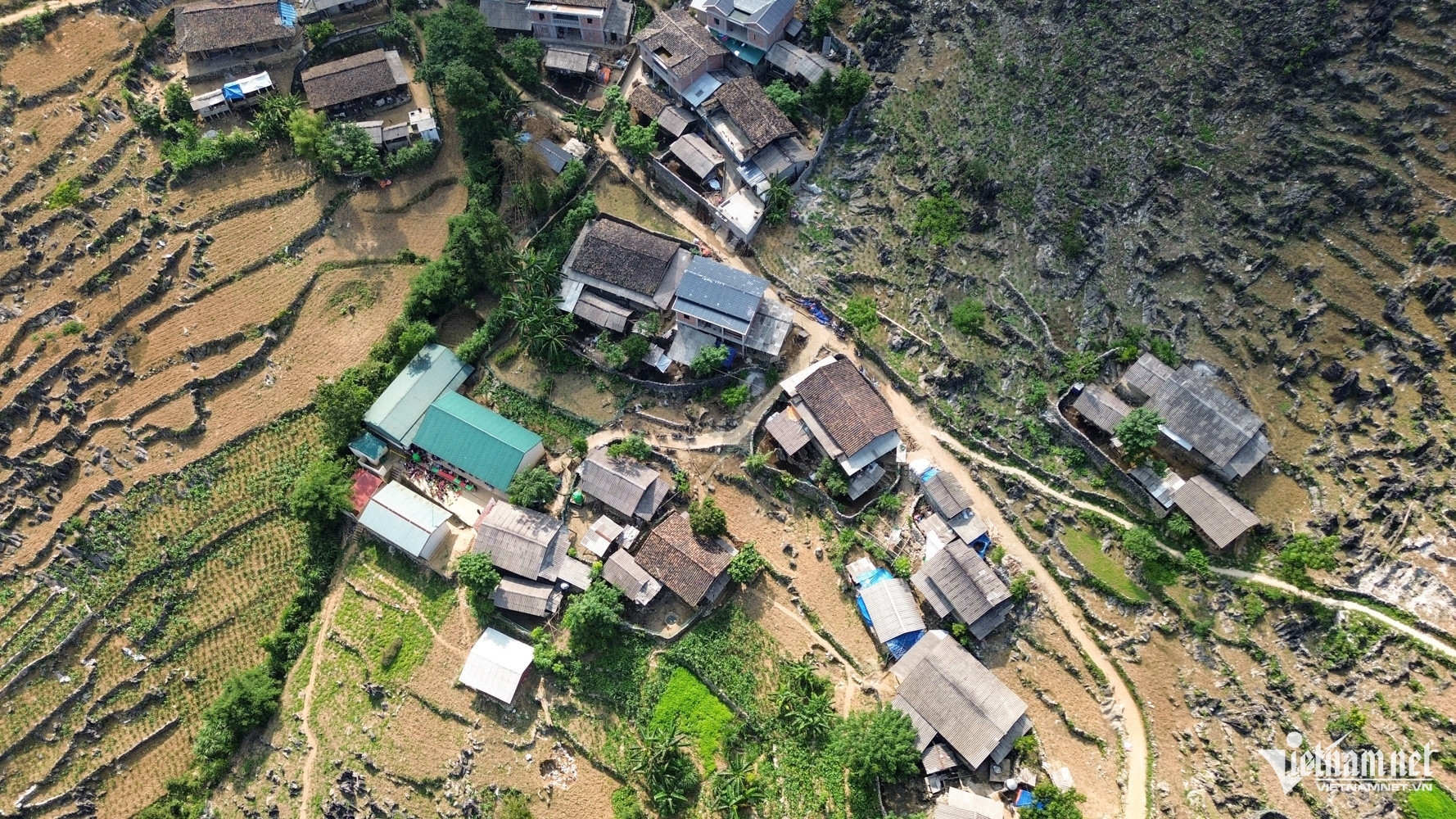

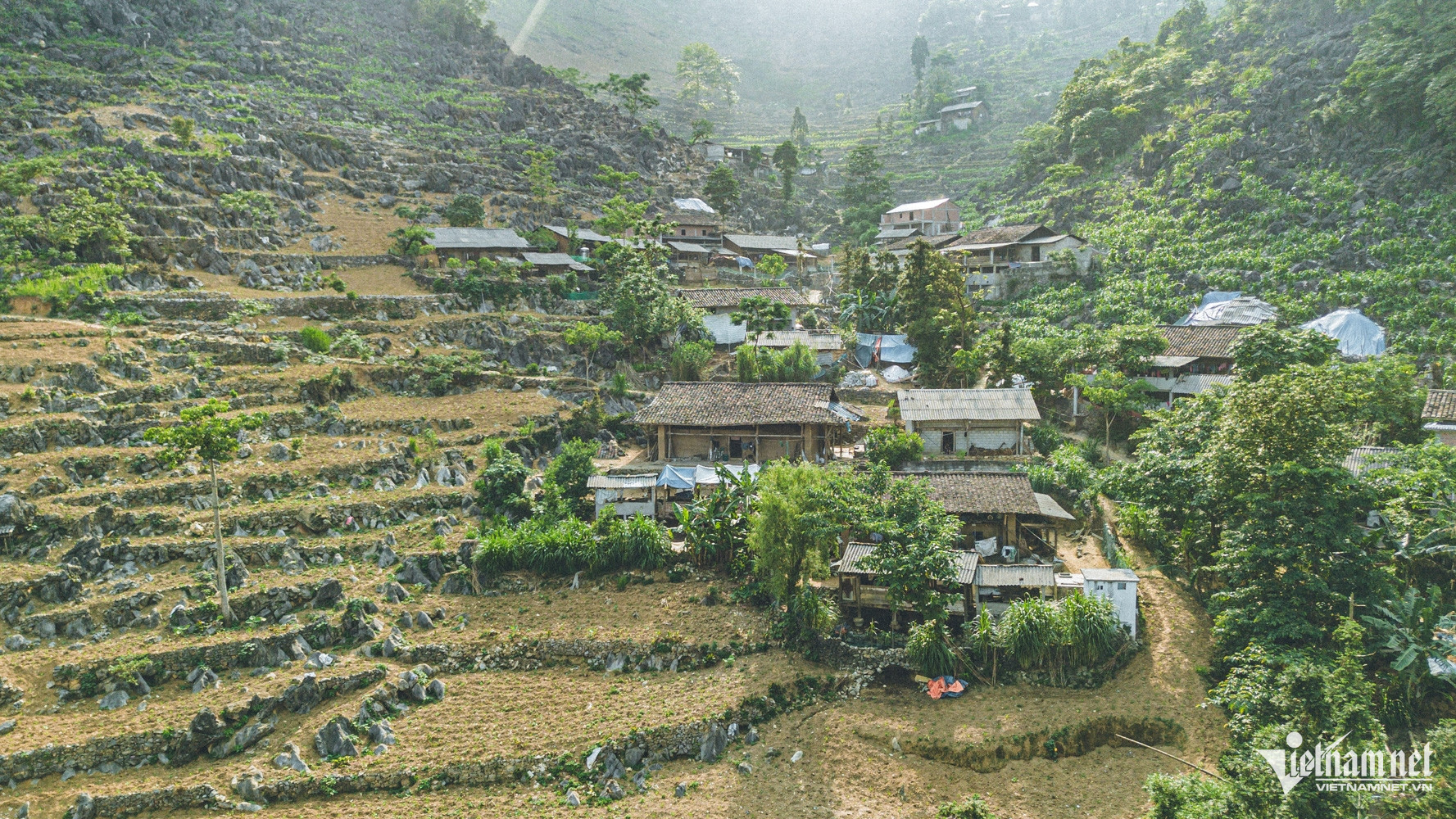
More than 250,000 people from 17 ethnic groups live on the Dong Van Karst Plateau.
The Mong are the largest ethnic community, alongside the Dao, Giay, Nung, Tay, Bo Y, Lo Lo and others.
The region has an average population density of approximately 75 people per square kilometer.
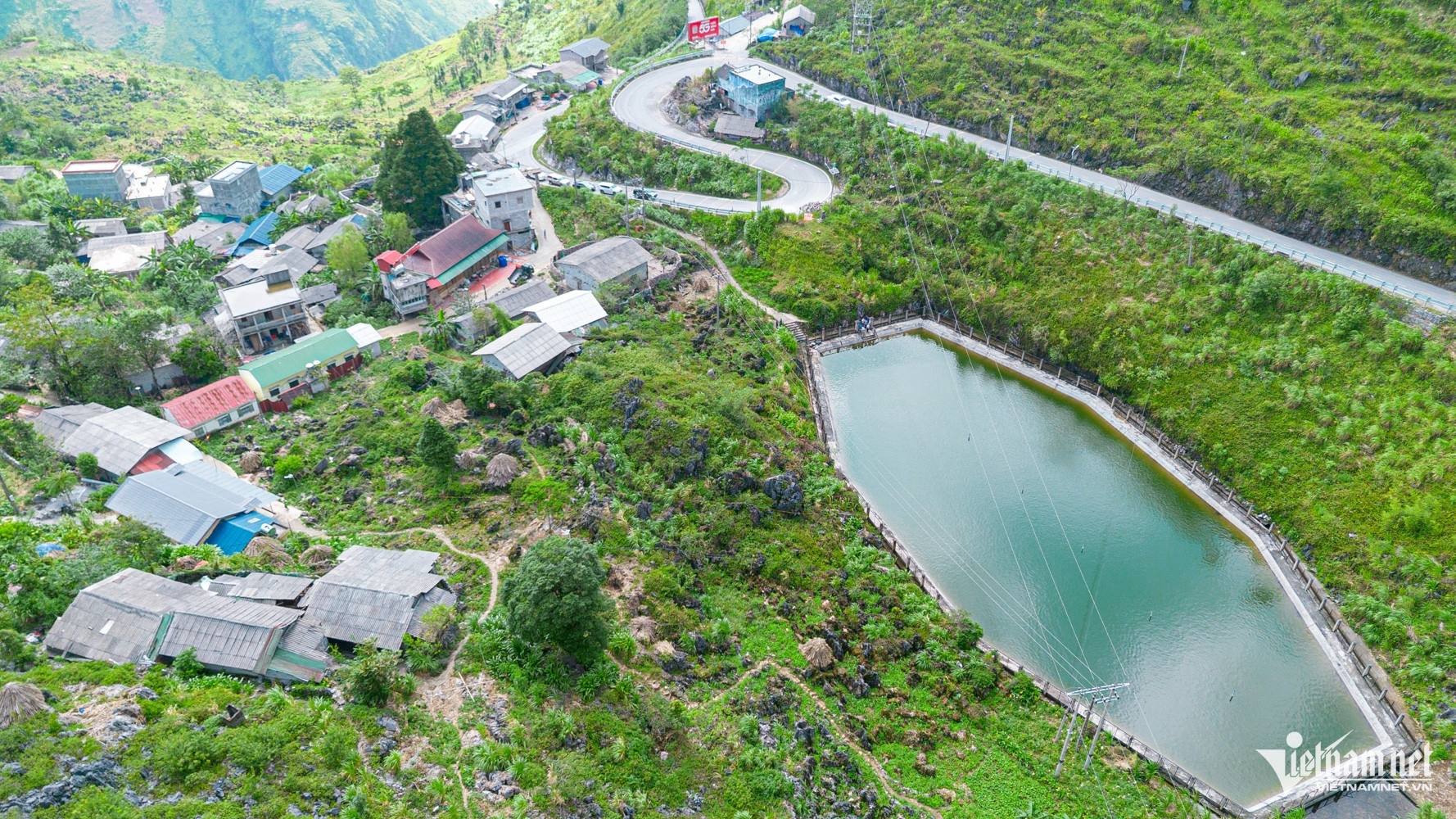
With natural water sources scarce, mountainside reservoirs built in locations suitable for water collection have become essential storage facilities.
During the rainy season, they capture and retain water for use during the dry months, supplying households, livestock and agricultural activities.

The first mountainside reservoir project was launched in 2002 in Sa Phin Commune.
From that initial facility, the reservoir network gradually expanded across the Dong Van Karst Plateau.
Today, the region has 121 reservoirs, providing additional water storage capacity for numerous residential communities.

Reservoirs on the Dong Van Karst Plateau typically hold between 2,500 and 5,000 cubic meters of water, enough to serve approximately 150-300 households.
To prevent water from escaping through the limestone, reservoir walls and floors are generally constructed from concrete or reinforced concrete.
Water is collected from small natural springs or specially constructed catchment systems before being conveyed into the reservoirs through pipelines.
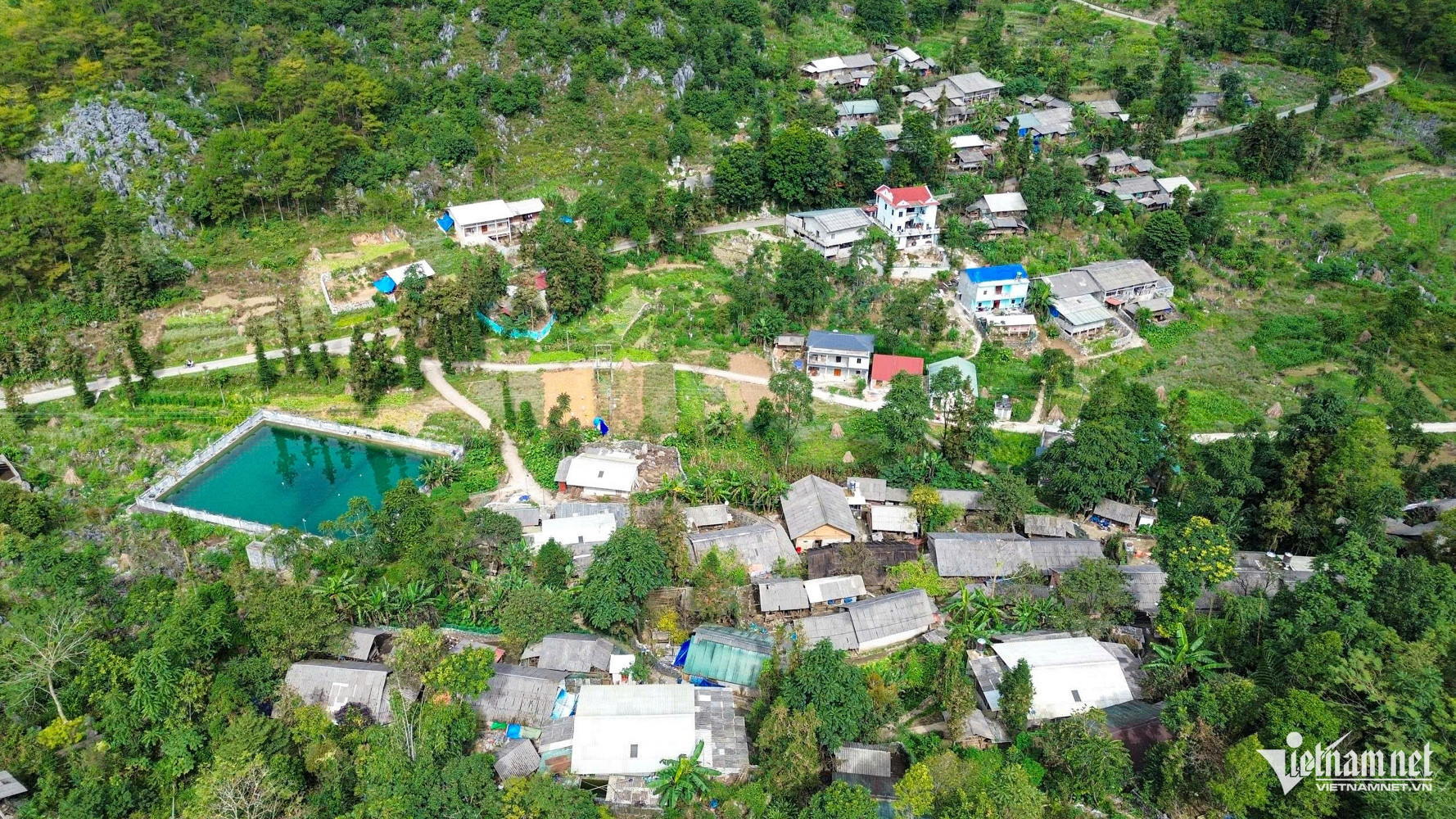
Amid the dry, rocky mountain slopes, a reservoir in Lung Pu Village, Khau Vai Commune, stands like a precious water store halfway up the mountainside.
Covering approximately 7,000 square meters and holding more than 9,400 cubic meters of water, the reservoir has been in operation for over a decade.
It supplies domestic water to hundreds of local residents, as well as government officials, teachers and students in the area.

The mountainside reservoir in Residential Group 1, Meo Vac Commune, was inaugurated in December 2022.
With a storage capacity of 7,000 cubic meters, it draws water from the Chi San Nature Reserve.

Thao Minh Son, Vice Chairman of the commune People's Committee, said the locality currently has more than 21,000 residents.
However, approximately 1,000 households in highland villages and rocky mountain areas still lack access to a stable domestic water supply.
Local authorities have proposed constructing additional mountainside reservoirs with capacities of 2,000-3,000 cubic meters, combined with rainwater harvesting systems to increase reserves during the dry season.
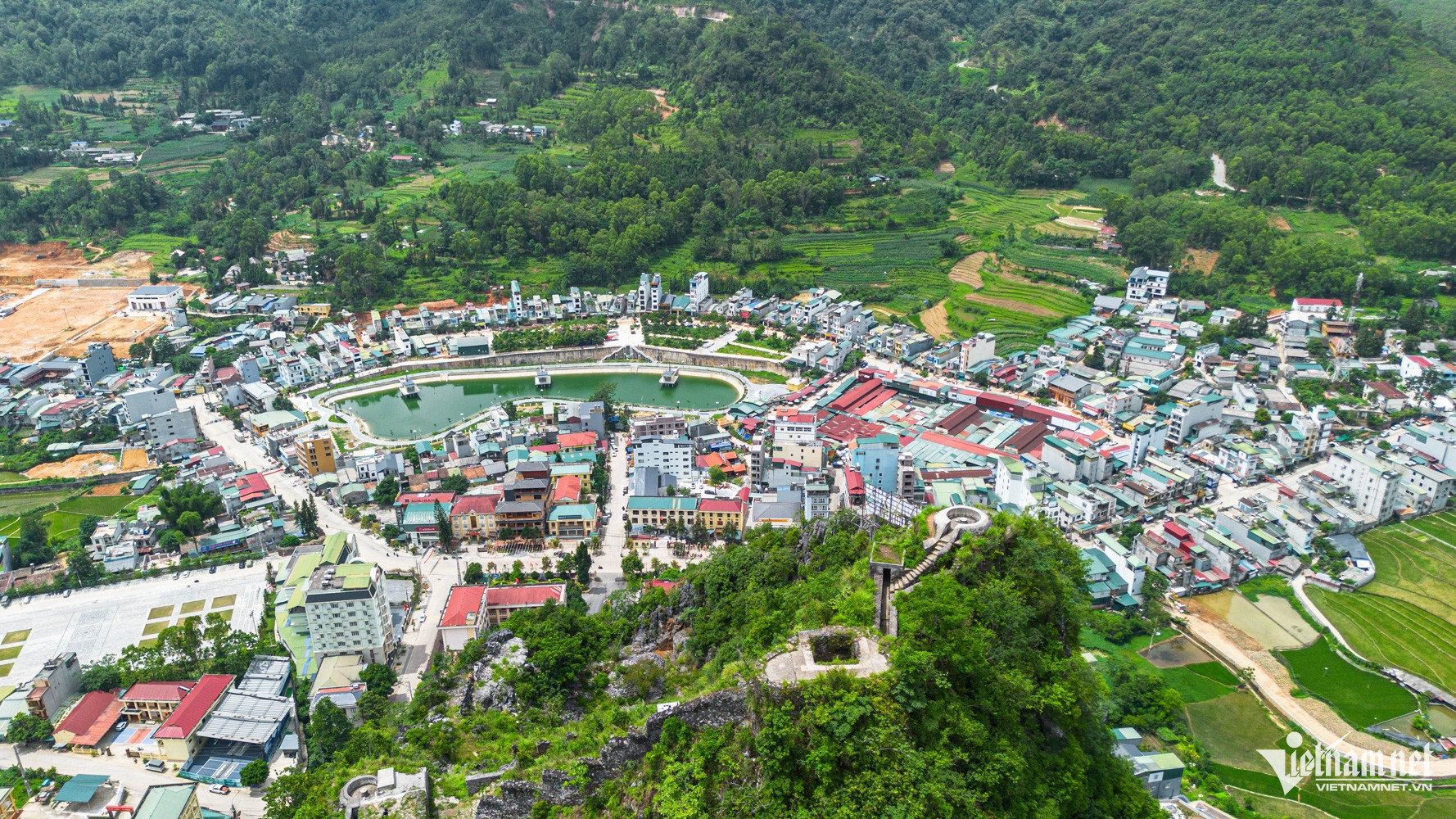
In Dong Van Commune, Le Trung Quyet, Vice Chairman of the commune People's Committee, said the locality currently has 37 water supply facilities, including 12 reservoirs.
Demand continues to increase as the population grows and tourism expands.
The area receives more than two million tourist visits annually and has approximately 150 accommodation establishments.
To meet both immediate and long-term needs, Dong Van authorities have proposed studying further investments in village reservoirs.
These facilities would support household consumption and production while also meeting the needs of the growing tourism industry.

Between 2021 and 2025, the province supported decentralized domestic water supply solutions for 36,978 households and invested in 61 centralized water supply facilities.
However, subsequent assessments found that more than 13,059 households across 16 communes still experienced difficulties accessing domestic water.
The figures highlight a persistent problem: having water infrastructure does not necessarily guarantee a reliable supply throughout the year.
During a drought in June 2023, across the four highland districts of the former Ha Giang Province, 57 of the 121 mountainside reservoirs had run completely dry.
Another 36 had water levels below 30cm, while only 28 retained water depths above 30cm.

The Nho Que River is one of the largest natural water sources in the rocky mountain region, but it flows deep below towering cliffs.
While the river supplies water to lower-lying areas, many communities on the high plateau must continue relying on mountainside reservoirs to store water for everyday use.
.svg)
