 Vietnamnet.vn

 Podcast



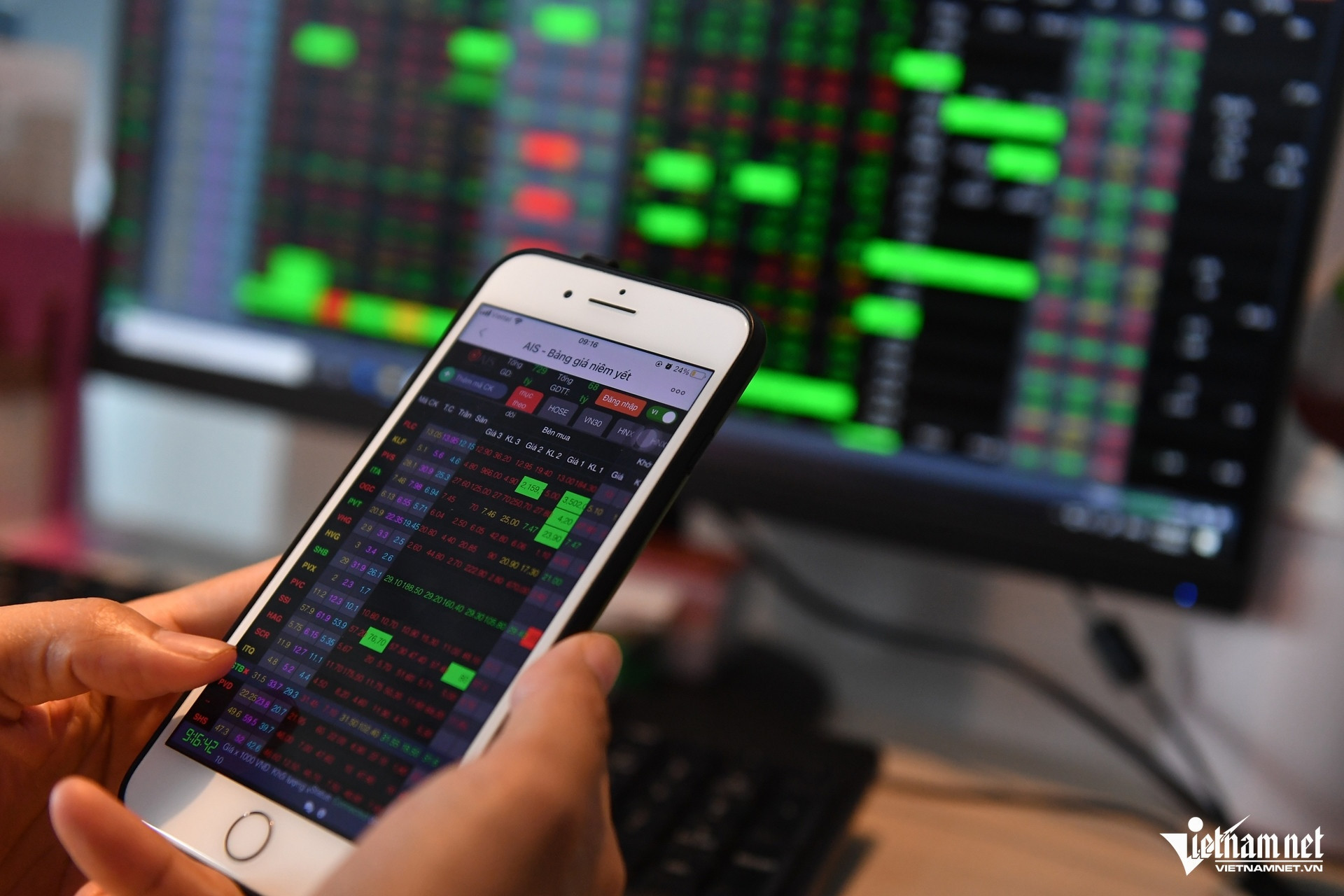
Vietnam’s stock market has entered a new phase after FTSE Russell officially upgraded it from frontier-market to secondary emerging-market status.
Experts, however, say that beyond attracting foreign capital, the bigger challenge is improving market quality and ensuring that international investment remains in the country over the long term.
Upgrade is only the beginning
Dr. Chu Thanh Tuan, deputy head of the Bachelor of Business program at RMIT University Vietnam, said the broader significance of the upgrade is that Vietnam has officially entered the “investment universe” of many international funds that previously could not invest in the market, or could allocate only a very small proportion of their portfolios, because of internal rules or benchmark restrictions.
Reforms such as removing the requirement for foreign institutional investors to have sufficient funds available before placing buy orders, known as non-prefunding, as well as changes related to handling failed trades, have also brought Vietnam’s market closer to international practices.
“The upgrade is therefore, first and foremost, about market accessibility. It does not automatically increase corporate earnings, eliminate exchange-rate risks or guarantee that stock prices will keep rising,” Tuan said.
According to Tuan, assessments of the upgrade’s impact need to distinguish between flows from index-tracking funds and those from actively managed funds.
An exchange-traded fund or other passive fund tracking an index will generally have to buy Vietnamese stocks when the country is added to its benchmark to minimize tracking error. This represents a relatively predictable source of capital inflows.
Active funds, by contrast, are not necessarily required to allocate money to Vietnamese equities simply because the market has been upgraded. Their allocation decisions depend on investors’ assessments of valuations, expected returns, liquidity, exchange-rate risks and opportunities in other markets.
As a result, estimates of potential capital inflows vary considerably.
HSBC estimates that passive inflows directly related to the upgrade could reach around $1.2 billion, while SSI Research puts the figure at approximately $1.5 billion.
Reuters, citing FTSE, reported that the upgrade process could redirect around $6 billion into Vietnam. It also cited Vanguard as expecting to invest approximately $2.5 billion in Vietnam over the coming years.
Tuan said that if only the “mechanical” inflows from index-tracking funds are counted, the total could amount to around $1-2 billion. Higher estimates should be viewed as broader scenarios that also incorporate active investment flows and allocations made over subsequent years.
“So the big question after Sept. 21 is not ‘how many billions of dollars will flow into Vietnam,’ but how much of that capital can stay and become a source of long-term funding,” Tuan emphasized.
He said the market upgrade is only a necessary condition. To attract larger international inflows and keep them for longer, Vietnam must still demonstrate corporate profitability, growth prospects, governance quality, market liquidity and currency stability.
Saigon-Hanoi Securities (SHS) shares this view, saying that while the upgrade is a necessary condition, the sufficient conditions are the quality of listed companies and the growth potential of both businesses and the broader economy.
How can Vietnam retain foreign capital after the upgrade?
Experts say the success of the market upgrade should not be measured by how many points the VN-Index gains or how many billions of dollars enter Vietnam during the first few months.
Tuan said a more important measure is whether Vietnam can transform international inflows into a source of lower-cost, long-term capital for the economy.
First, Vietnam needs to continue upgrading its market infrastructure.
Removing the prefunding requirement for foreign institutional investors has eliminated a major bottleneck. However, Tuan said settlement systems, failed-trade handling, clearing and counterparty risk management will need further improvement as the number and scale of international institutional investors increase.
Second, Vietnam needs to strengthen its foreign-exchange buffers without focusing exclusively on a single measure such as “three months of imports.”
Following the upgrade, authorities should simultaneously monitor foreign-exchange reserves, short-term foreign-currency debt, upcoming repayment obligations, the amount of money in the economy that could potentially be converted into foreign currencies and the sensitivity of capital flows.
Third, the exchange rate should remain sufficiently flexible to absorb some external shocks.
“If the central bank tries to defend a fixed exchange rate under all circumstances, it may have to use a large amount of foreign-exchange reserves. Conversely, better development of forward and swap markets and currency-hedging instruments would give international investors more options to manage risks without necessarily having to sell their Vietnamese assets,” Tuan said.
Finally, Vietnam needs to broaden its domestic base of long-term investors.
Pension funds, insurers, mutual funds and professional savings institutions could provide more stable demand for the market, reducing its dependence on short-term trading and cycles of foreign capital inflows and outflows.
Thieu Thi Nhat Le, CEO of UOBAM Vietnam Fund Management JSC, also said Vietnam needs to continue improving the quality and depth of its market to attract and retain long-term foreign capital.
The market needs a sufficient number of companies with the scale and quality required to meet the investment criteria of major funds, she said.
Vietnam also needs to improve market mechanisms and accessibility to make investing easier for foreign investors.
According to Le, the country’s economic outlook, particularly its growth prospects, remains an important factor in the long-term capital allocation decisions of international institutions.
Thu Ha
.svg)
