 Vietnamnet.vn

 Podcast



During January-July, the country exported 168,429 tonnes of pepper worth 1.087 billion USD, a 16.1% surge in volume and a 10.1% climb in value compared to the same period last year.
Asia remained the top buyer, soaking up 76,845 tonnes, a 12.3% year-over-year rise that grabbed 45.6% of total exports. The America took 45,470 tonnes, rocketing 34% higher for a 27% share. Europe imported 36,140 tonnes, up 7.5% and claiming 21.5%, while shipments to Africa rose 10% to 9,964 tonnes.
Zooming in, the US held firm as the single biggest market, buying 40,712 tonnes and notching a 31.8% year-over-year gain. China followed with 17,110 tonnes, up 55.8%, the Netherlands with 6,136 tonnes, up 48.8%, and Thailand with 6,913 tonnes, soaring 88.7%. On the flip side, exports to Germany tumbled 18.1%, while those to India slid 26.4%.
On the import front, Vietnamese companies brought in 3,614 tonnes of pepper valued at 21.6 million USD in July, a steep decline from June but still a 13.8% year-over-year volume hike. Over the first seven months, pepper imports totaled 48,812 tonnes valued at 279.3 million USD, leaping 55.1% in volume and 43% in value from the same period in 2025. Cambodia dominated as the top supplier, shipping 25,413 tonnes, up a staggering 256.9% and accounting for 52.1% of all inbound pepper.
The numbers confirm that beyond just growing pepper, Vietnam is rapidly cementing its role as a processing and trading hub for value-added products in the global supply chain.
While pepper roared ahead, cinnamon showed signs of cooling. July saw 11,788 tonnes of cinnamon exported for 30.3 million USD, down 6.5% in volume and 5.1% in value from the previous month, though still up 13.6% in volume year-over-year. Over January-July, cinnamon exports reached 73,085 tonnes worth 186.5 million USD, slipping a slight 1% in volume and 0.6% in value compared to a year earlier.
Asia continued to dominate cinnamon purchases with 50,085 tonnes, or 68.5% of all exports, but that figure fell 9.1% year-over-year. In contrast, shipments to the America hit 15,108 tonnes, surging 32.8%; Europe bought 5,644 tonnes, up 1.6%; and Africa absorbed 2,248 tonnes, a 28.3% leap.
India stood as the top individual cinnamon buyer, taking 29,530 tonnes, or 40.4% of total exports though that was down by 0.9%. The data signals clear room to grow cinnamon sales in the America and Africa, especially as Asian demand softens.
Star anise faced a bumpier road. Vietnam exported 1,191 tonnes worth 4.8 million USD in July, down 19.2% in volume and 19% in value from June, but up a blistering 97.8% in volume year-over-year. For the first seven months, star anise exports totaled 8,434 tonnes valued at 33.4 million USD, declining 9.1% in volume and 6.2% in value from the same period a year ago.
Asia remained star anise’s main outlet with 6,474 tonnes, or 76.8% of exports, though that represented an 18.4% drop. India alone imported 5,220 tonnes, equivalent to 61.9% of the total but that was a 25.2% contraction.
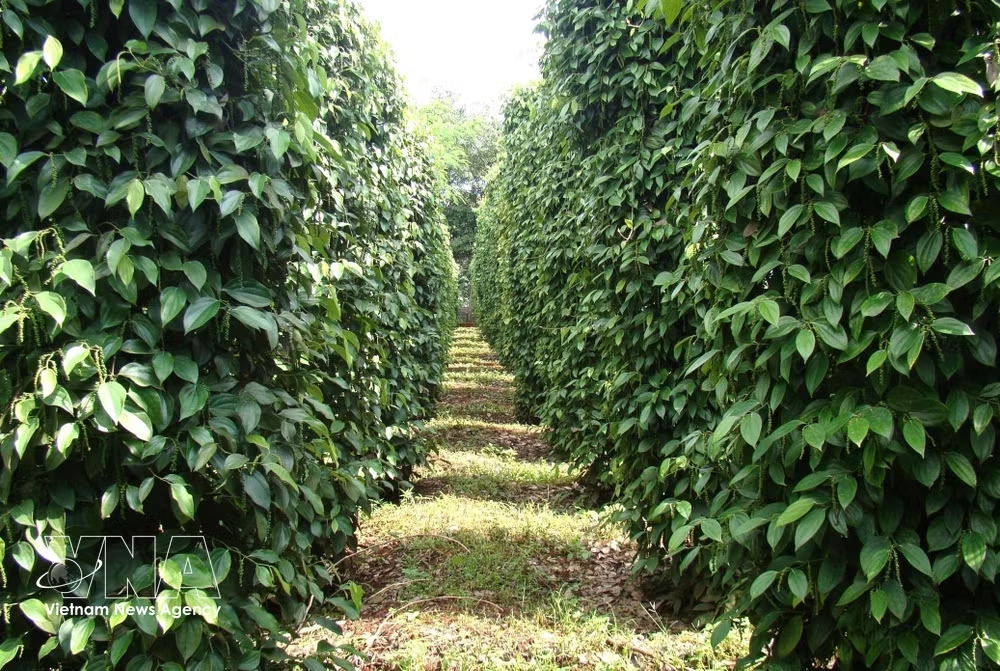
In a sharp contrast, star anise shipments to the America climbed 33.2% to 1,280 tonnes, and exports to Europe soared 81.9% to 633 tonnes. The trend pointed to swelling demand outside traditional Asian markets, offering companies a clear lane to diversify and cut their reliance on traditional buyers.
VPSA Chairman Le Viet Anh said pepper prices should hold steady in the near term barring any major geopolitical shocks. US-bound pepper exports are expected to remain stable over the medium and long haul.
A bright spot emerged on the regulatory front as EU warnings tied to Vietnamese pepper and spices fell from 34 cases in the first half of 2025 to 22 in the same period of 2026. For pepper alone, alerts dropped from five to three. That progress underscores real improvements in quality control, pesticide residue management, and compliance awareness among farmers and exporters.
Longer-term, Anh stressed that the industry’s core challenge has shifted. After more than two decades as the world’s top pepper exporter, Vietnam has almost no room left to expand planted acreage. Land is increasingly scarce, other crops compete for space, and new rules, especially the European Union Deforestation Regulation (EUDR), are piling on tougher requirements.
The pepper sector can no longer bet on higher output or low pricing. Instead, it must pivot to a growth engine fueled by quality, branding, and deeper value addition.
The same pivot applies to cinnamon, star anise, and other spices. The VPSA urged companies to ramp up investment in certified raw material zones, tighten partnerships with farmers, enforce stricter pesticide residue controls, build out traceability systems, and hit every technical standard demanded by importing markets.
At the same time, the industry should get ahead of the green consumption wave by embracing regenerative agriculture, circular economy models, lower carbon emissions, and smarter water use./.
.svg)
