 Vietnamnet.vn

 Podcast



Pham Cong
After 13 years of effort, the complex of Yen Tu, Vinh Nghiem, Con Son, and Kiep Bac was officially inscribed as a World Cultural Heritage Site at the 47th session of the UNESCO World Heritage Committee.
A challenging journey
On July 12, at the 47th session of the UNESCO World Heritage Committee, the chairperson officially struck the gavel recognizing the Yen Tu - Vinh Nghiem - Con Son - Kiep Bac complex as a World Cultural Heritage Site.
Nguyen Viet Dung, Director of the Department of Culture, Sports, and Tourism of Quang Ninh province, shared that Quang Ninh began preparing the heritage nomination dossier in 2013. At that time, the government instructed that Bac Giang and Hai Duong provinces also join the effort.
In 2019, when foreign experts came to evaluate the site, they concluded that while the complex had potential, it lacked the necessary conditions to proceed.
In 2020, Quang Ninh resumed work on the dossier, but the COVID-19 pandemic delayed progress until 2023. When the dossier was submitted to UNESCO in 2024, the committee pointed out three major shortcomings: unclear global value, insufficient evidence of outstanding universal value, and lack of continuity.
“In April, I joined a delegation from the three provinces to France to present and defend the nomination. At that point, UNESCO ranked the dossier in the lowest category, suggesting it could only be resubmitted in one or five years. It was heartbreaking, after 13 years of preparation, to think it might all be in vain,” Dung recalled.
At all times of the year, Yen Tu continues to draw large numbers of pilgrims and tourists.
Venerable Thich Thanh Quyet, Vice President of the Vietnam Buddhist Sangha’s Executive Council, noted that the dossier lacked crucial information about the Truc Lam Yen Tu Zen sect. As a result, for 13 years the nomination made no progress. During the April meeting, UNESCO nearly rejected it.
In a conversation at the Quang Ninh Provincial Party Committee headquarters with Lazare Eloundou Assomo, Director of the UNESCO World Heritage Centre, Venerable Thich Thanh Quyet conveyed the profound cultural significance of the complex. Mr. Assomo expressed regret that these insights were not included in the initial dossier.
“A UNESCO ICOMOS representative said during a virtual meeting that even if we submitted again, their position would remain unchanged. I was truly disheartened,” said Venerable Quyet.
However, on June 9, he and the delegation traveled again to France to present the improved dossier. This time, representatives from 20 UNESCO member states unanimously agreed to inscribe the site as a World Heritage Site.
Some ambassadors even expressed the hope that the philosophy of ‘Three Harmonies’ - reconciliation, unity, and peace - championed by King Tran Nhan Tong would be promoted globally, especially in today’s conflict-ridden world.
Leveraging inter-regional heritage values
Truong Quang Hai, Deputy Director of Bac Ninh’s Department of Culture, Sports, and Tourism, said this is the first time a World Heritage Site spans such a vast area across three provinces: Quang Ninh, Bac Ninh, and Hai Phong City.
UNESCO raised concerns about how the three provinces would coordinate heritage management. This is Bac Ninh’s first UNESCO-recognized site, so the province pledged to work closely with Quang Ninh and Hai Phong in establishing a heritage management body, aligned with the National Heritage Council, to create a comprehensive conservation and development plan.
Bac Ninh also plans to invest further in preservation, restoration, and promotion in accordance with UNESCO principles. Strategic communication efforts will be strengthened to highlight the outstanding universal value of the complex.
“Following the administrative merger, Bac Ninh has become a cultural powerhouse, now home to seven UNESCO-recognized heritages, eleven national special relics, nearly 4,000 listed monuments, and around 1,400 ranked ones. This recognition greatly enhances the province’s spiritual-cultural tourism appeal,” Hai said.
Dong Pagoda at Yen Tu is crowded with pilgrims during the Lunar New Year.
Vu Dinh Tien, Deputy Director of Hai Phong’s Department of Culture, Sports, and Tourism, acknowledged the enormous management pressure that comes with World Heritage status. In Hai Phong, the complex includes five separate sites across multiple localities, presenting logistical challenges.
However, the former Hai Duong province had previously restructured the management board for Con Son and Kiep Bac to ensure effective operation. Hai Phong now plans to strengthen media efforts to promote the heritage’s value locally and internationally.
Golden apricot blossom forests at Yen Tu bring a vibrant atmosphere every spring.
Tien added that Hai Phong has begun developing tourism products related to the heritage sites. Initial surveys have been conducted, and three tours are being designed: Following the footsteps of the Truc Lam Patriarchs, Exploring Con Son and Kiep Bac heritage, and a five-site heritage journey.
Nguyen Viet Dung from Quang Ninh’s Department of Culture, Sports, and Tourism said that in 2024, Quang Ninh, Bac Ninh, and Hai Phong signed a cooperation agreement to jointly manage the heritage complex. Responsibilities are clearly divided among localities and units.
Quang Ninh has taken the lead in coordinating with former Hai Duong and Bac Giang provinces to develop a shared action plan to protect and preserve the site.
Among the nine newly inscribed World Heritage Sites, Yen Tu - Vinh Nghiem - Con Son - Kiep Bac stands out for its unique blend of sprawling heritage landmarks, local communities, and natural forest landscapes.
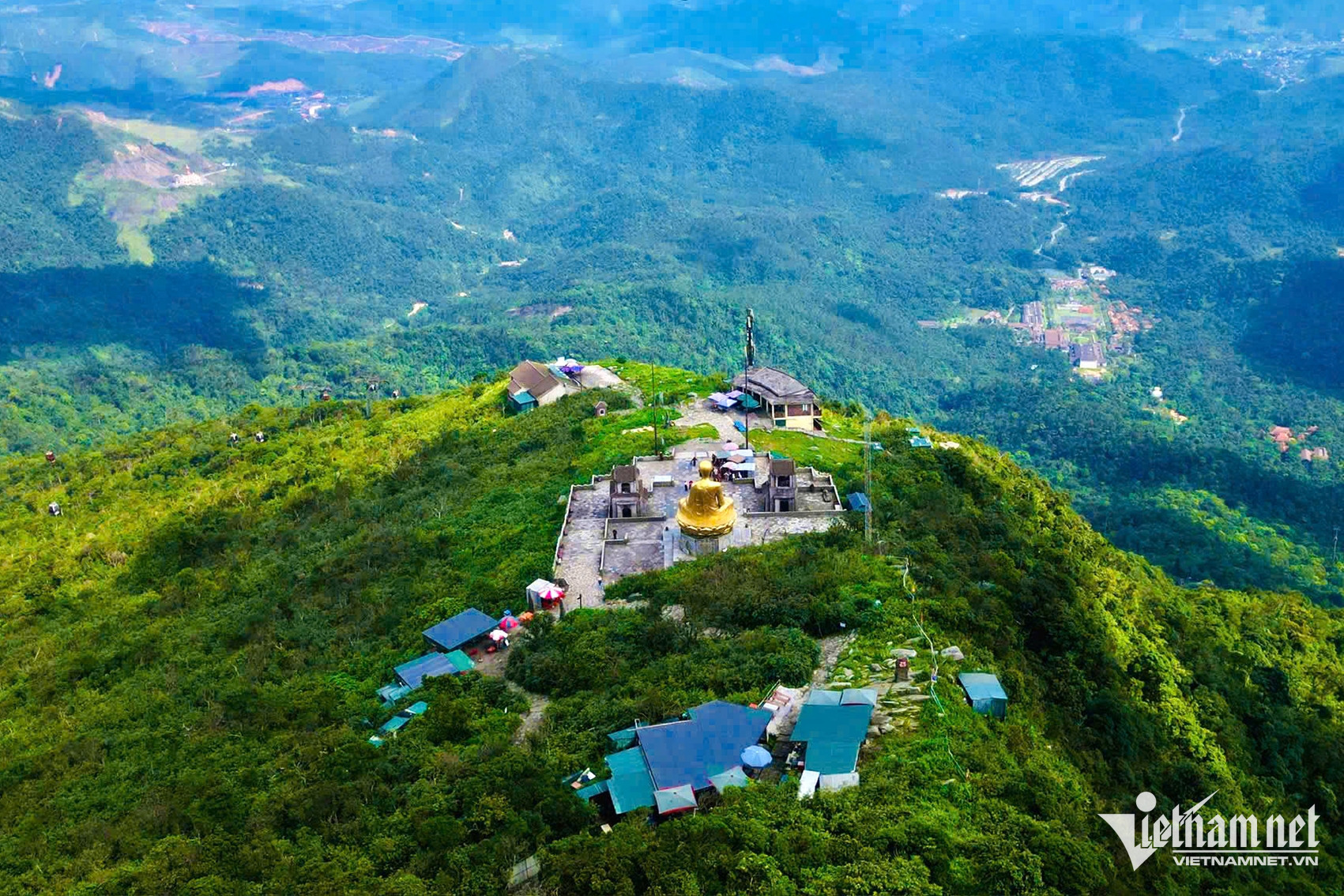
Statue of King Tran Nhan Tong at Yen Tu.

Yen Tu continues to attract pilgrims year-round.

Aerial view of Yen Tu mountain.

Dong Pagoda at Yen Tu during New Year holidays.

Golden apricot blossoms give Yen Tu a spring glow.
Photos by Pham Cong
.svg)
