 Vietnamnet.vn

 Podcast



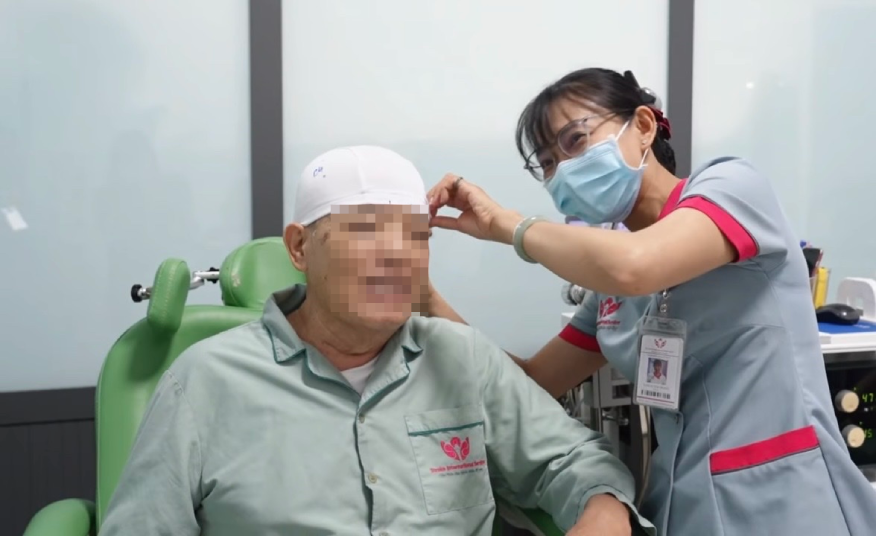
According to Dr. Truong Dan Kha, a specialist in physical medicine and rehabilitation, the patient underwent multidisciplinary assessment before receiving surgery to stabilize the fractures.
His rehabilitation program combined personalized physical therapy with hyperbaric oxygen therapy, transcranial magnetic stimulation and high-power laser therapy.
After a period of treatment, he was able to walk independently and became more self-sufficient in his daily activities.
Impressed by Vietnamese doctors' experience
For P.H.D., the biggest surprise was the depth of experience among Vietnamese medical teams.
"Hospitals in the United States also have modern equipment, but in Vietnam I saw doctors treating a huge number of stroke patients. Their experience is remarkable. Every day while I was hospitalized, I saw patients undergoing brain surgery, and that gave me greater confidence," he said.
He is not alone.
A 77-year-old Vietnamese Canadian, identified as L.X.C., also returned to Vietnam for rehabilitation after suffering a stroke.
Weighing 109 kilograms, he faced additional mobility challenges because of the strain placed on his knees while one side of his body remained weakened.
Doctors developed an individualized rehabilitation program focusing on muscle strengthening, knee pain management and weight control.
After just one week of therapy, he was able to take his first independent steps and slowly climb stairs. He also reported that chronic knee pain, which had troubled him for years, disappeared during the rehabilitation process.
Clinical experience seen as a key advantage
According to Dr. Tran Chi Cuong, President of the Ho Chi Minh City Society of Neurointervention, Vietnam's training system and medical equipment for neurointervention are now comparable to those found in many developed countries.
He said one of Vietnam's greatest strengths is its large patient volume, which provides physicians with extensive practical experience.
The country's high caseload enables specialists in neurointervention and rehabilitation to continuously refine their skills through daily clinical practice, he said, adding that their expertise is on par with that of colleagues in many developed healthcare systems.
Dr. Cuong also noted that treatment and rehabilitation costs in Vietnam remain significantly lower than those in many countries, making long-term rehabilitation more financially accessible for patients.
Phuong Thuy
.svg)
