 Vietnamnet.vn

 Podcast



According to the university, several fanpages and websites - most notably a page titled “Tuyển dụng VNU-HCM” and a site named “VNU - Cùng các em đến trường” - have been falsely using the university’s name, logo, and imagery to create a false sense of credibility.
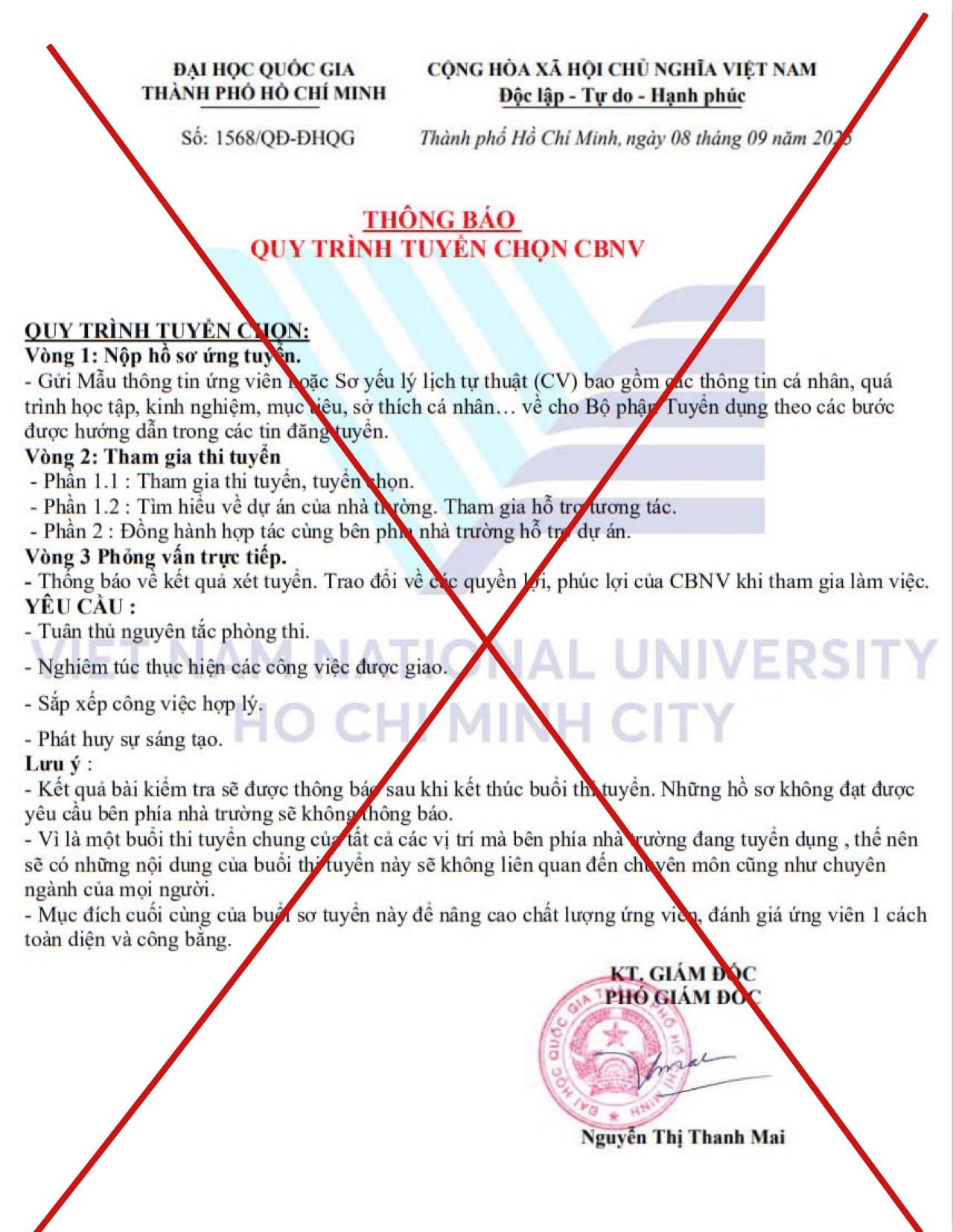
These pages mislead the public by advertising job opportunities for public employees and soliciting charitable donations, none of which are part of the university’s official operations.
Worryingly, the scammers require candidates or site visitors to pay fees, participate in surveys, or complete procedures that are completely unrelated to VNU-HCM’s legitimate hiring process. Some also ask for donations under false pretenses.
These actions, the university stresses, damage its reputation and violate Vietnamese law.
The university reminds the public that all official announcements are published only on its verified website and fanpages. It urges students, parents, and the broader community not to provide personal information, send money, or engage with any activity promoted by unofficial or suspicious channels.
Students impersonated in scam targeting parents
On the same day, Bui Thi Xuan High School in Ho Chi Minh City’s Ben Thanh Ward issued an emergency warning about a new and sophisticated scam involving impersonation of students.
After receiving reports from parents and students, the school outlined a deceptive tactic where scammers pretend to be students contacting the parents of classmates.
They claim to have lost their phones and contact lists and ask for the phone number of the parent’s child - under the pretense of needing help with final exam study materials.
Once the scammers obtain a student's number, they then pose as police officers or government officials, using fear tactics to carry out further fraud.
In response, Principal Huynh Thanh Phu of Bui Thi Xuan High School has issued a “Three No” rule to safeguard families:
Do not share your child’s or friends’ contact details with anyone over the phone, even if they claim to be classmates, without direct verification.
Do not trust phone calls from people claiming to be law enforcement or government officials, as real investigations are always conducted in person with official summons or invitations.
Do not transfer money or provide OTP codes under any circumstance.
Phu advised parents and students to immediately contact the homeroom teacher or the school administration if they encounter any suspicious requests. He also recommended reporting such cases to local authorities without delay.
“For the safety of students and their families, the school leadership urges everyone to remain vigilant against identity-based scams,” Phu emphasized.
Le Huyen
.svg)
