 Vietnamnet.vn

 Podcast



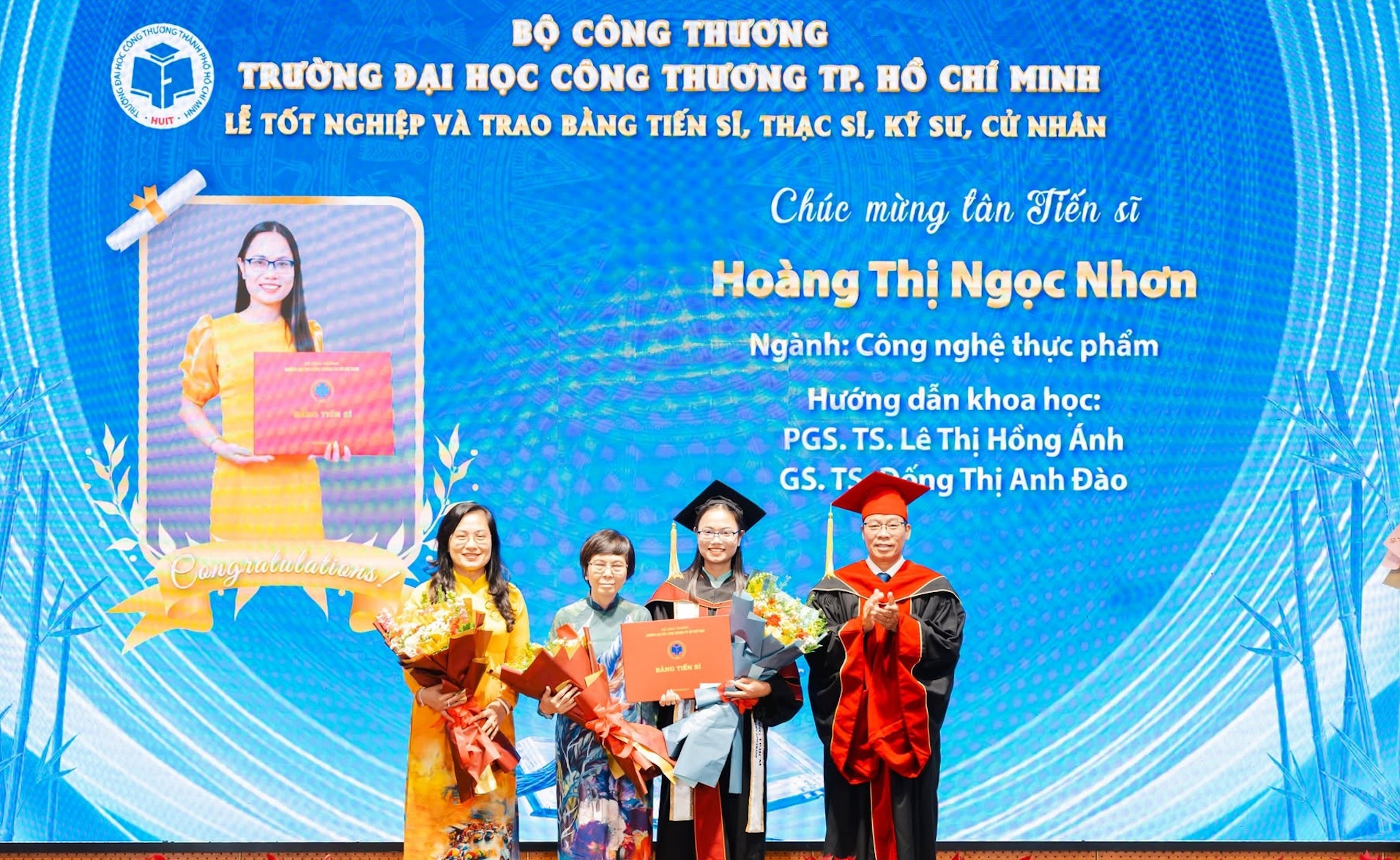
Doctoral programs struggle to attract applicants across multiple disciplines
During the 2025-2026 academic year, Vietnamese higher education institutions were allocated 9,083 doctoral enrollment places but recruited only 5,687 candidates, filling 62.6% of their available places and leaving 3,396 unfilled.
The pattern has persisted for several years. In 2024-2025, universities enrolled 4,077 doctoral candidates against a quota of 7,068, leaving 2,991 places vacant. In 2023-2024, just 3,376 candidates were admitted out of 7,158 available places, with 3,782 going unfilled.
Meanwhile, the Ministry of Education and Training aims to raise the proportion of university lecturers holding doctoral degrees to more than 37.5% by 2026 and 40% by 2030.
This has created a striking paradox: Vietnam is struggling to attract enough doctoral students at a time when its universities need more PhD-qualified academics than ever.
Associate Professor Nguyen Xuan Hoan, President of Ho Chi Minh City University of Industry and Trade, said doctoral recruitment falls short of targets across many disciplines, particularly engineering and technology.
These fields require doctoral candidates to devote considerable time to laboratory research, making it difficult for professionals already employed by companies to balance their jobs with academic study.
According to Hoan, disciplines such as geology, materials science, environmental studies, construction and hydraulic engineering already struggle to attract undergraduate students, making doctoral recruitment even more challenging.
In fields offering abundant job opportunities and attractive salaries, graduates are also more inclined to enter the workforce than pursue further academic qualifications.
Associate Professor Tran Thien Phuc, Vice President of Ho Chi Minh City University of Technology (HCMUT), said financial support is crucial to attracting doctoral candidates, particularly in disciplines with limited enrollment but significant long-term value.
He suggested that funding policies should be more flexible, taking into account individual research projects and their potential value rather than imposing a rigid three-year limit.
At HCMUT, the disciplines facing the greatest difficulty in doctoral recruitment are often those that already struggle at undergraduate level, including geology, materials science, environmental studies and certain branches of construction and hydraulic engineering.
Universities compete for PhD-qualified academics

While thousands of doctoral training places remain vacant, Vietnamese universities are actively seeking highly qualified faculty members.
Over the next five years, Vietnam National University, Ho Chi Minh City (VNU-HCM), plans to add 1,500 PhD-qualified academics to its workforce, with around half expected to hold professorial or associate professorial titles.
That translates into an average requirement of approximately 300 additional doctorate holders each year.
Earlier this year, VNU-HCM sought to recruit 167 PhD holders for its member universities and affiliated institutions, focusing on science and technology, economics and priority areas of the social sciences.
Demand spans strategic fields such as semiconductors, integrated circuit design, artificial intelligence, computer science, data science and automation, as well as medicine, economics, education, languages and the social sciences.
Among its institutions, Ho Chi Minh City University of Technology needed 36 doctorate holders, the University of Science 35, the University of Social Sciences and Humanities 22, the University of Health Sciences 20, the International University 17, the University of Information Technology 13, and An Giang University 14, among others.
On October 5, Ho Chi Minh City University of Technology announced plans to recruit 80 lecturers, targeting candidates with doctoral qualifications and strong teaching and research capabilities.
The vacancies cover 19 fields, ranging from mechanical engineering, electronics and telecommunications, integrated circuit design, computer science and information technology to biotechnology, finance, business administration and hospital management.
These recruitment efforts highlight a broader challenge for Vietnamese higher education. The issue is not simply producing as many PhD graduates as possible, but training researchers in the right disciplines and attracting qualified academics to institutions where their expertise is needed.
To compete for highly skilled talent, universities are introducing increasingly attractive salary packages and research incentives.
At VNU-HCM member universities, compensation generally combines a government-regulated base salary with additional pay determined by job position.
Some institutions offer PhD holders monthly incomes of approximately US$770 to US$1,730, depending on the university and the candidate's experience. Associate professors and professors may earn more.
Ho Chi Minh City University of Technology offers doctorate holders with less than three years of experience around $1,350 per month, rising to approximately $1,730 for those with at least three years of experience.
Professors and associate professors with more than three years of experience earn an average of approximately $3,280 per month.
Some universities have also introduced their own recruitment incentives.
The University of Information Technology offers initial financial support of approximately $5,780 for PhD holders, $7,710 for associate professors and $11,560 for professors.
Meanwhile, the University of Economics and Law provides recruitment incentives of approximately $5,780, $9,630 and $13,490 for doctorate holders, associate professors and professors, respectively, under its talent attraction policy.
Beyond salaries, VNU-HCM has established a phased research funding scheme to support academics at different stages of their careers.
During their first two years, young scientists may receive research project funding of up to approximately $7,710.
In their third year, they may qualify for category B research projects worth up to $38,530. By their fourth year, they may receive laboratory investment support of up to approximately $385,000.
For leading scientists, funding for category B research projects can reach $38,530 during the first two years, followed by laboratory investment support of up to approximately $1.16 million.
Numerous other universities are also offering competitive compensation packages to attract PhD-qualified academics.
These policies show that universities are not simply looking for people with doctoral certificates. They need researchers capable of conducting meaningful studies, publishing scientific papers, securing research projects and leading research teams.
Ultimately, the apparent contradiction between unfilled doctoral enrollment places and universities' growing demand for PhD holders reflects two distinct challenges.
One concerns prospective students' willingness and ability to pursue doctoral education. The other involves universities' need to recruit highly skilled researchers whose expertise aligns with their academic and scientific priorities.
Le Huyen
.svg)
