 Vietnamnet.vn

 Podcast



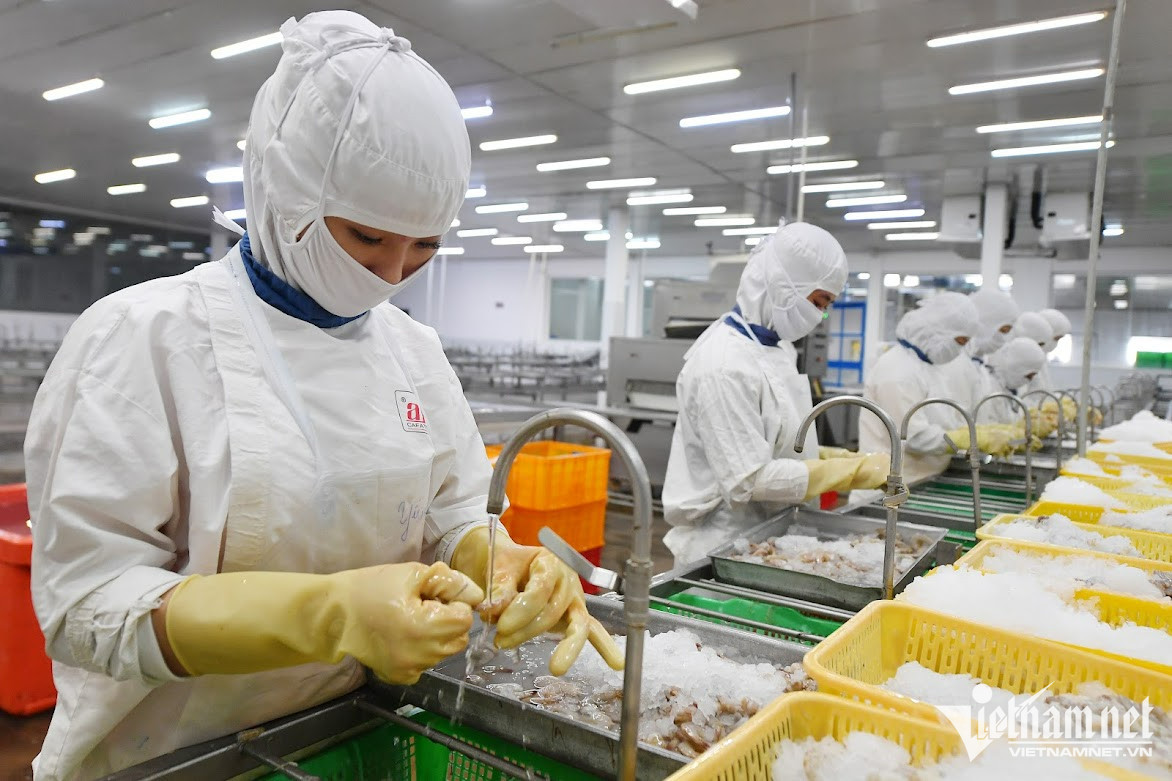
Despite a turbulent 2025, Vietnam’s shrimp exports reached a record US$4.6 billion, marking a robust 19 percent increase compared to the previous year. This is the highest level ever recorded by the country’s shrimp industry.
Last year, China and the US remained Vietnam’s two largest shrimp import markets, with export turnover reaching US$1.23 billion, up 61 percent, and US$796 million, up 5 percent, respectively.
Notably, Vietnamese shrimp has just received encouraging news from the US market. The US Department of Commerce announced the final results of the 19th administrative review, known as POR19, of the anti-dumping duty order on frozen warmwater shrimp imported from Vietnam, covering the period from February 1, 2023 to January 31, 2024.
Under the final determination, two Vietnamese companies - Soc Trang Seafood Joint Stock Company (STAPIMEX) and Thong Thuan Company, including Thong Thuan Cam Ranh - are subject to an adverse facts available rate of 25.76 percent. The corresponding cash deposit rate, after deducting export subsidies, stands at 25.46 percent. This duty is applied directly to shrimp shipments exported by these companies to the US.
For companies eligible for a separate rate but not selected for mandatory review, the Department of Commerce set a margin of 4.58 percent and a cash deposit rate of 4.28 percent.
Compared to the preliminary results announced in June 2025, the final outcome represents a positive adjustment. In the preliminary findings, all 22 Vietnamese companies under review, including STAPIMEX, were subject to a proposed rate of up to 35.29 percent - the highest level in more than 19 years of administrative reviews in the anti-dumping case against Vietnamese shrimp.
The downward revision of the final rates is seen as a constructive signal. It helps ease cost pressures on exporters and creates more favorable conditions for contract negotiations and the maintenance of supply to the US market.
Beyond the US, Vietnam’s billion-dollar shrimp sector has also received good news from China. Vietnam has overtaken Canada to become the largest lobster supplier to the world’s most populous nation.
According to data from China’s General Administration of Customs, in 2025 Vietnam exported 24,067 tonnes of lobster to China, accounting for about 34.5 percent of total imports. Canada followed with 15,355 tonnes, or roughly 22 percent market share.
In 2024, Canada ranked first with 44 percent of China’s total lobster imports, while Vietnam held second place with about 18 percent.
Data from the Vietnam Customs Department show that shrimp exports to China, including Hong Kong, reached US$1.23 billion. Of this, green lobster was the clear growth driver, generating US$840 million, up 131 percent compared to 2024.
In January 2026 alone, Vietnam’s green lobster exports to this market reached approximately US$100.2 million, a 6 percent increase year on year. These figures suggest that demand momentum has remained solid at the start of 2026, even as competition intensifies.
According to the Vietnam Association of Seafood Exporters and Producers (VASEP), although lobster exports to China are maintaining a stable pace, the competitive landscape could shift quickly from March 2026 if Canadian lobster sees its 25 percent tariff officially removed. Canada would then have greater incentive to reclaim market share in high-end restaurant channels and the premium gift segment, while Australia continues to strengthen its presence following the restoration of trade.
Amid increasingly segmented consumer demand in China, the premium segment still holds room for growth. However, Vietnamese enterprises seeking to sustain momentum will need to ensure consistent quality, standardize product specifications, optimize live and fresh logistics, and enhance direct connections with modern distribution networks.
Statistics from the Vietnam Customs Department show that by February 15, the country’s seafood export turnover had reached nearly US$1.46 billion, placing seafood among the top three agricultural export categories at present.
In 2026, total seafood output is targeted to exceed 10 million tonnes, including about 3.75 million tonnes from capture fisheries and an estimated 6.25 million tonnes from aquaculture. Seafood export turnover is expected to reach approximately US$11.5 billion.
Tam An
.svg)
