 Vietnamnet.vn

 Podcast



At a seminar on "Swiftlet Conservation and the Sustainable Development of the Khanh Hoa Bird's Nest Brand" held on July 15, provincial authorities and industry representatives highlighted growing concerns over conservation and intellectual property protection.
Speaking at the seminar, Trinh Minh Hoang, Vice Chairman of the provincial People's Committee, said the province's island swiftlet colonies are not only a unique biological resource but also the foundation of the renowned "Khanh Hoa Bird's Nest" brand, helping strengthen its position in both domestic and international markets.
According to Hoang, the bird's nest harvesting industry has generated significant economic value, created jobs, increased local incomes, and promoted the province's image.
However, swiftlet populations are facing mounting pressure from climate change, environmental degradation, urbanization, and illegal hunting methods - including nearly invisible mist nets and other destructive trapping techniques - that threaten colony numbers and future harvesting activities.
From the business perspective, Trinh Thi Hong Van, Chairwoman of the state-owned Khanh Hoa Salanganes Nest Company, said "Khanh Hoa Bird's Nest" represents both the geographical origin of the province's natural swiftlet islands and a trademark developed by the company.
As a result, the brand has frequently been copied or used without authorization in unfair commercial practices.
Van noted that trademark infringement has increasingly shifted to digital platforms, including Facebook, TikTok, company websites, and e-commerce marketplaces.
Many online accounts and pages use the phrase "Khanh Hoa Bird's Nest" while closely imitating the appearance and branding of authentic products.
Even after enforcement actions, violators often create new accounts or move to different online platforms, making monitoring, evidence collection, and enforcement increasingly difficult.
She warned that trademark violations not only harm rights holders but also mislead consumers and weaken fair market competition.
Rapid growth accompanied by growing challenges
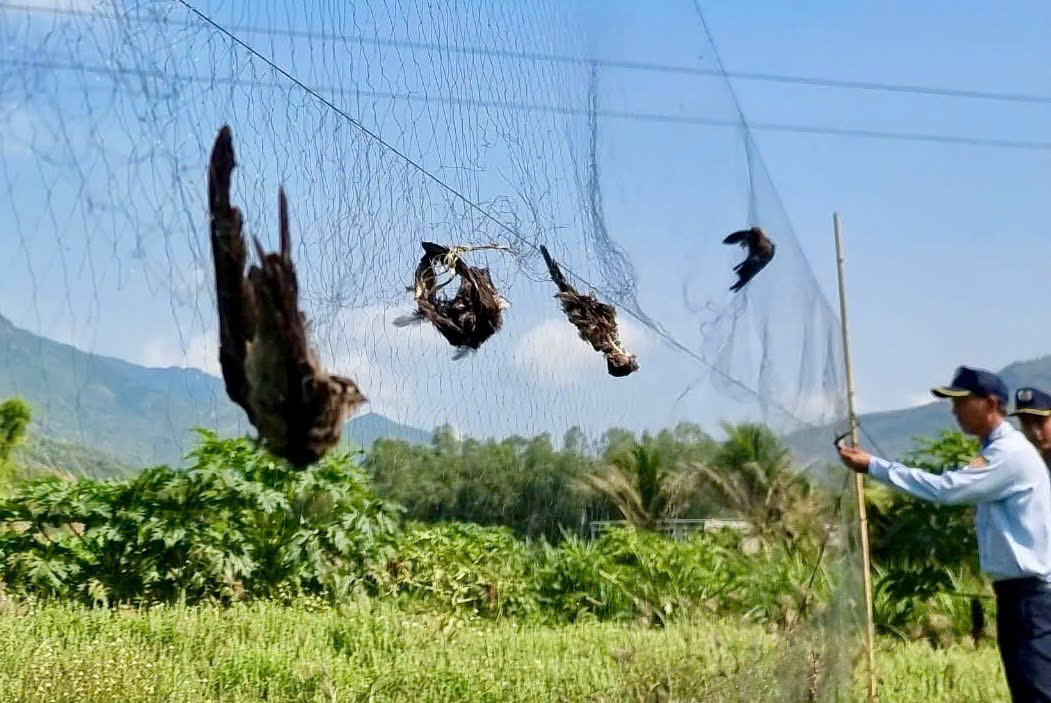
Pham Kim Dang, Deputy Director General of the Department of Livestock Production and Animal Health under the Ministry of Agriculture and Environment, said swiftlets are now found in 23 of Vietnam's 34 provinces and centrally administered cities.
Between 2021 and 2026, the number of purpose-built swiftlet houses increased by an average of 6.05% annually, rising from 20,344 to 29,896 facilities.
Vietnam produced 234.6 metric tons of raw edible bird's nests in 2025.
Khanh Hoa alone is home to approximately 1,300 swiftlet-house owners operating 1,425 facilities, producing around 14 metric tons annually, equivalent to about 6% of national output.
The province also possesses one of Vietnam's largest natural swiftlet populations, with 33 islands and 173 nesting caves.
In 2025, Vietnam's bird's nest industry was estimated to comprise between 29,000 and 30,000 swiftlet houses, producing 150-200 metric tons annually.
The industry's production value reached approximately US$600 million (VND15 trillion) each year, accounting for roughly 3.4-3.5% of the country's livestock sector.
Annual bird's nest exports are projected to reach US$200-300 million.
Dang emphasized that Vietnam's export potential expanded significantly after Vietnam and China signed a protocol governing edible bird's nest exports on April 15, 2025.
By April 2026, 20 Vietnamese companies had received approval from China's customs authorities to export raw and cleaned edible bird's nests through official channels.
Alongside expanding production, Dang said Vietnam should strengthen scientific research, technology transfer, public awareness campaigns, and enforcement against illegal hunting while balancing wildlife conservation with economic development and improved livelihoods.
However, industry reports also identify persistent weaknesses, including incomplete statistical data, unplanned expansion of swiftlet houses that complicates zoning, limited technical capacity, and fragmented processing operations.
Illegal hunting and competition from imported bird's nest products also remain significant challenges requiring stronger enforcement measures.
Regarding regulation, Do Van Hoan, Deputy Head of the Livestock Breeding Division at the Department of Livestock Production and Animal Health, explained that Vietnamese law does not designate prohibited areas for swiftlet farming but instead authorizes local governments to determine suitable swiftlet farming zones.
The government has also issued Decree No. 211/2026/ND-CP, which takes effect on August 5, 2026, introducing additional penalties.
Using loudspeakers to attract swiftlets in residential areas or within 300 meters of residential communities may result in fines of VND3-5 million (US$115-190).
Noise violations may be fined VND5-10 million (US$190-385), while illegal hunting, unauthorized attraction of swiftlets, or unlawful expansion of swiftlet houses may incur fines of VND10-15 million (US$385-575).
Depending on the violation, offenders may also face confiscation of equipment, orders to reduce noise levels, release captured birds, surrender the value of illegally obtained wildlife, or restore affected sites to their original condition.
Xuan Ngoc
.svg)
