 Vietnamnet.vn

 Podcast



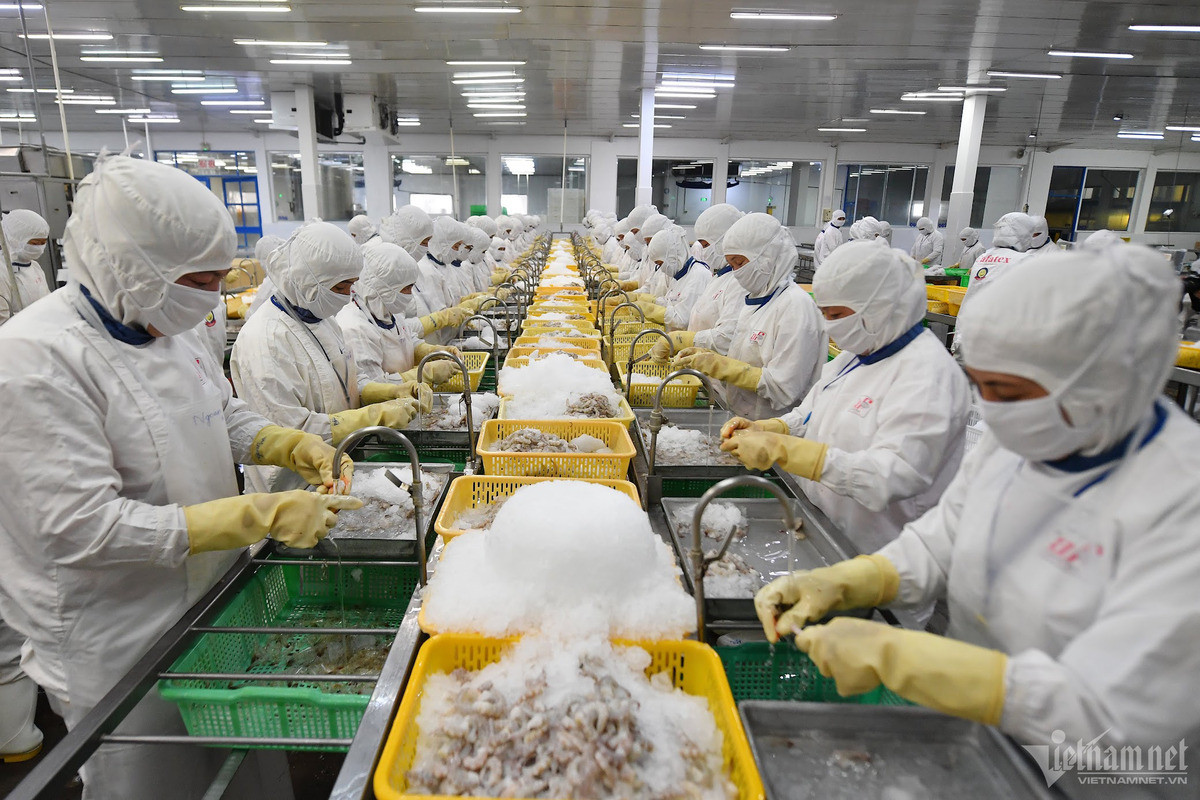
The latest report from the Ministry of Agriculture and Environment indicates that Vietnam's seafood export turnover reached $1.09 billion in July. In the first seven months of 2026, seafood exports brought in $6.85 billion, representing a 12.7 percent increase compared to the same period in 2025.
Notably, seafood exports surpassed the $1 billion monthly threshold in five separate months this year, reinforcing prospects that this high-performing sector will exceed $12 billion for the full year.
Le Hang, Deputy Secretary-General of the Vietnam Association of Seafood Exporters and Producers (VASEP), said that China (including Hong Kong) remained the largest market in July, with export turnover exceeding $267 million, up 24.7 percent. For the seven-month period, exports to this billion-consumer market reached nearly $1.74 billion, marking a sharp 34.5 percent surge.
A major portion of the entire industry's growth stemmed from the Chinese market. Without the additional $445 million contributed by China, the overall seafood export picture would appear considerably less positive.
Regarding the US market, turnover reached only $159 million in July. Over the first seven months of 2026, exports to the US totaled over $1.05 billion, up a modest 0.3 percent year-on-year.
"This figure does not yet fully reflect Section 301 tariffs because the new rates were announced by the USTR (Office of the United States Trade Representative) on July 23. A broader impact will become visible in shipments cleared through customs from late July onward," she emphasized.
Exports to Japan grew by a modest 2.6 percent, whereas the CPTPP market group maintained a steady 8.1 percent growth rate.
Conversely, exports to the EU, South Korea, ASEAN, and the Middle East all recorded substantial declines in July.
VASEP's Deputy Secretary-General highlighted a series of challenges confronting the seafood industry in the remaining months of the year as it targets the $12 billion milestone.
Shrimp exports totaled $2.78 billion in the first seven months, up 12.6 percent year-on-year. However, July growth slowed to 4.5 percent, well below the pace recorded during the first seven months, indicating that shrimp exports are no longer expanding as rapidly as they did earlier in the year.
According to Le, much of the current momentum comes from lobster exports to China, while whiteleg shrimp and black tiger shrimp are facing increasingly intense competition in the US, EU and Japanese markets.
"The biggest pressure comes from Ecuador," she said.
Ecuador's shrimp supply continues to expand rapidly, not only in whole shrimp but also in headless, peeled and processed products. This marks an important shift as Ecuador moves beyond being a low-cost raw material supplier to competing directly with Asian processors in higher value-added segments.
Vietnam also faces a tariff disadvantage in the US market, as competitors including Ecuador, India and Indonesia are subject to lower tariff rates.
Le believes the $12 billion target this year remain achievable. However, growth in the remaining months is likely to slow considerably. The most direct impacting factor is the US Section 301 tariff. According to her, the 12.5 percent tariff imposed on Vietnam will have three major consequences.
First, new contracts with US buyers are likely to be renegotiated, with importers seeking lower FOB prices, tariff-sharing arrangements or shorter-term contracts.
Second, Vietnam will be at a disadvantage compared with Ecuador, India and Indonesia, which face a 10 percent tariff. The difference is particularly significant for whiteleg shrimp, canned tuna and standard frozen seafood products.
Third, the new tariff will be added to the MFN tariff as well as any applicable anti-dumping and countervailing duties. As a result, purchasing decisions will increasingly be made on a company-by-company and product-by-product basis, rather than simply comparing exporting countries.
On the positive side, Vietnam has introduced a regulation banning imports of goods produced with forced labor, which will take effect in early September 2026. This provides a basis for further discussions with the US, although there is currently no official indication that the 12.5 percent tariff will be revised in the near term.
Looking ahead to the fourth quarter, the VASEP deputy secretary general expects pangasius exports to recover if Vietnamese exporters can secure contracts to replace supplies of cod and pollock during the year-end consumption season. Greater growth potential lies in portioned, breaded and ready-to-cook pangasius products, rather than continuing to rely almost entirely on frozen fillets.
Tam An
.svg)
