 Vietnamnet.vn

 Podcast



Vietnam currently has approximately 6 million people living with rare diseases, with 58% of cases affecting children. Alarmingly, around 40% of these conditions are misdiagnosed as more common diseases, leading to delayed treatment and financial burdens.
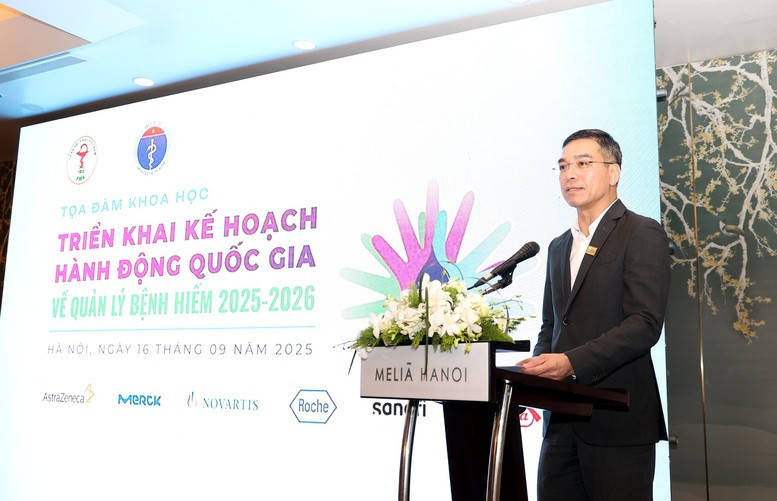
The information was shared during a scientific symposium on the implementation of the National Action Plan for Rare Disease Management 2025-2026, organized by the Vietnam Medical Association and the Ministry of Health.
Globally, about 300 million people suffer from approximately 6,000 types of rare diseases, accounting for 3.5% to 5.9% of the world population. In Vietnam, one in every 15 people is affected, translating to roughly 6 million individuals.
Dr. Ha Anh Duc, Director of the Department of Medical Services Administration at the Ministry of Health, stated that Vietnam has identified about 100 rare diseases, with 58% of cases occurring in children. Shockingly, 30% of children with rare diseases do not survive past the age of five due to limited access to effective treatment options.
This situation highlights significant challenges for the healthcare system, especially as both infectious and non-communicable diseases become increasingly complex, while medical resources remain limited. A comprehensive and effective strategy is urgently needed to manage rare diseases.
Associate Professor Dr. Vu Chi Dung, Director of the Center for Endocrinology, Metabolism, Genetics and Molecular Therapy at the National Children's Hospital, emphasized that diagnosing and treating rare diseases is extremely difficult due to a lack of information, specialized experts, and effective treatment protocols.
Statistics show that around 40% of rare diseases are initially misdiagnosed, resulting in delayed or improper treatment and skyrocketing costs. This places a heavy burden on patients - physically, emotionally, and financially.
For instance, at the National Children’s Hospital, a patient undergoing spinal muscular atrophy treatment was administered a medication that costs approximately $2.1 million per dose. Originally developed by a Swiss pharmaceutical company, it remains one of the most expensive drugs in the world, designated for children under two years of age.
Dr. Nguyen Khanh Phuong, Director of the Institute for Health Strategy and Policy, pointed out that rare diseases often lack specific treatment guidelines. The available drugs are either too expensive or in short supply, making access extremely difficult for most patients - one of the biggest barriers to rare disease management in Vietnam.
To address these challenges, Dr. Ha Anh Duc emphasized the need for a coordinated, system-wide response involving all levels of government, the healthcare sector, and related stakeholders.
At the symposium, experts from leading hospitals shared their experiences and proposed practical solutions to improve diagnosis, treatment, and management of rare diseases. A standout recommendation was the establishment of a shared "rare drug bank" that hospitals could collectively use to reduce costs and improve access.
Dr. Nguyen Trong Khoa, Deputy Director of the Department of Medical Services Administration, confirmed the department’s commitment to issuing an official list of rare diseases in Vietnam. The goal is to complete the review of 30 to 40 rare diseases by the end of 2025 and to officially issue the national list in 2026.
Also during the event, the Ministry of Health announced the approval of the Action Plan for Rare Disease Management for the 2025-2026 period. This marks a significant milestone in efforts to improve healthcare access and quality of life for people living with rare diseases in Vietnam.
Phuong Thuy
.svg)
