 Vietnamnet.vn

 Podcast



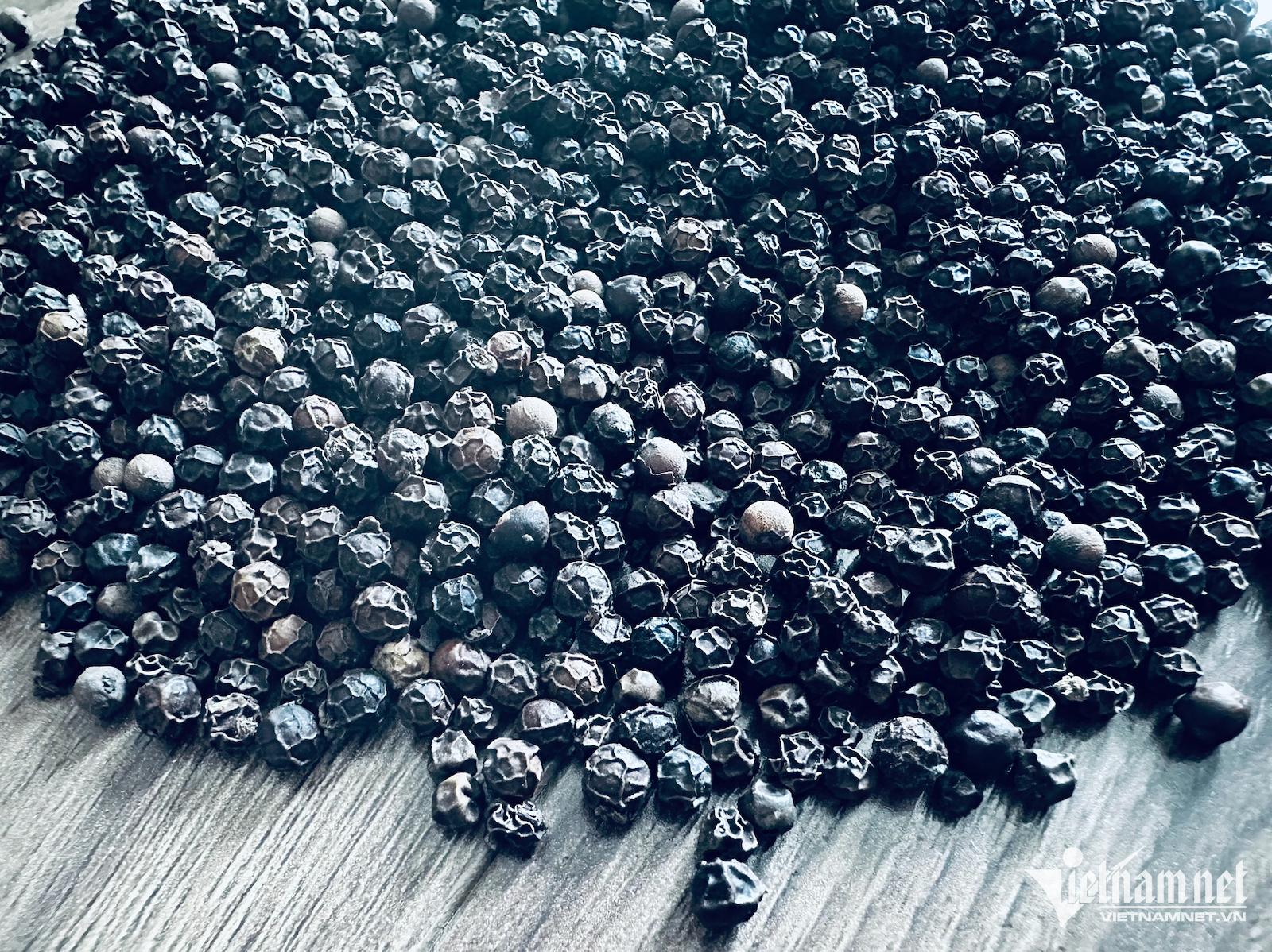
According to data from the General Department of Customs, Vietnam exported 246,132 tons of various types of pepper last year, with the average price nearing $6,750 per ton - an increase of 28.3% compared to the previous year. This surge in unit price led to a 26.3% jump in export earnings, despite a slight 1.5% drop in export volume.
This marks the first time Vietnam’s pepper export revenue has surpassed the previous all-time high of nearly $1.43 billion set in 2016.
The United States, Germany, and India were Vietnam’s three largest pepper markets in 2025, accounting for 25.1%, 7.5%, and 4.8% of the total export value respectively.
In detail, Vietnam shipped 56,182 tons of pepper to the US, generating around $416.4 million in revenue. Notably, despite ongoing challenges related to countervailing duties, exports to this market still rose by 2.2% year-on-year, reaffirming the US as Vietnam’s top buyer.
Germany ranked second, importing 16,167 tons of pepper worth approximately $123.8 million - an impressive 31.2% increase in value over 2024.
India followed with 11,349 tons imported, bringing in $79.9 million, marking a remarkable 54.5% year-on-year increase.
Currently, domestic pepper prices in Vietnam remain at their peak, ranging from 150,000 to 152,000 VND per kilogram. Prices are highest in Dak Lak and Lam Dong at 152,500 VND/kg, followed by Ho Chi Minh City at 151,500 VND/kg. In Gia Lai and Dong Nai, farmers are selling pepper at 151,000 VND/kg and 150,000 VND/kg, respectively.
On the international market, export prices for black pepper are holding steady between $6,600 and $6,800 per ton for the 500g/l and 550g/l varieties. White pepper is commanding even higher prices, currently at around $9,350 per ton.
Vietnam remains the world's leading pepper exporter. In December 2025, pepper-growing regions across the country began the new harvest season. However, the 2025–2026 crop is forecast to decline slightly due to adverse weather and storm-related disruptions.
Both domestic and export pepper prices are expected to rise further as global supply tightens.
Tam An
.svg)
