 Vietnamnet.vn

 Podcast



Starting in 2026, all post-graduate clinical training programs in the health sector - such as residency and specialist doctor degrees - will fall under the management of the Ministry of Health, according to the newly amended Law on Higher Education passed by the National Assembly on December 10.
The amended law outlines specific academic pathways that result in formal degrees: bachelor's degrees, master’s degrees (including integrated bachelor–master programs), and doctoral degrees (including integrated master–doctoral programs). These degrees are granted based on the level completed.
However, for advanced clinical medical programs - specifically medical residency and specialist doctor training - the Ministry of Health will be responsible for issuing guidance, organizing programs, and overseeing administration.
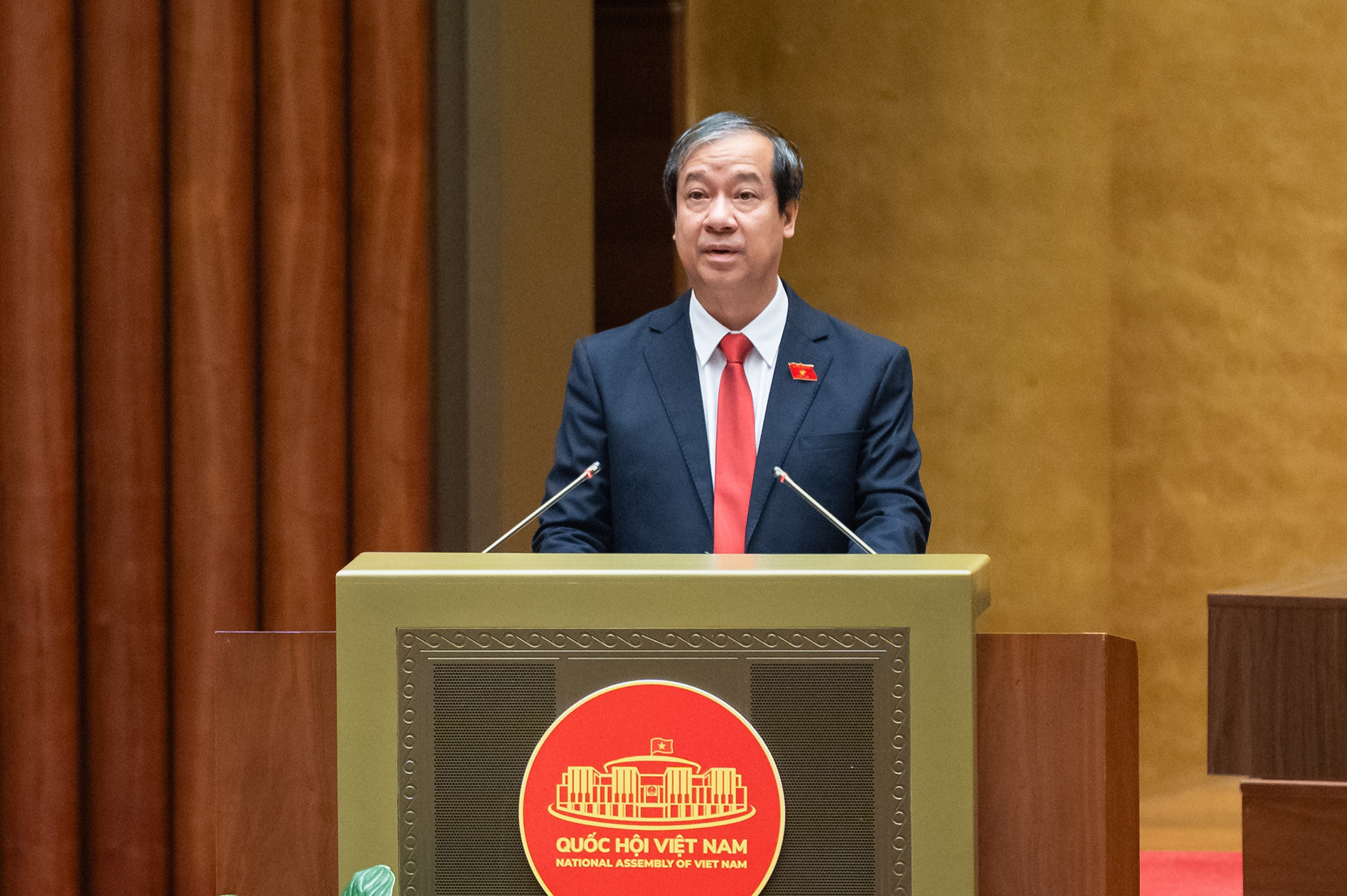
Clinical programs distinct from academic degrees
Minister of Education and Training Nguyen Kim Son emphasized that specialist and residency doctors are highly capable professionals who make significant contributions to public health. They deserve recognition and adequate benefits.
However, equating residency or specialist degrees with academic qualifications like master’s or PhD degrees lacks both scientific foundation and international precedent.
Globally, educational systems clearly differentiate academic qualifications from practice-based clinical training.
Master’s and doctoral degrees fall within the academic training system, each with its own curriculum, outcome standards, and regulations. In contrast, residency and specialist levels (Specialist I and II) are regarded as intensive professional practice programs specific to the medical field, but not part of the academic degree hierarchy.
The medical sector in Vietnam will continue to offer master's and doctoral degrees and to appoint academic titles such as associate professor and professor in line with current regulations.
As such, the government has agreed that: “Post-graduate clinical programs in the health sector that award degrees such as medical residency or medical specialist shall be guided, organized, and managed by the Ministry of Health.”
This provision aims to strengthen the Health Ministry’s responsibility for managing advanced post-graduate clinical training.

Clarifying the structure of higher education institutions
Regarding institutional definitions, the amended law reaffirms that a “higher education institution” is part of the national education system, has legal status, and operates in accordance with this law and other relevant legal provisions.
These institutions include universities, academies offering multi-disciplinary education at all levels of higher education, multi-disciplinary universities, and national or regional universities that span multiple fields.
In doing so, the National Assembly has decided to retain the model of regional universities, contrary to earlier proposals by some lawmakers to eliminate them.
The law defines the mission of regional universities as developing high-level human resources, cultivating talent, advancing scientific research, technological development, and innovation, and transferring knowledge to serve society, the nation, and humanity.
Regional universities are also tasked with coordinating regional resources, supporting socio-economic development across provinces, and contributing to national strategic development.
The government emphasized the continued strategic importance of regional universities and their role in developing scientific and innovation ecosystems. It aims to enhance their internal governance and clarify their strategic coordination roles, academic and financial autonomy for member universities, and define mechanisms for decentralization, accountability, personnel standards, and operational frameworks.
Tuition transparency and support for disadvantaged students
The amended law allows higher education institutions to set tuition fees based on the principle of cost recovery, with reasonable surplus to improve education quality. Public institutions, however, must comply with government-set fee frameworks.
Universities are required to publicly disclose full training costs, tuition rates, enrollment fees, and other service charges - by education level, academic year, and full program.
They must also allocate part of their revenue to provide tuition waivers, reductions, and support for students from disadvantaged or policy-priority backgrounds, in accordance with state policies and each institution’s regulations.
Enrollment and service charges must be calculated transparently and used for their stated purposes, based on actual costs. The government will issue detailed regulations on tuition and service fees to ensure consistent management across the higher education system.
Tran Thuong
.svg)
