 Vietnamnet.vn

 Podcast



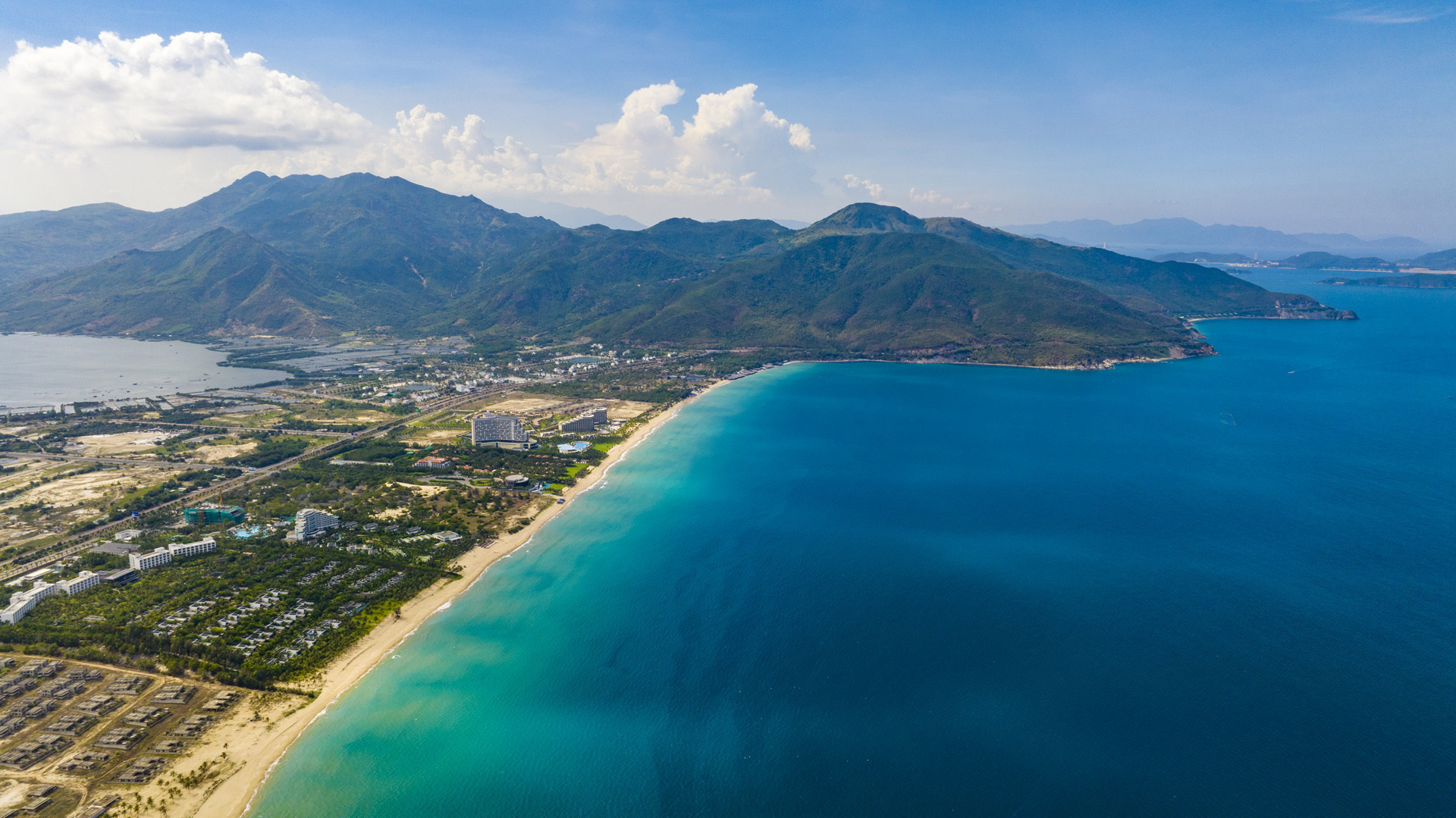
With a coastline stretching over 3,260 km along one of the world's busiest maritime routes, Vietnam holds great advantages for marine economic development. However, why have we not yet truly become a strong maritime nation?
The answer, perhaps, lies entirely within the spirit of the recent guidance from General Secretary and President To Lam, when he requested a powerful transformation in mindset, abandoning a simple "marine economic mindset" to step into a "strategic mindset on a strong national marine development space."
The sea is not just a place to exploit resources or develop a few business fields, but must be identified as a strategic development space that converges economic, national defense, security, science-technology, and international integration interests. It is time for Vietnam to have a revolution in perception, bidding farewell to the ocean-exploitation mindset to create an infinite survival and development space in the new era.
From ‘resource storehouse’ to strategic ‘survival space’
For a long time, the marine economy in Vietnam has often been measured through the output of specific sectors: how many tons of fish are caught, how many barrels of oil are exploited, how many tourists arrive to swim, or how many million TEUs of goods going through ports.
These sectors have certainly contributed huge revenues and created livelihoods for millions of people. However, this approach heavily carries the mindset of exploiting available resources.
The limitations of this mindset are becoming clearly visible. Overfishing causes inshore aquatic resources to deplete; uncontrolled heavy industrial development puts pollution pressure on the marine environment; and the value added from the maritime service chain remains modest. Sectors considered launchpads for the new-generation marine economy, such as deep-sea technology, offshore renewable energy, ocean biopharmaceuticals, or integrated logistics, still have “potential”.
The change in development philosophy emphasized by the Party Chief and State requires us to view the sea as an integrated space. If we only consider the sea as a place to fish or build ports, the value created will hit a "ceiling." But if we consider the sea as the center of transcontinental fiber-optic cables, a giant wind energy field, a transit station for global supply chains, and a massive laboratory for technological innovations, the development room will multiply exponentially.
Many nations succeed not just because they possess seas, but because they know how to organize marine space.
The Netherlands has turned low-lying lands and saltwater estuaries into global logistics hubs. Singapore has almost no natural resources, but its excellence in maritime services have turned it into a global pricing and transit center. Their common point is turning the ocean into a space that creates new value, instead of just a storehouse of resources that diminishes over the years.
Drag from ‘fragmented’ ocean mindset
If one must point out the single largest barrier restraining Vietnam's marine strength today, it is the bottleneck in governance. Marine space has no boundaries, but our development master plans are being "fragmented" mechanically according to the administrative boundaries of each province and city.
The consequence is a fragmented development picture: every province wants to build deep-water ports, airports, open economic zones, and develop beachfront resorts. The absence of an inter-regional coordination mechanism to unify statistical data and planning has led to a situation of neutralizing each other's motivations and scattering investment resources.
Within the same bay, an area planned for aquaculture directly conflicts with eco-tourism orientations; and a master plan for coal-fired thermal power development blocks maritime traffic channels.
The governance of marine space cannot stop at the water's edge. It requires an integrated, seamless planning vision from the connection of large river basins flowing into the sea.
Managing irrigation systems, assessing infrastructure impacts, and preventing natural disasters from the upstream of large basins like the Dong Nai River system or the Mekong Delta must be organically linked with the planning of estuarine areas and the coastal strip. The flow of goods from inland through domestic waterway and road systems must be smooth with major seaports.
The issuance of a new, more generalized resolution, as directed by General Secretary and President To Lam, is precisely to solve this core question: How can we have a unified, interconnected national marine governance model based on databases and marine spatial planning?
Only when we overcome local mindsets and eliminate administrative barriers to form inter-regional marine economic clusters will we create a synergy of strength.
To Van Truong
.svg)
