 Vietnamnet.vn

 Podcast



Only three administrative procedures remain under police authority
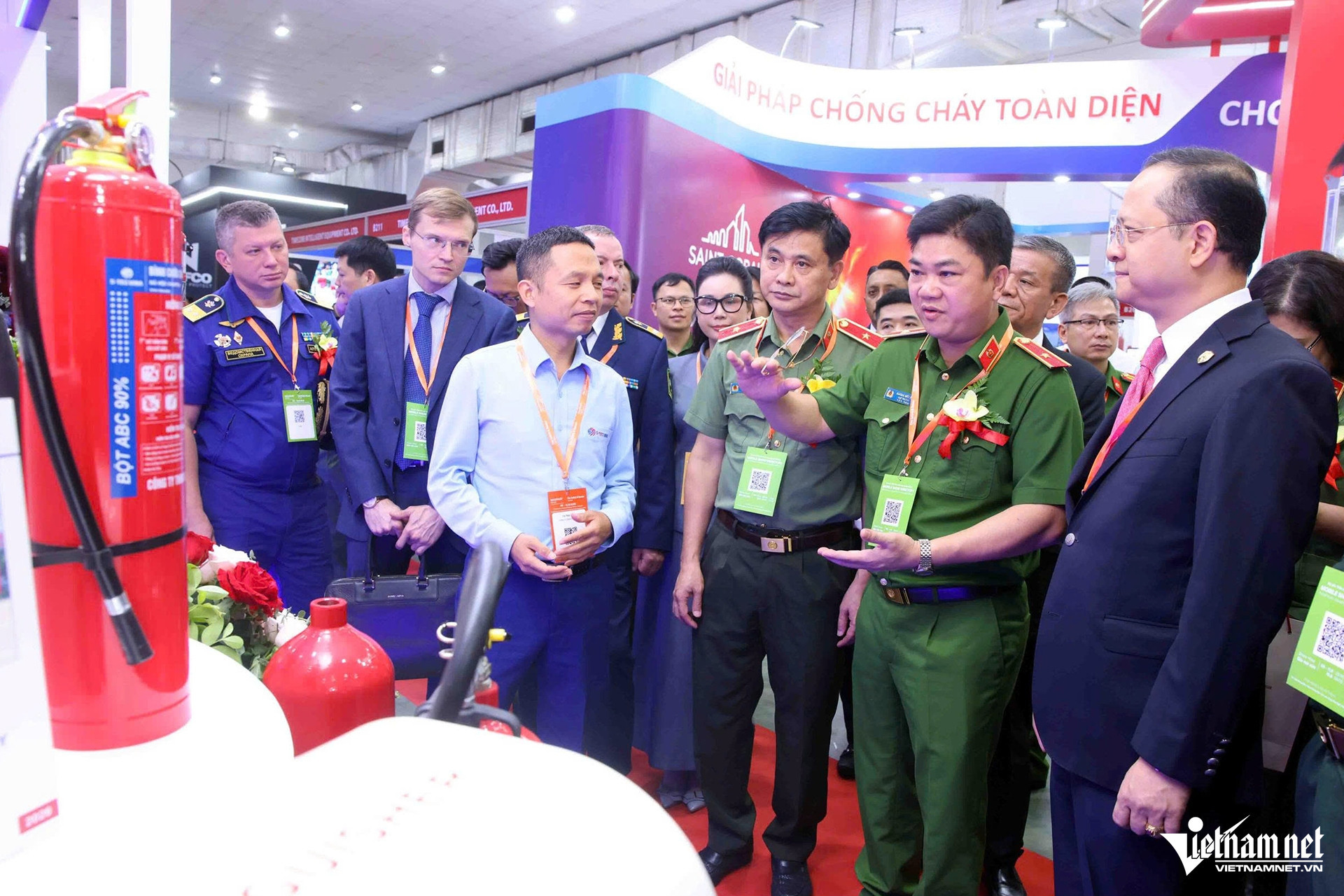
On Oct. 1, a representative of the Fire Prevention, Firefighting and Rescue Police Department (C07) under the Ministry of Public Security said administrative reforms in fire prevention, firefighting and rescue in recent years have introduced major changes aimed at eliminating unnecessary procedures and creating a more favorable environment for individuals and businesses.
A notable example is the 2024 Law on Fire Prevention, Firefighting and Rescue, which provides for nine administrative procedures in the sector. This represents the elimination of 28 out of 37 procedures, or more than 75%, compared with previous fire safety regulations. Seven of the nine procedures were initially handled by police agencies.
Under Government Resolution No. 66.18/2026/NQ-CP on reducing and simplifying administrative procedures, the Ministry of Public Security proposed eliminating another three procedures handled by police agencies.
The proposed cuts include inspections of fire safety acceptance work; fire safety acceptance for buildings and vehicles that had received police certificates approving their designs but had not yet received acceptance approval; and procedures for resuming the operation of facilities, motor vehicles, households and individuals.
In addition, the procedure for issuing certificates for the inspection of firefighting equipment ceased to be effective on July 1, 2026.
As a result, only three administrative procedures in the fire prevention, firefighting and rescue sector are now handled by police agencies, while two are carried out by commune-level People's Committees.
Greater responsibility for investors
According to the C07 representative, reducing the number of administrative procedures to a minimum is part of a broader reform of fire prevention, firefighting and rescue regulations, with the system moving partly from pre-approval toward post-inspection combined with risk-based management.
The new rules also place greater responsibility on investors for complying with the law, under the principle of "proactive prevention, proactive implementation and proactive compliance," while encouraging individuals and businesses to voluntarily meet regulatory requirements.
"To implement the provisions of Resolution No. 66.18/2026/NQ-CP, the Government issued Decree No. 347/2026/ND-CP on Sept. 8, amending several provisions of Decree No. 105/2025/ND-CP, which details and provides measures for implementing the Law on Fire Prevention, Firefighting and Rescue.
The decree cuts administrative procedures, simplifies application requirements and adjusts the categories subject to appraisal and approval of revised fire safety designs. Under the new rules, investors are allowed to organize their own appraisal and approval of fire safety designs for certain items and cases, moving toward management based on technical standards and regulations," the C07 representative said.
Technical standards and regulations on fire prevention and firefighting have been reviewed and revised by the Ministry of Public Security to make them easier to understand and apply. Once building designs comply with the relevant technical standards and regulations, investors only need to carry out construction and organize acceptance in accordance with the appraised and approved designs.
The C07 representative said many investors have shown a marked improvement in their awareness of fire safety requirements. Eliminating police inspections of acceptance work will therefore reduce processing time and state management resources while allowing investors to put projects into operation sooner and lower compliance costs.
The Ministry of Public Security has also simplified application requirements by making greater use of available data, reducing preparation costs for individuals and businesses.
Requirements for approving design adjustments during construction have also been reduced. Approval is now required only for major changes, such as changes in location or area that reduce fire safety distances, reductions in the dimensions of access roads or parking areas for fire engines, or increases in the number of floors.
Processing times shortened, procedures moved fully online
Administrative processing times have also been significantly shortened, from 15 working days to 10 days for Group A projects and from 10 working days to six days for Group B projects.
Shorter processing times are expected to allow investors to put projects into operation sooner, contributing to economic growth.
As part of the Government's Project 06, the Ministry of Public Security has also introduced a fully electronic system for receiving administrative applications and returning results.
Dinh Hieu
.svg)
