 Vietnamnet.vn

 Podcast



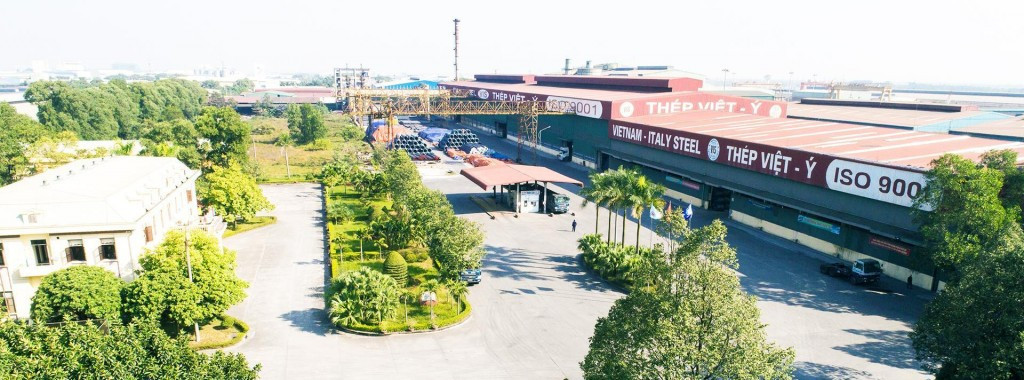
The company recently released documents from its 2026 annual general meeting, outlining an ambitious plan: revenue is expected to surge 144 percent year-on-year to VND7.888 trillion (US$320 million), alongside a projected pre-tax profit of VND27.78 billion (US$1.13 million). If achieved, this would mark its first return to profitability after years of losses.
Yet behind these targets lies a persistent imbalance. Since 2017, the company has consistently generated revenue in the range of VND5-6 trillion (US$205-245 million) annually, underscoring its scale and continued presence in the construction steel market. However, profitability has moved in the opposite direction.
After recording a profit of over VND43 billion (US$1.76 million) in 2017, the firm entered a prolonged downturn, with losses of VND326 billion in 2018, VND219 billion in 2019, VND503 billion in 2022, VND283 billion in 2023, and more than VND312 billion in 2024. Although losses narrowed to around VND60 billion (US$2.46 million) in 2025, the company has yet to regain financial stability.
The balance sheet tells a similarly concerning story. Total assets have expanded significantly, rising from roughly VND2.6-3 trillion in earlier years to over VND4.2 trillion (US$172 million) by the end of 2024. However, much of this growth has been debt-driven, with liabilities reaching VND3.663 trillion (US$150 million), while equity has declined sharply to just over VND580 billion (US$23.8 million).
This reflects a strategy focused on maintaining revenue and market share, but without resolving core issues related to costs and profit margins. Expansion under low efficiency conditions has increased financial pressure, forcing the company to juggle growth ambitions with the need to repair its capital structure.
From domestic player to Japanese-controlled firm
Founded in the early 2000s, Viet Y Steel was once a familiar name in Vietnam’s construction steel sector and has been listed on HOSE since 2006.
During its growth phase, the company attracted investment from Thai Hung Trading JSC, a major but relatively low-profile steel distributor in Vietnam. Thai Hung, led by chairwoman Nguyen Thi Vinh, reportedly accounts for about 13 percent of the country’s steel consumption annually and has stakes in several major industry players.
Between 2016 and 2017, VIS underwent a significant ownership shift. Control moved from Song Da Corporation to Thai Hung, which raised its stake to over 65 percent. The strategy was clear: expand from trading into production, positioning VIS as a manufacturing hub within its steel ecosystem.
However, a turning point came in late 2017 when Kyoei Steel entered as a strategic investor. Within less than a year, Kyoei Steel increased its ownership to 65 percent, and nearly 74 percent by the end of 2018, effectively taking control. Thai Hung gradually reduced its stake to 20 percent before fully exiting management and completing divestment around 2021.
The rise and exit of Thai Hung highlights the limitations of combining trading strength with manufacturing complexity. While trading offers flexibility and cash flow advantages, steel production requires heavy capital investment, carries higher risks, and is deeply tied to industry cycles.
Structural challenges in a volatile industry
The broader dynamics of the steel industry further complicate VIS’s recovery path. Unlike integrated players such as Hoa Phat Group, which benefit from vertical integration and cost control, or companies like Hoa Sen Group, which leverage strong distribution networks, VIS remains heavily focused on construction steel.
This leaves the company highly exposed to fluctuations in the domestic real estate market and raw material prices, both of which have exerted downward pressure on margins.
The COVID-19 period and the subsequent slowdown in real estate exposed these vulnerabilities. As projects stalled, steel demand weakened sharply, forcing VIS to scale back production, while inventory levels rose and financial costs increased. Meanwhile, larger competitors were better positioned to pivot toward exports or optimize costs.
The central question now is whether VIS can regain momentum. Its production base and revenue scale remain intact, but deeper issues persist: eroded equity, high debt, and weak profitability.
In a more optimistic scenario, the company could undergo further restructuring under Japanese ownership, potentially integrating into broader supply chains. In the near term, however, it continues to face a familiar dilemma - high revenue but thin or negative margins - a paradox that remains difficult to resolve amid ongoing volatility in the steel sector.
Manh Ha
.svg)
