 Vietnamnet.vn

 Podcast



The warning comes as regulators continue to uncover cases in which households and individuals have bought uncertified repeater devices to improve weak mobile reception inside homes, only for those devices to disrupt nearby mobile networks.
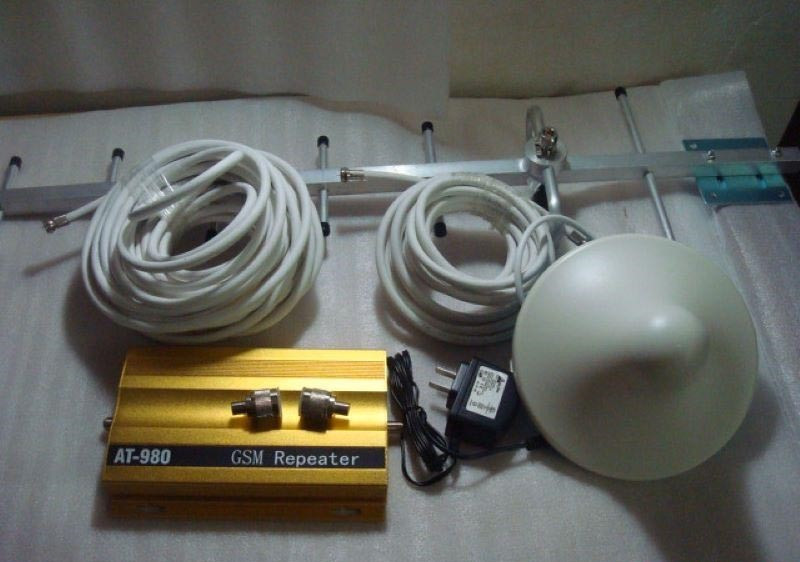
According to Tuan, people who install mobile signal boosters that fail to meet technical standards can cause interference and service interruptions. Since 2023, the authority has detected and handled 532 violating devices, most of them used by individuals or households with limited understanding of the law. Many had bought the equipment to improve reception in areas with poor signal, such as basements or buildings shielded by high-rise structures.
Over the past period, the Authority of Radio Frequency Management has carried out regular monitoring through radio frequency control systems, while also using interference reports from organizations and individuals. Specialized equipment has been deployed to monitor, locate and identify interference sources, allowing authorities to handle violations by organizations and individuals using such devices.
The authority has also worked with relevant forces to expand public communication, including leaflets, direct messages to mobile subscribers, conferences, workshops, training sessions, mass media campaigns and social media outreach.
“Since 2025, the authority has developed and operated the iSpectra interference monitoring and detection platform. This platform can monitor down to each mobile station, improving our ability to proactively detect and completely handle the use of signal boosters in a timely manner,” Tuan said.
In parallel, the authority has coordinated with the Vietnam E-Commerce and Digital Economy Agency and the Market Surveillance Agency under the Ministry of Industry and Trade to require e-commerce platforms to remove links selling these devices and other equipment lacking conformity certification.
To improve coverage, the authority has licensed low-frequency bands to mobile operators. In 2025, it granted the 700 MHz band to mobile networks. As a low-frequency band with wide and deep coverage, 700 MHz can help operators improve service in local coverage dead zones, particularly in densely built urban areas.
Regarding sanctions, Tuan said the illegal installation, use, trade or sale of mobile signal boosters may lead to administrative penalties and confiscation of the devices. In cases causing serious consequences, violators may also face further handling under relevant legal regulations.
“In reality, most violations by residents stem from lack of awareness. They buy devices to strengthen mobile signals without fully understanding the harm. Once the issue is explained and they are asked to remove the equipment, they comply and do not repeat the violation. In the authority’s assessment, current sanctions are basically deterrent and the number of violations is gradually declining. However, for trading and public advertising, especially online, stronger inter-agency coordination is needed to control and strictly handle the problem from import to distribution,” Tuan said.
Vietnam’s urban structure, with narrow alleys and dense housing, often makes indoor mobile coverage difficult. In many places, weak mobile signals lead residents to install boosters, but uncertified devices can interfere with mobile networks.
When telecom staff visit homes to handle interference, many residents say they never wanted to install boosters, but weak signals in their area left them feeling they had no other choice. For them, buying and installing the equipment is often a reluctant solution.
This raises questions about the responsibility of mobile operators. Have telecom companies created effective mechanisms to receive customer reports about locations without mobile coverage? Why do operators not install certified boosters for customers instead of leaving users to find their own devices, which can then cause harmful interference?
These questions are not only for telecom operators. They also concern the Ministry of Science and Technology, especially as it periodically announces quality criteria for mobile networks.
Recent cases show how easily illegal or uncertified devices can disrupt communications.
The Authority of Radio Frequency Management recently inspected and handled three illegal mobile repeater devices that caused interference to mobile networks in Hung Yen province.
Based on data analysis from the iSpectra frequency monitoring system, the Regional Radio Frequency Center V, under the authority, coordinated with the Hung Yen Department of Science and Technology and local authorities on March 30 and April 2, 2026 to measure, inspect and handle three illegal mobile repeater devices. The devices were causing harmful interference to several mobile base stations in Viet Tien and Nghia Tru communes.
On-site inspections found that all three repeaters had been bought and installed by households to strengthen indoor mobile signals. Notably, all three devices had been purchased through the Shopee e-commerce platform.
The devices were unlicensed, failed to meet technical standards and emitted signals in violation of regulations. As a result, they degraded service quality, caused dropped calls, slowed data access and directly affected multiple mobile base stations in the area.
The Regional Radio Frequency Center V drew up administrative violation records and issued penalty decisions against the individuals involved. It also ordered the removal and destruction of all illegal signal boosters in accordance with the law.
Authorities advised the public not to buy, install or use mobile signal boosters. The unauthorized use of radio equipment not only violates the law but also poses risks to information security, economic development and social order.
Earlier, the Authority of Radio Frequency Management had detected several interference cases caused by non-compliant devices.
Since late July 2025, many residents and officials working near the Hai Phong Department of Science and Technology at 1 Pham Ngu Lao Street, An Bien ward, Hai Phong, reported that smart keys for cars and motorbikes were not working. Vehicles could only be started after being moved about 50m away from the area.
After measurement and signal analysis, the inspection team identified the source of interference as a TRND16 wireless vibration alert system with 16 tags, used to notify customers when drinks were ready at Mr Good Tea, located at 4 Pham Ngu Lao Street, An Bien ward, Hai Phong.
In 2024, the Regional Radio Frequency Center V handled two similar cases in Hai Phong. One occurred at Nhat Van 1 Restaurant at 303 Nguyen Van Linh Street, where a faulty rolling door remote-control device caused interference that affected smart keys for cars and motorbikes.
The second interference case occurred near Lot LK1, Hoang Huy Apartment Building, An Hai ward, formerly An Dong commune, where an electronic game management device emitted signals that completely disrupted smart key devices.
The devices involved in these cases did not have conformity labels and failed to meet technical requirements under Circular 08/2021/TT-BTTTT. After the devices were handled, vehicles in the affected areas returned to normal operation and the interference disappeared.
To ensure radio frequency safety and prevent similar incidents, the Authority of Radio Frequency Management urged individuals and organizations to buy and use only radio-wave devices with clear origin, conformity certification, conformity declaration and proper conformity labels as required by current regulations.
When suspected interference occurs, people can report it by calling or messaging the hotline 0862.92.92.92, or by contacting the regional radio frequency center or the Department of Science and Technology in their province or city.
Thai Khang
.svg)
