 Vietnamnet.vn

 Podcast



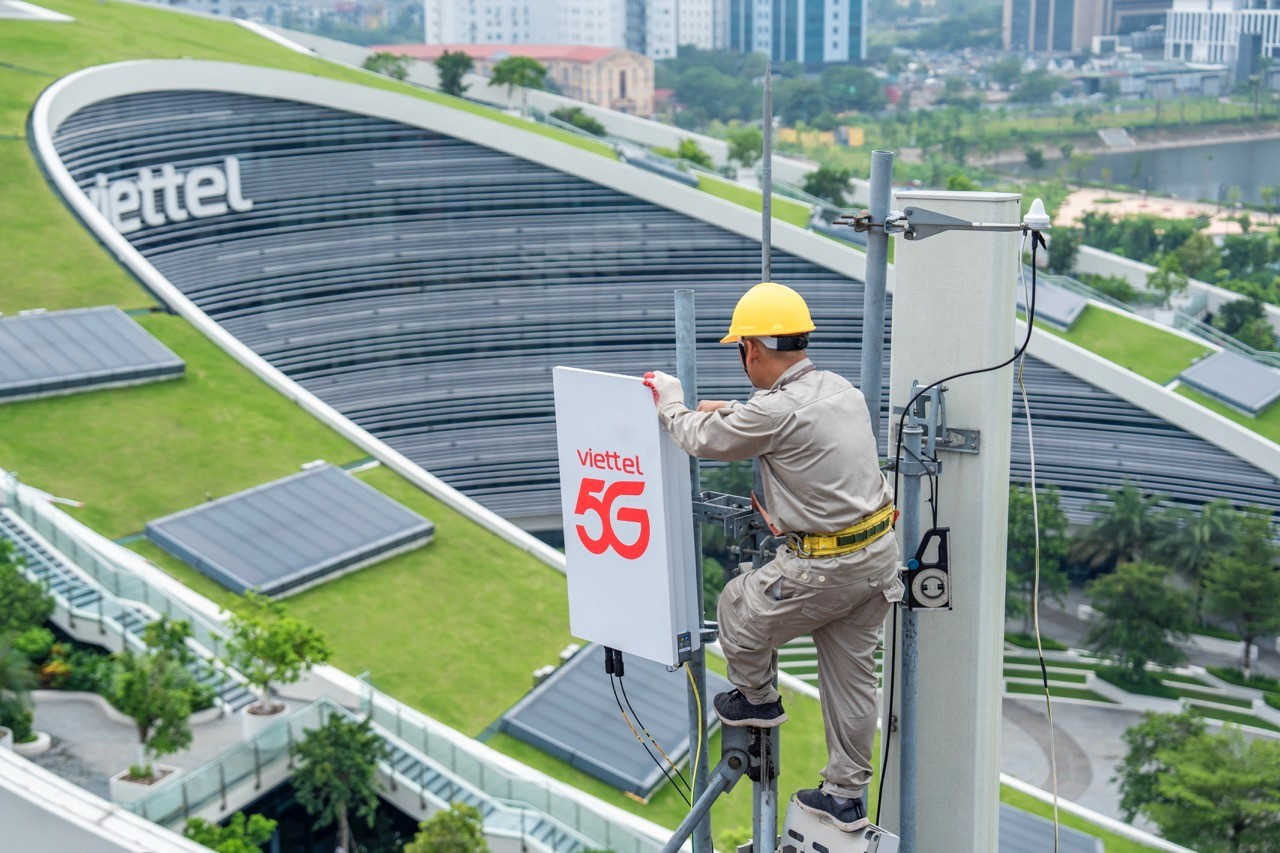
After more than a decade of strong expansion driven by the mobile data boom, the global telecom industry is entering what many research organizations describe as a “maturity phase,” marked by slower growth and mounting restructuring pressure.
Reports by GSMA and several international consulting firms show that global telecommunications revenue in recent years has grown only at a low single-digit rate, and in many developed markets has even stagnated or declined.
Meanwhile, PwC forecast that global telecommunications revenue would grow at a rate of only about 2.9 percent per year.
Many major telecom groups have been forced to scale back international operations, divest from distant or less efficient markets, and refocus on domestic markets to preserve profitability.
In Vietnam, however, one telecom and technology enterprise has moved against this trend. At its 2025 year-end review, the company reported growth of 23.9 percent in overseas markets, seven times higher than the global industry average.
For the full year, revenue from international markets reached $3.34 billion in 2025. This marked the ninth consecutive year Viettel has maintained double-digit growth overseas, a rare achievement in the global telecom industry.
Viettel’s overseas operational scale also continued to expand. Total international mobile subscribers reached 90 million, officially surpassing its subscriber base in Vietnam.
Of the 10 countries where Viettel has invested, it holds the number one position in seven markets, including Unitel (Laos), Metfone (Cambodia), Mytel (Myanmar), Telemor (Timor-Leste), Lumitel (Burundi), Natcom (Haiti) and Movitel (Mozambique).
In 2025, cash flow remitted back to Vietnam from the group’s international markets reached $385.5 million, marking the fourth consecutive year of nearly $400 million in annual repatriated cash flow.
By the end of 2025, Viettel’s overseas investment payback ratio reached 91 percent, achieving its target ahead of schedule.
In one of the most challenging markets, Peru, the group also made a strong mark as its local unit Bitel rose to the second place, two years ahead of target, despite competition from global telecom giants.
Alongside traditional telecom services, Viettel has also rolled out multiple digital platforms such as e-wallets, e-government solutions, and online education and healthcare services.
In several African and Southeast Asian markets, these services have helped people access basic digital utilities, from payments and learning to information and public services.
Meanwhile, FPT Corporation has just announced the establishment of a legal entity in Israel, the country known as the "startup capital" of the world, focusing on strategic technologies such as AI, semiconductors, and cybersecurity.
On January 13, FPT Israel was officially established. This move took place in the context of the approved Implementation Plan for the Vietnam - Israel Free Trade Agreement (VIFTA), opening a favorable legal corridor for trade and investment activities between the two countries.
According to the business representative, direct presence in Israel aims to contribute to Vietnam’s ambition to master core technologies and develop technologies with Vietnamese sovereignty, in response to Resolution 57 and Decision 1131.
FPT Israel will operate as a connecting hub, building a research and development (R&D) center and cooperating with local partners. The three key technology areas it targets are artificial intelligence (AI), cybersecurity and semiconductor chips.
At the launch event, FPT also announced a list of Israeli technology partners to cooperate with in the near future, including: Enabley (education), CropX (high-tech agriculture), Cyabra and CyberproAI (cybersecurity), Classiq (quantum computing), and AsicSValue (semiconductors).
Attending the announcement, Nguyen Khac Lich, Director General of the Department of Information Technology Industry under the Ministry of Science and Technology, said the move aligns with the new phase of the “Make in Vietnam” policy.
“The ‘Make in Vietnam’ policy for 2026–2030 emphasizes the leading spirit of ‘designing in Vietnam and manufacturing in Vietnam’. This does not mean leading at all costs, but leading in areas where Vietnam has advantages, real demand, the ability to differentiate and create sustainable value,” Lich said. He also urged enterprises to focus on innovation, strengthen R&D cooperation, and comply with international standards when expanding into new markets.
From the host country’s side, Israeli Ambassador to Vietnam Yaron Mayer said the presence of Vietnamese enterprises in Israel is a positive signal for bilateral cooperation.
Israel is currently ranked 14th out of 139 countries in the Global Innovation Index, with high technology contributing a large share of its economy. FPT’s expansion into this market brings the total number of countries and territories where the group is present to more than 30.
Thai Khang
.svg)
