 Vietnamnet.vn

 Podcast


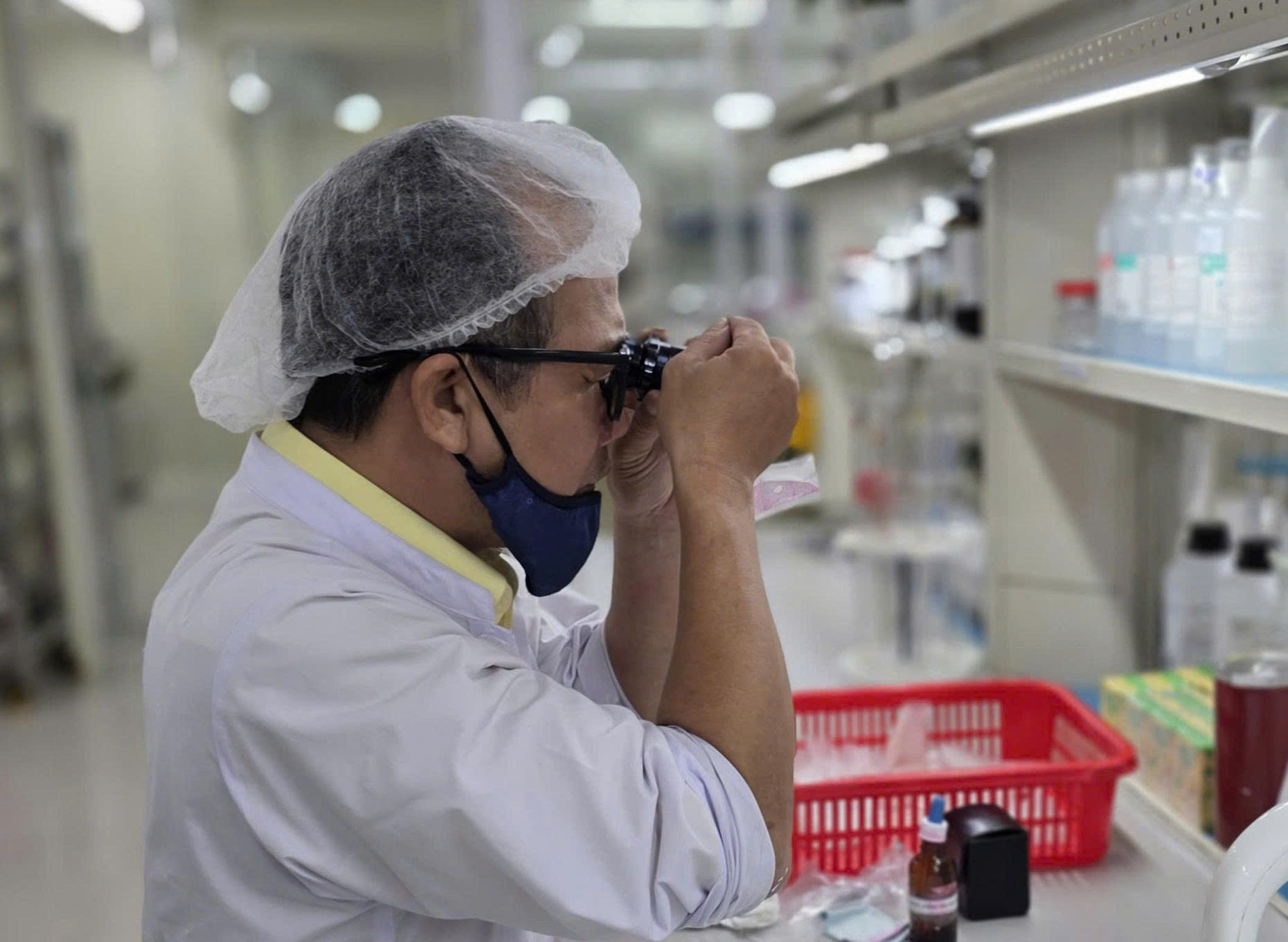
Scientific research has transformed into practical market solutions as Vietnam tech product commercialization has gained global traction across biotechnology, cybersecurity, and digital platforms. Vietnam's scientific research capacity continues to improve significantly. According to SCImago, Vietnam ranked 42nd globally in scientific publication volume in 2025, climbing three places from 2024 while ranking 12th in Asia and 5th in Southeast Asia.
Accelerating Vietnam tech products commercialization remains central to maintaining this upward momentum.
Research moves into practice
In the first 10 months of 2026, Vietnamese entities produced 26,107 scientific publications indexed on Scopus, surpassing the total volume achieved throughout all of 2025.
Higher education institutions comprised 9 out of the top 10 Vietnamese organizations with the most international publications. By June 2026, SCImago ranked 61 Vietnamese universities, adding 15 institutions compared to 2024. The Ministry of Science and Technology approved research support programs for outstanding PhD candidates (2026–2030) and basic natural science research (2026–2035).
International cooperation in scientific research has also continued to expand. The International Center for Mathematics Research and Training and the International Center for Physics, both under the Vietnam Academy of Science and Technology, have had their UNESCO designation as Category 2 centers renewed for the 2026-2034 period.
In radiation safety, an EU-funded cooperation project has established 41 online monitoring stations to monitor radiation and share early-warning data across the region.
Notably, some research and technology development results have been turned into tangible products and are gradually reaching the market.
In biotechnology, a vaccine against African swine fever developed and produced in Vietnam has been exported. In October 2026, Vietnam completed an order for 300,000 doses for the Philippines.
In cybersecurity, the Government Cipher Committee, in cooperation with domestic businesses, successfully developed a specialized security chip.
In the application of nuclear technology, the Hanoi Irradiation Center was certified by the Animal and Plant Health Inspection Service (APHIS) of the US Department of Agriculture as meeting the technical requirements for treating fresh fruit for export. It is the third facility in Vietnam to receive this certification, enabling quarantine treatment in the northern region for lychee exports to the US.
Digital technology industry grows
The digital technology industry remains a major growth engine. In 2025, sector revenues reached $215 billion while export turnover hit $172 billion, up 36 percent and 30 percent year-on-year, respectively.
During the first 10 months of 2026, estimated revenues reached $254.6 billion while exports reached $ 212 billion, increasing 53 percent and 46.2 percent over the same period last year.
Within national digital transformation, shared digital platforms, databases, and online public services expanded. The National Digital Architecture Framework was enacted, guiding ministries and localities to build interoperable information systems ensuring data reusability.
As of September 30, 2026, 37 of the 79 national shared digital platforms became operational, while 12 were undergoing testing. The National Public Service Portal offered 3,745 online administrative procedures, including 2,361 end-to-end procedures. By October 2026, approximately 36.16 million digital signature certificates had been issued nationwide, up 36.71 percent from the end of 2025.
One notable development is the use of artificial intelligence to support public administration. Two national-scale AI platforms for public services, built on Vietnamese large language models developed and controlled by domestic companies, are being provided free of charge during their pilot phase across all 24 central-level ministries and agencies and all 34 provinces and cities.
These platforms assist legal research, document drafting, summarization, comparison, and regulatory compliance. By November 2, 2026, registered user accounts reached approximately 761,000.
Alongside the development of digital infrastructure and platforms, science, technology and innovation policies are gradually shifting toward addressing practical challenges, with a stronger focus on tangible outputs.
The Prime Minister has identified 20 major challenges and assigned 10 ministries, sectors and agencies to take the lead in addressing them. The Prime Minister also approved a plan to restructure national science, technology and innovation programs for the 2026-2035 period. As of November 3, 2026, 18 strategic technology tasks had been approved.
Intellectual property protection has also recorded positive results. In 2025, the authorities processed 251,676 applications and granted 83,385 protection titles. The number of patent applications filed by Vietnamese organizations and individuals increased by 36 percent, while the number of patents granted rose by 134.2 percent compared with 2024.
In the first 10 months of 2026, authorities processed 182,415 applications and granted 76,804 industrial property protection titles.
Thai Khang

