 Vietnamnet.vn

 Podcast



The State Bank of Vietnam is finalizing a plan to establish a centralized gold exchange aimed at enhancing transparency, unlocking private gold reserves, and strengthening state management of the gold market.
The proposal is expected to be submitted to the government this October.
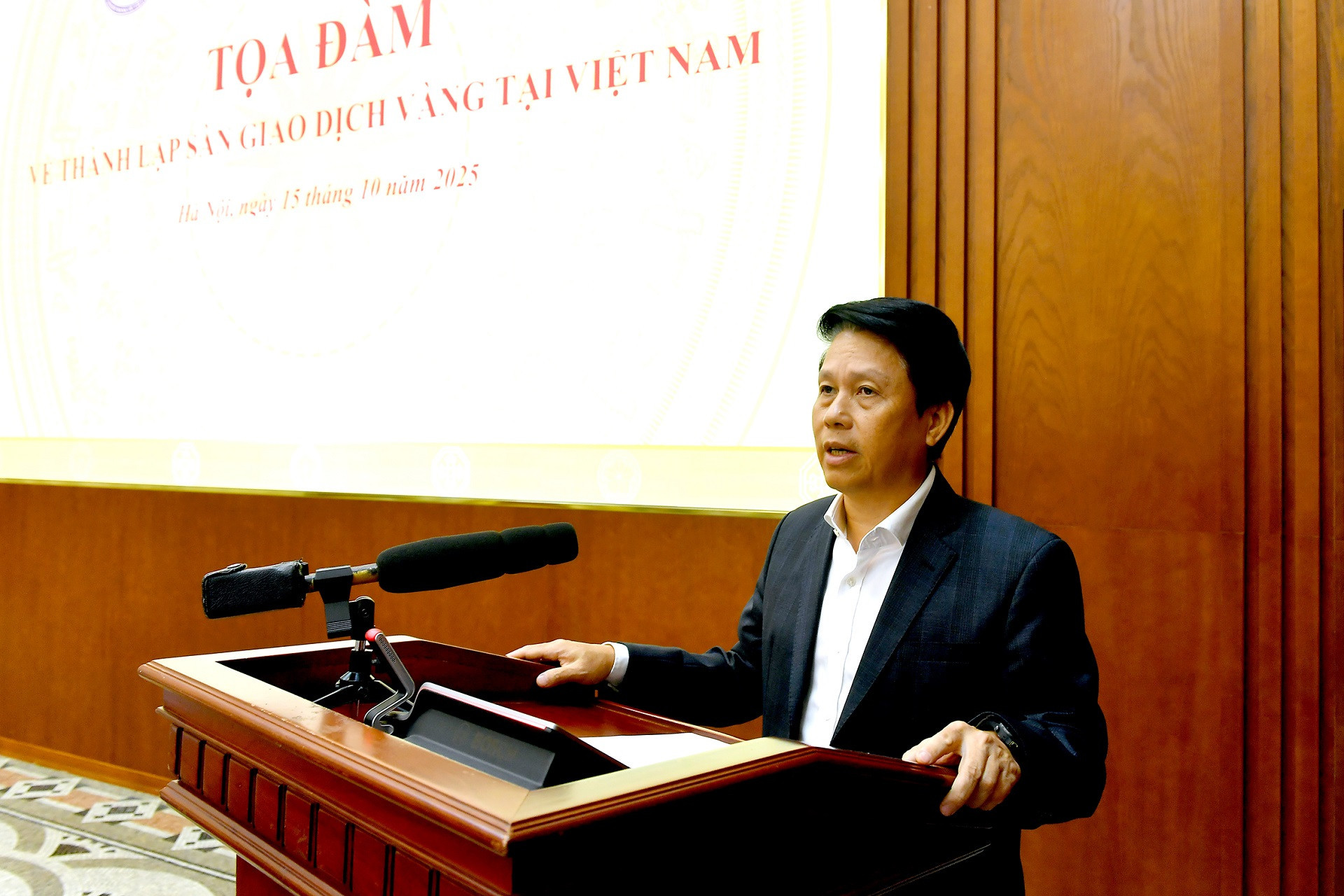
At the seminar “Establishing a Gold Exchange in Vietnam” held on October 15, Deputy Governor of the State Bank Pham Tien Dung stated that the initiative would improve legal frameworks, develop market infrastructure, and provide a transparent and efficient gold trading environment.
The gold exchange is expected to limit unofficial trading channels, provide reliable data for market forecasting and policy planning, and become a crucial tool for state supervision.
Participants at the seminar - including government officials, businesses, banks, and trade associations - agreed on the importance of launching a centralized, state-managed physical gold exchange, with potential to gradually expand into non-physical gold products.
In the long term, the gold exchange is projected to help stabilize the market, build public trust, and channel dormant gold into the economy, promoting productive investment and national development.
Dao Xuan Tuan, Director of the Foreign Exchange Management Department, added that in its initial phase, the exchange would focus on physical gold, specifically distributing standardized imported raw gold through transparent channels.
Once stable, the exchange could expand to include digital gold accounts and gold derivatives, depending on market conditions.
Eight key stages of gold exchange operations
Before finalizing the centralized model, the State Bank had considered alternative models such as integrating gold into the commodity exchange system or establishing a gold exchange within an international financial center in Vietnam.
Regardless of the structure, the goal remains the same: to build a modern gold trading hub with full infrastructure, including clearing systems and storage facilities, to gradually mobilize the vast gold reserves held by citizens.
Operations of the gold exchange are expected to follow eight key steps:
Licensing: Grant licenses for gold exchange service providers and designate commercial banks to participate.
Account registration: Eligible organizations and individuals open accounts to trade on the exchange.
Deposits: Traders deposit cash or gold as collateral before placing orders.
Order placement: Orders to buy or sell gold are submitted; the system matches and notifies results.
Physical delivery: Gold is delivered upon order matching.
Settlement: Payment is completed based on matched order value.
Reporting and data storage: All transaction data is recorded, stored, and reported.
Inspection: Authorities conduct regular and ad-hoc inspections and oversight.
The pilot implementation will proceed in three phases, with flexible adjustments based on real-world performance.
Phase 1: Trade in standardized imported raw gold.
Phase 2: Include both raw gold and gold bullion.
Phase 3: Expand to all forms of gold in circulation, including certificates and derivatives.
During the pilot period, the exchange will operate solely within Vietnam and will not be linked internationally.
In Phase 1, participants will include the gold exchange service provider, settlement bank, and trading members. More stakeholders may be added in later phases.
Centralized custody and gold certification systems will not be implemented in the initial phase but are expected to be developed in cooperation with relevant ministries in future phases.
Tuan Nguyen
.svg)
