 Vietnamnet.vn

 Podcast



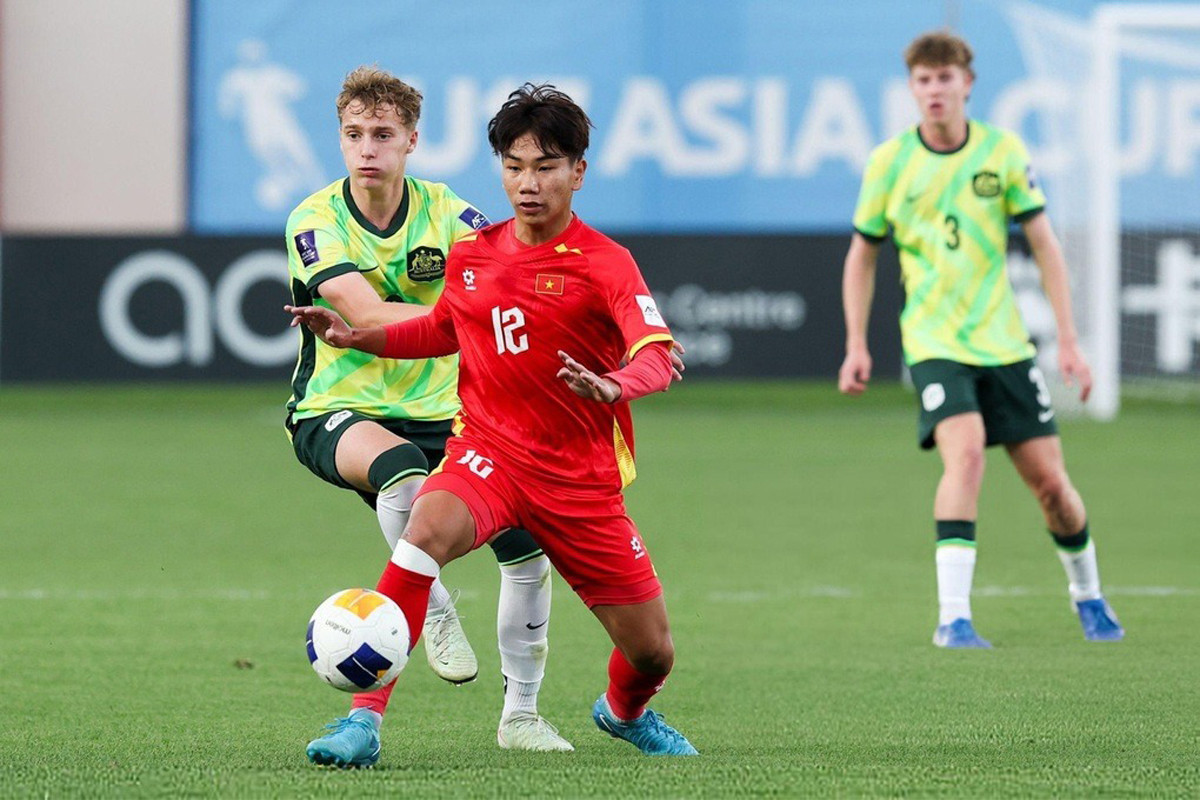
Vietnam’s U17 team now know their opponents at the FIFA U17 World Cup 2026. More importantly, the tournament in Qatar is expected to provide lessons that Vietnamese youth football simply cannot find within Southeast Asia.
A difficult challenge ahead
The official draw ceremony held at FIFA headquarters on May 21 placed Vietnam in Group G alongside Belgium, New Zealand and Mali.
On paper, Vietnam avoided one of the tournament’s toughest groups.
But realistically, the gap between Southeast Asian football and the world’s leading nations remains enormous, even at senior level.
That reality means the tournament in Qatar will be anything but easy for coach Cristiano Roland and his players.
Still, for Nguyen Luc and his teammates, the competition itself already represents a remarkable experience.
The young Vietnamese side will have the opportunity to face three teams representing three very different football cultures from Europe, Africa and Oceania.
Each opponent brings a distinct playing style and football philosophy.
Those are lessons Vietnam’s young players rarely encounter in regional competitions.
The greatest value lies beyond results
In Vietnam, expectations always rise whenever national teams enter major tournaments.
Fans dream of miracles and hope to see underdog victories against football powerhouses.
But at the age of 16 or 17, learning important lessons may matter more than winning matches.
The World Cup will show Vietnam’s young players that individual technique alone is only a small part of modern football.
To compete at the highest level in the future, players also need speed, physical strength, tactical intelligence and the ability to handle relentless pressure for 90 minutes.
Such lessons are difficult to experience in Southeast Asian tournaments, where Vietnam’s youth teams often enjoy more time on the ball, face less physical intensity and rarely encounter the same aggressive tempo found at global competitions.
More importantly, the FIFA U17 World Cup offers Vietnamese football an opportunity to honestly assess itself.
Qualifying for the World Cup and performing well in Asia are achievements worth celebrating.
Yet the distance between Vietnam and the world’s strongest football nations remains significant.
That gap is not about spirit or ambition.
It lies in youth development systems, competitive environments and long-term player training structures.
If Vietnam’s U17 team can leave the World Cup wiser, more mature and with a clearer understanding of where they stand in global youth football, that alone would represent meaningful success.
Sometimes, the experiences unavailable in Southeast Asia are exactly what Vietnamese football needs to move forward.
Duy Nguyen
.svg)
