 Vietnamnet.vn

 Podcast



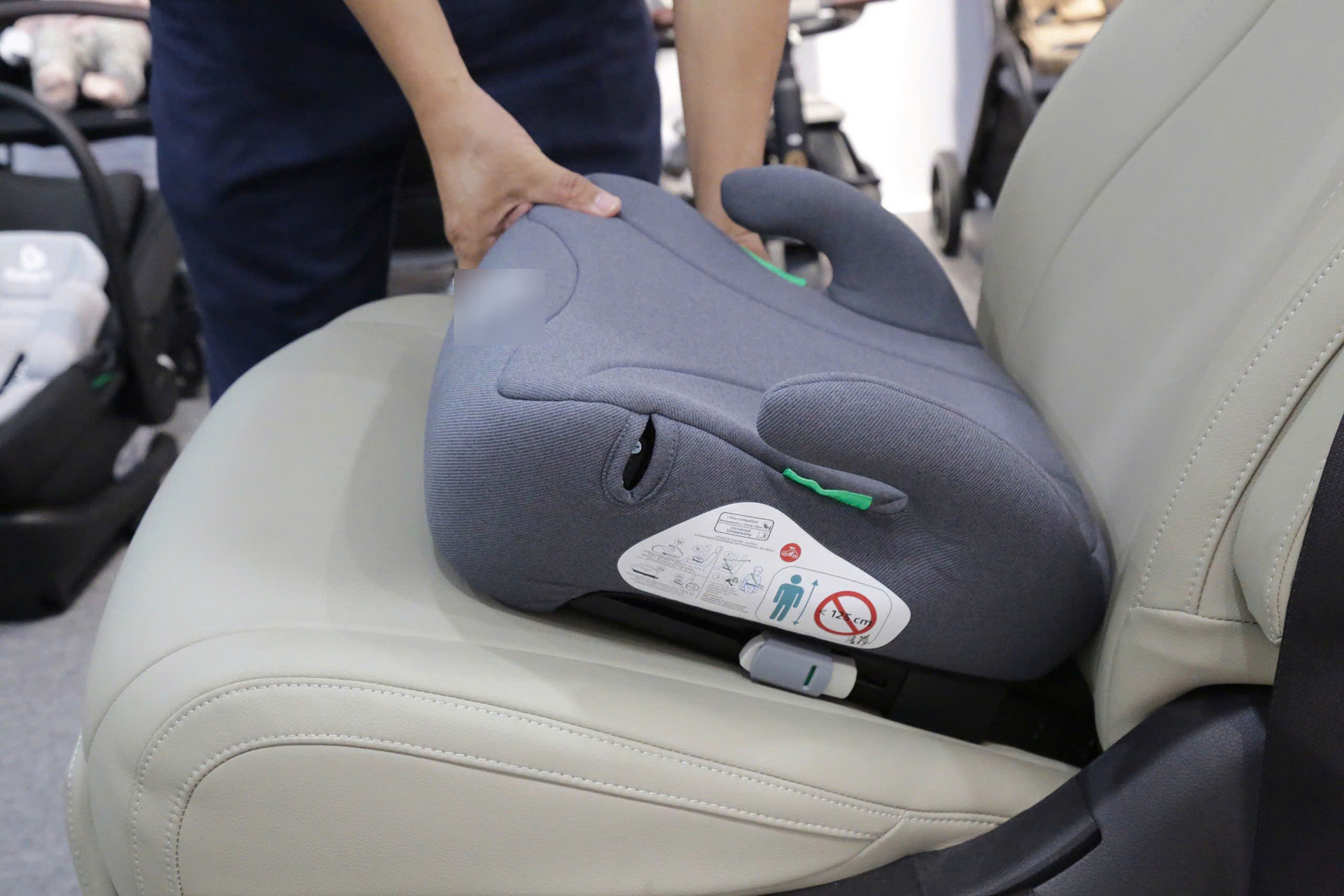
On December 2, a representative of the Traffic Police Department under Vietnam’s Ministry of Public Security announced revisions to the regulation on child safety devices in cars. These changes aim to make the rules more practical and suitable for Vietnam’s current traffic conditions.
According to the latest draft amendment to the Law on Order and Road Traffic Safety - part of the bill to revise ten laws related to public security - the Government has adopted the following changes after feedback from National Assembly members:
“When transporting children under 10 years old and shorter than 1.35 meters in a car, they must not sit in the same row as the driver, unless the vehicle only has a single row. The driver must use or instruct the use of appropriate child safety devices - except in passenger transport vehicles.”
This means commercial passenger transport vehicles (such as taxis, shuttle buses, or public buses) will be exempt from the requirement to use dedicated child safety devices. The exemption was made to enhance the law’s feasibility and better align with real-world conditions in Vietnam.
What qualifies as a child safety device?
As defined, a child safety device is any equipment that ensures safety for children seated or lying down in a car. It is designed to reduce the risk of injury in case of collision or sudden braking by limiting a child’s body movement. These include:
Car seats
Infant carriers
Booster seats with seat belts
Equipment that secures the child and attaches to the vehicle
The revised law is expected to take effect from January 1, 2026, following approval by the 15th National Assembly during its 10th session.
Context and implications: The updated regulation has sparked discussion around its practicality, especially for families with multiple young children traveling in 5-seat cars. Experts and parents have raised concerns about space limitations and compliance difficulties.
Nonetheless, authorities emphasize that child safety in vehicles is as important as wearing helmets when riding motorcycles.
Dinh Hieu
.svg)
