 Vietnamnet.vn

 Podcast


Vietnam's efforts to reduce transport emissions should involve a coordinated range of measures rather than relying solely on replacing gasoline-powered vehicles with electric alternatives.
The Government Office issued Document No. 11281/VPCP-CN on November 5, conveying instructions from Standing Deputy Prime Minister Pham Gia Tuc on finalizing the Transport Services Development Strategy and the Action Program on Green Energy Transition and Greenhouse Gas Emissions Reduction in Transport.
Under the directive, the Ministry of Construction will lead coordination with relevant agencies to review and finalize draft decisions approving the two initiatives.

The Deputy Prime Minister emphasized that the policies must clearly outline coordinated measures encouraging individuals and businesses to voluntarily adopt green transportation based on their financial circumstances, socioeconomic conditions and available transport infrastructure.
Importantly, the policies must not impose mandatory requirements, or provisions that could be interpreted as compulsory deadlines, for vehicle owners, individuals or businesses to switch to fully electric or other green vehicles, particularly road motor vehicles.
The directive has attracted considerable public attention and support, as gasoline-powered motorcycles remain the primary means of transportation for tens of millions of Vietnamese people.
Although electric motorcycles are becoming increasingly popular, they have yet to meet every user's transportation needs.
Consumers seek vehicle choices that match their budgets
For people who depend heavily on motorcycles for commuting, taking children to school or running businesses, choosing a vehicle involves more than following technological trends.
Purchase prices, operating expenses, travel distances and charging accessibility all influence purchasing decisions.
Nguyen Huu Dung, a motorcycle user in Hanoi's Long Bien area, acknowledged several advantages of electric vehicles, including quieter operation, zero tailpipe emissions and potentially lower energy costs under certain conditions.
However, he noted that the initial purchase price remains relatively high for many working-class households.
Charging time and access to charging stations also present challenges for people who frequently travel long distances, make business trips or need to use their vehicles continuously throughout the day.
Dung suggested that authorities should encourage the transition and consider geographically targeted restrictions rather than requiring everyone to replace gasoline-powered motorcycles with electric models by a fixed deadline.
Such an approach, he argued, would preserve consumers' freedom to choose transportation suited to their circumstances.
Phan Huyen Thanh, a resident of Hanoi's Ha Dong area who commutes daily on a gasoline-powered motorcycle, raised concerns about charging infrastructure in apartment buildings and rented accommodation.
She said many residential properties were not originally designed to accommodate electric vehicle charging, while suitable charging facilities remain unavailable in some neighborhoods.
"Keeping an electric vehicle in an apartment building is very difficult because charging facilities were not included in the original planning, while public transportation is not yet sufficiently convenient," Thanh said.
She argued that encouraging green mobility must go hand in hand with infrastructure development, financial support policies and an adequate transition period.
"When these conditions are in place, people will have stronger reasons to consider switching to electric vehicles instead of feeling pressured," she added.
Modern gasoline and hybrid vehicles still have a role
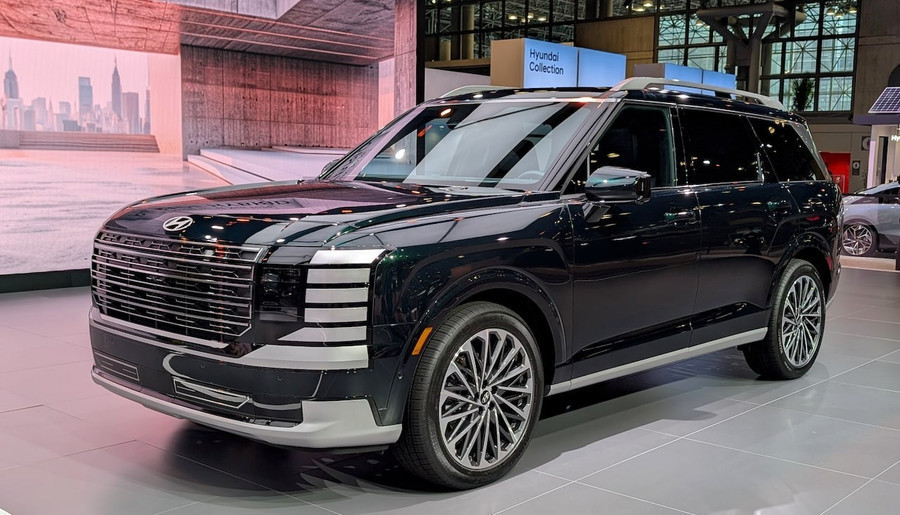
Many consumers believe the transition toward greener transportation should not necessarily mean immediately eliminating internal combustion engine vehicles.
Alongside fully electric models, newer gasoline-powered and hybrid vehicles with lower fuel consumption and improved emissions performance can also contribute to environmental protection.
Duong Ngoc Duy, a resident of Hanoi's Thanh Liet area, said modern gasoline engines have become considerably more fuel-efficient and produce fewer emissions than earlier generations.
"Many new-generation gasoline vehicles consume very little fuel and emit significantly less pollution than before," Duy said.
He argued that advances in automotive technology and stricter emissions standards should be recognized as contributions to reducing pollution, rather than treating green transportation as synonymous with immediately eliminating gasoline-powered vehicles.
Do Huu Viet, a hybrid car owner in Hanoi's Thanh Xuan area, shared a similar view.
His vehicle consumes approximately 3-4 liters of fuel per 100 kilometers, he said.
When traveling slowly in urban areas, the car operates almost entirely on its electric motor, helping reduce fuel consumption and exhaust emissions.
Viet believes hybrid vehicles should also receive policy encouragement, even though they retain internal combustion engines.
Automotive and motorcycle engine technologies have advanced significantly in recent years.
Electronic fuel injection systems, improved combustion management and hybrid powertrains have helped many newer vehicles achieve greater fuel efficiency than previous generations.
Experts also recommend using fuel-efficient vehicles, following regular maintenance schedules, changing engine oil as advised by manufacturers, checking air filters and maintaining appropriate tire pressure.
These measures can reduce fuel consumption and limit emissions during vehicle operation.
More broadly, reducing transport emissions requires a comprehensive strategy extending beyond replacing gasoline-powered vehicles with electric ones.
Expanding public transportation, improving infrastructure, encouraging energy-efficient vehicles and tightening controls on high-emission vehicles are all important measures worth considering.
Vietnam's automotive market undergoes major transformation
Vietnam's vehicle market is entering a period of increasingly intense competition between internal combustion engine vehicles, hybrids and fully electric models.
In the passenger car segment, domestic electric vehicle manufacturer VinFast rose to the top of the overall market in 2024.
Other major brands include Toyota, Hyundai, Ford, Mitsubishi, KIA and Mazda.
While VinFast concentrates on fully electric vehicles, manufacturers such as Toyota, Honda and Hyundai are expanding their hybrid offerings alongside conventional gasoline-powered models.
Mazda, KIA and Mercedes-Benz, together with Chinese-linked brands and manufacturers including Omoda & Jaecoo, BYD, Geely and MG, are also competing across various market segments.
In the motorcycle market, Honda continues to hold a dominant position, selling more than 2.24 million units in 2025.
Yamaha, Piaggio, Suzuki and SYM also maintain their presence in the gasoline-powered motorcycle segment.
Meanwhile, VinFast has emerged as a major electric motorcycle manufacturer, alongside brands such as Yadea, Dat Bike and Pega.
The growing diversity of vehicle technologies highlights the importance of policies that support emissions reductions while allowing consumers and businesses to select transportation options suited to their needs and financial capacity.
Hoang Hiep

