 Vietnamnet.vn

 Podcast



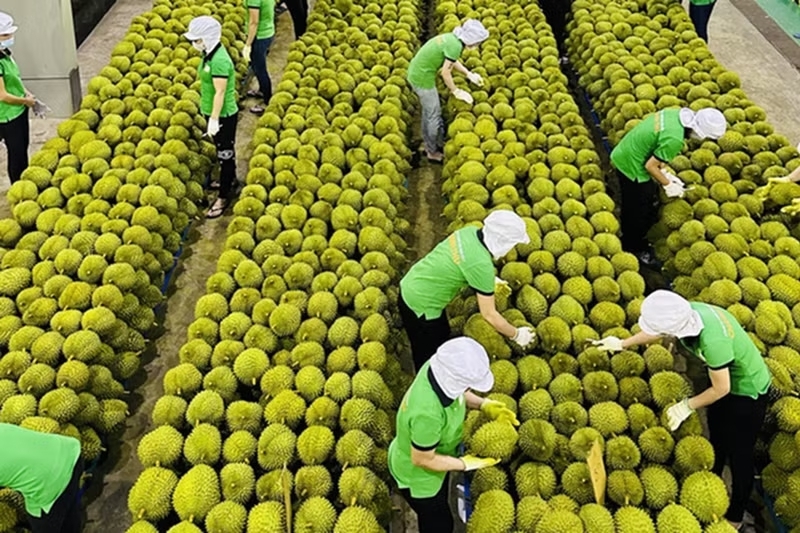
Vietnam should establish a government-level task force to coordinate reforms across ministries and industries if it hopes to raise agricultural, forestry and fishery exports to USD100 billion by 2027, experts said at a policy forum in Hanoi.
Speaking at the seminar, "How can agricultural, forestry and fishery exports reach USD100 billion?", organized by the Government Information and Communications Department on July 9, policymakers and industry representatives agreed that achieving the target will require more than expanding export markets.
Instead, they said Vietnam must shift from a production-focused model toward a modern agricultural economy built on technology, digital transformation and integrated value chains.
Ambitious target faces significant challenges
Au Anh Tuan, Deputy Director General of the Customs Department under the Ministry of Finance, described the USD100 billion target as highly ambitious.
He said that if Vietnam's agricultural exports reach approximately USD75 billion in 2026, exports would still need to grow by more than 15% in 2027 to achieve the goal.
According to Tuan, the Government has already introduced a series of reforms this year, including cutting administrative procedures, simplifying business regulations and accelerating digital transformation.
These measures, he said, will facilitate both imports and exports, including agricultural shipments.
Nguyen Thanh Binh, Chairman of the Vietnam Fruit and Vegetable Association (Vinafruit), acknowledged that the target remains challenging because the sector continues to face obstacles related to product quality, quarantine and inspection requirements.
However, he said Vietnam's production capacity and remaining market potential provide a realistic opportunity to achieve the goal if existing bottlenecks are addressed.
Digital data seen as the foundation
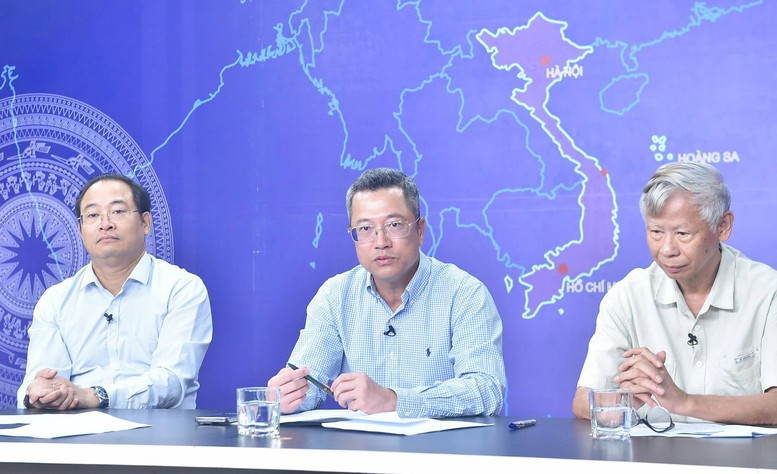
Experts speak at a policy seminar in Hanoi on July 9, where participants proposed establishing a government-level coordination mechanism to help Vietnam achieve USD100 billion in agricultural, forestry and fishery exports. Photo: VGP.
From a technology perspective, To Nguyen Thanh, a specialist in agricultural and seafood traceability systems, said successful digital transformation begins with reliable data.
He argued that digitalization should start at production areas and farms before extending throughout the entire supply chain, including processing, logistics and exports.
"When data is connected across ministries and large national databases are established, artificial intelligence can support market forecasting, risk warnings and more effective policymaking," Thanh said.
He proposed three priorities: digitizing the entire production chain, building comprehensive traceability systems and integrating data across ministries to improve both management and policy planning.
Experts call for stronger government coordination
Economist Dang Kim Son, former Director of the Institute of Policy and Strategy for Agriculture and Rural Development, said technology alone will not determine success.
He argued that Vietnam must fundamentally reorganize its agricultural economy by developing large-scale specialized production zones linked with science and technology, businesses, cooperatives, processing industries and logistics networks.
He also called for mechanisms that allow all participants in agricultural value chains to share both benefits and risks instead of operating independently.
One proposal that received broad support during the seminar was the establishment of a government-level steering committee or task force dedicated to agricultural exports.
Nguyen Hoai Nam said agricultural exports involve numerous ministries, agencies and local governments, making a strong coordinating body essential for resolving cross-sector issues and mobilizing resources effectively.
Nguyen Thanh Binh agreed, saying Vietnam already has the necessary institutions but lacks a mechanism capable of driving breakthrough reforms.
"We need a national-level coordinating body with sufficient authority to resolve cross-sector bottlenecks," he said.
To Nguyen Thanh added that agricultural exports involve production, trade, customs and many other areas.
"If coordination remains at the ministerial level, it will be difficult to ensure integrated data systems and quickly resolve emerging issues," he said.
From the customs perspective, Au Anh Tuan noted that exporters currently must complete procedures administered by multiple ministries, increasing both costs and processing time.
He suggested establishing a government task force led by a senior government leader to oversee cross-sector coordination and administrative reform.
Legal expert Nguyen Si Dung proposed creating a task force chaired by a Deputy Prime Minister, with participation from industry associations, businesses and farmers to strengthen coordination across the entire agricultural value chain.
Participants concluded that combining stronger government coordination with digital transformation and closer cooperation among stakeholders would significantly improve Vietnam's chances of achieving its USD100 billion agricultural export target.
Vu Diep
.svg)
