 Vietnamnet.vn

 Podcast



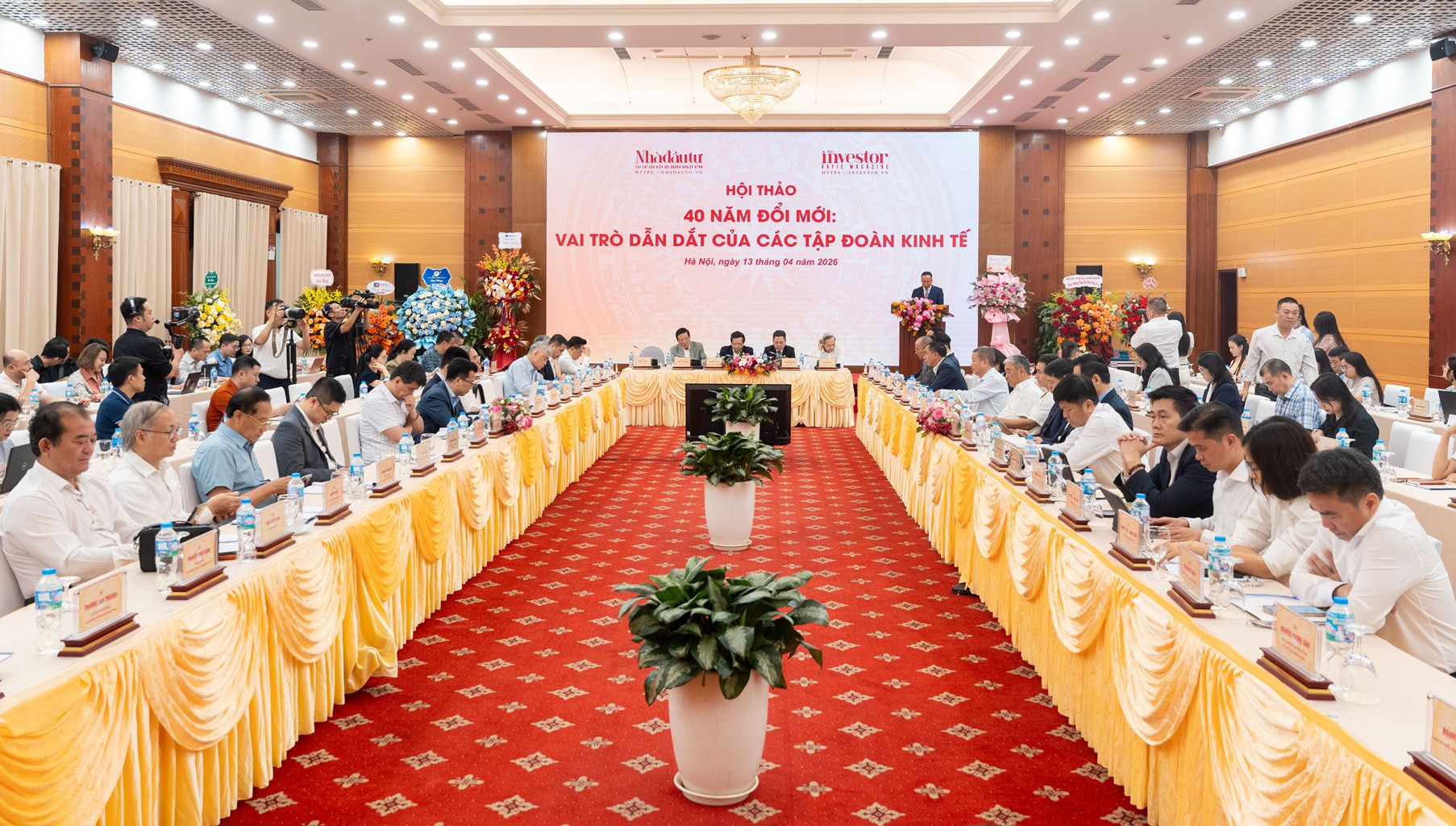
Sharing insights from corporate practice, Le Khac Hiep, Vice Chairman of Vingroup, described the group’s evolution from a diversified portfolio spanning real estate, tourism, education, healthcare and retail to a strategic pivot toward industrial manufacturing, particularly the automotive sector.
According to Hiep, true international integration requires more than service-based expansion. Industrial capability, especially in sectors like automobiles, plays a decisive role in national development. Historically, countries with strong automotive industries have built broader industrial ecosystems, driving advancements in mechanics, materials and supporting sectors.
Today, automobiles are no longer merely mechanical products but complex technological platforms that can anchor wider economic transformation.
Hiep also highlighted the importance of leadership resolve, citing the rapid completion of the National Exhibition Center project in Co Loa, Hanoi, in just 10 months - a timeline significantly shorter than comparable international projects. With sufficient determination, he argued, businesses can achieve what once seemed impossible.
Meanwhile, Nguyen Duy Hung, a board member at Tan Hiep Phat, emphasized that what businesses need most today is not additional constraints, but a stable and enabling environment.
Enterprises, he said, want regulators to move beyond a supervisory role and instead act as partners - listening, engaging in dialogue and helping resolve bottlenecks, particularly for large corporations.
The need for leading private conglomerates
Looking ahead, Phan Duc Hieu, a National Assembly delegate and member of the Economic and Financial Committee, underscored the critical role of large economic groups in shaping Vietnam’s future trajectory.
He argued that Vietnamese enterprises must expand beyond domestic competition and actively pursue international markets. Companies such as Vingroup, Vinamilk, Xuan Thien Group and Viettel have already begun this journey, but broader policy support is needed to sustain and accelerate the process.
However, policy alone is not enough. It must be accompanied by concrete institutional mechanisms to ensure effective implementation.
Drawing on international experience, Tran Dinh Thien stressed that no country has become an economic power without strong, competitive conglomerates - particularly in the private sector.
In a global economy increasingly organized around value chains, such enterprises are essential to lead, connect and scale production networks.
“Vietnam needs a developmental state that governs effectively, alongside powerful private corporations that serve as pillars of the economy,” he said.
From “scattered support” to targeted strategy
At the heart of his argument lies a critique of existing policy approaches.
“For too long, we have supported businesses in a scattered manner, like scattering grain for sparrows to eat. As a result, we end up with sparrows,” Thien remarked.
Instead, he called for a shift toward targeted support - focusing resources on leading enterprises and addressing specific bottlenecks within key value chains.
Such a transition, he argued, would mark a decisive move from quantity-based support to quality-driven development, laying the foundation for Vietnam to nurture globally competitive champions.
Nguyen Le
.svg)
