 Vietnamnet.vn

 Podcast



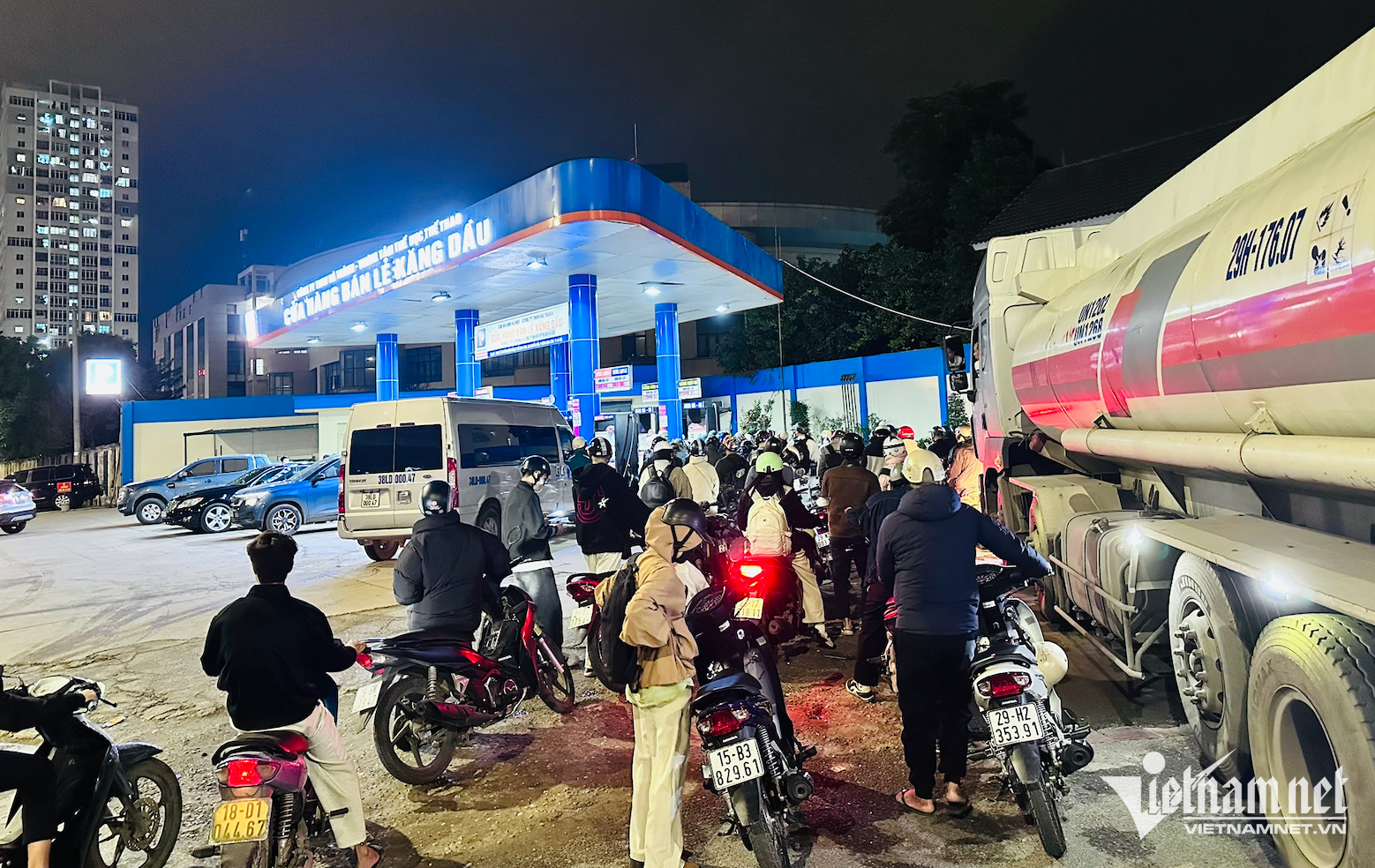
The ministry recently issued a notice calling for public cooperation with the government in ensuring national energy security as tensions in the Middle East continue to escalate.
In recent days, the ministry has instructed the nationwide fuel distribution system to maintain adequate supply and ensure uninterrupted sales at petrol stations. At the same time, authorities are revising policies to facilitate businesses in diversifying fuel import sources to serve domestic production and consumption.
However, as fuel prices rise sharply and supply pressures increase, the ministry has urged citizens and businesses to remain calm, support government management efforts and avoid panic buying or hoarding that could disrupt supply and demand.
Officials emphasized that taking advantage of the situation to speculate or illegally stockpile fuel is strictly prohibited. Such behavior violates the law and could worsen shortages, affecting the wider community.
If residents detect petrol stations suspending sales without justification, selling above the listed price or showing signs of hoarding fuel, they are encouraged to report the issue to the Ministry of Industry and Trade through the Domestic Market Management and Development Department hotline at 1900 888 655 or to local market surveillance authorities for timely handling.
The ministry also urged people to limit the use of private vehicles when unnecessary, prioritize carpooling and make greater use of public transportation or bicycles for short trips.
“People may consider using electric vehicles, hybrid vehicles or biofuel-powered vehicles such as E5 or E10 following the roadmap starting June 1,” the ministry recommended.
Authorities also noted that regularly checking tire pressure, changing engine oil on schedule and turning off engines during prolonged stops can reduce fuel consumption by 10-15 percent. Maintaining steady speeds and avoiding sudden acceleration or unnecessary high-speed driving can also help save fuel.
For businesses, the ministry suggested establishing fuel consumption benchmarks for production and transportation processes, adopting energy management systems based on the ISO 50001 standard and optimizing logistics routes to increase cargo loads and reduce empty trips.
Companies are also encouraged to invest in energy-saving technologies by upgrading machinery and production equipment or switching to renewable energy sources such as solar or wind power for supporting operations.
“Enterprises can encourage employees to work online to reduce travel and transportation demand,” the ministry noted.
Risk of localized fuel shortages
The ministry also warned that the military conflict between the US and Iran has escalated significantly. Iran has blocked the Strait of Hormuz, a strategic maritime route responsible for transporting about 13 million barrels of oil per day, equivalent to roughly 31 percent of global seaborne crude shipments.
Global oil prices have risen 20 percent since the beginning of the year and could surge to US$120-140 per barrel if supply disruptions persist.
Countries around the world, particularly those in Southeast Asia, are expected to face the strongest impact due to heavy dependence on energy imports from the Middle East.
In Vietnam, total domestic fuel consumption in 2025 reached about 28.6 million cubic meters or tons, averaging roughly 2.2-2.3 million cubic meters or tons per month.
Although the country has two oil refineries - Nghi Son and Dung Quat - the Ministry of Industry and Trade said Vietnam still relies significantly on imported fuel supplies. As a result, localized fuel shortages could occur in some areas.
The ministry noted that immediately after the conflict escalated, the government and the Prime Minister issued timely directives. Ministries, sectors and local authorities were assigned specific responsibilities and coordinated with the Ministry of Industry and Trade to safeguard national energy security.
On March 4, the Prime Minister signed Decision No. 385 establishing a task force to ensure energy security amid the complex developments of the Middle East conflict. The group is responsible for monitoring developments and submitting daily reports.
At the same time, the ministry has been developing contingency plans and coordinating with refineries and the entire fuel supply chain - from wholesalers and distributors to retailers - to resolve difficulties, seek new fuel sources and maintain production and business operations.
Authorities have also instructed local governments, departments of industry and trade and market surveillance forces to strengthen monitoring and strictly handle violations.
Meanwhile, the Ministry of Industry and Trade and the Ministry of Finance are preparing proposals to stabilize fuel prices, including the use of the fuel price stabilization fund, possible reductions in environmental protection taxes and other measures aimed at ensuring adequate fuel supply for the economy.
Tam An
.svg)
