 Vietnamnet.vn

 Podcast



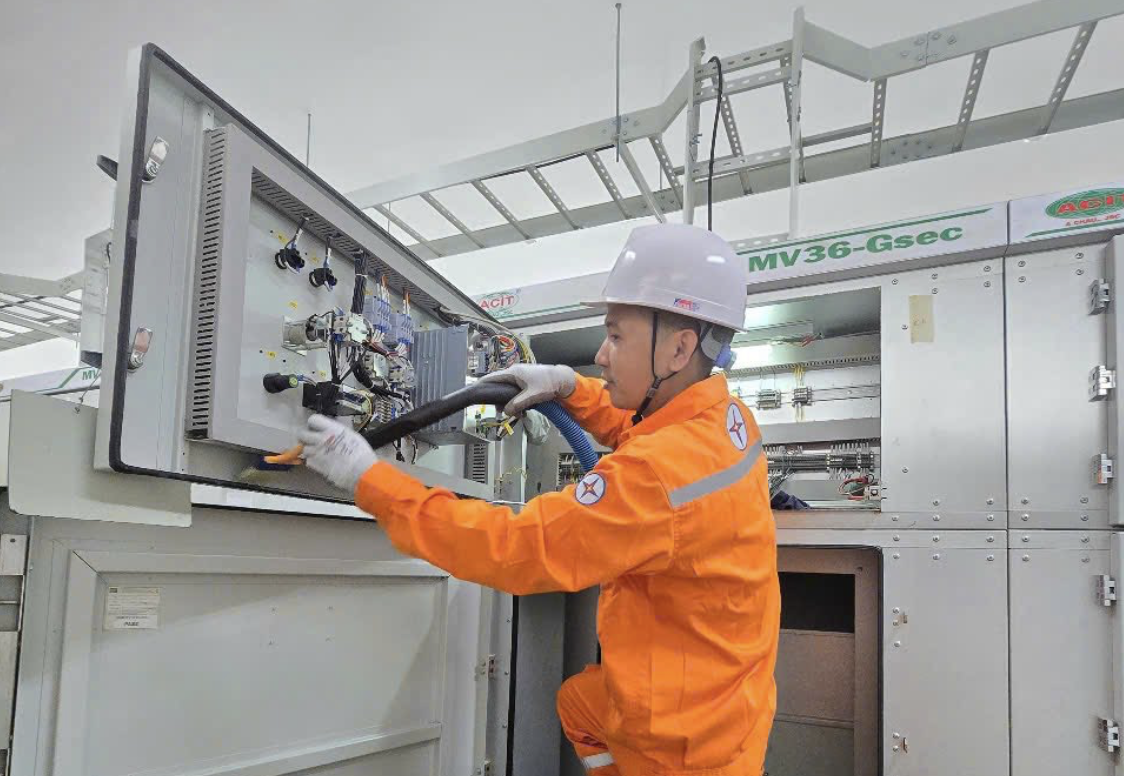
The ministry is currently seeking opinions on a draft decision regulating time-of-use periods for the national power system.
Under the proposal, peak hours would vary by season. Specifically, from January to April and September to December, peak hours would run from 14:00 to 19:00, Monday through Saturday, totaling five hours.
From May to August, peak hours would be split into two periods - 14:30 to 16:30 and 19:30 to 22:30, also from Monday to Saturday, totaling five hours. Sundays would have no peak hours.
Off-peak hours would be from 00:00 to 06:00 daily, while normal hours would cover the remaining time - 13 hours per day from Monday to Saturday and 18 hours on Sundays.
These time frames serve as the basis for electricity pricing, with peak hours typically carrying the highest rates and off-peak hours the lowest.
Currently, time-of-use pricing applies to customers engaged in production and business activities, with different tariffs depending on voltage levels and usage periods.
According to EVN, approximately 1.25 million electricity meters across power corporations, transmission units and generation units are used for time-based pricing. This represents a substantial volume directly affecting measurement, billing and payment processes nationwide.
Only a portion of these meters can support flexible configuration for multiple time-of-use tariffs or seasonal adjustments. Most are set to fixed schedules, meaning any change would require reconfiguration either remotely or directly in the field.
Preliminary estimates suggest that reconfiguring meters in large-scale units such as EVNNPC could take up to 90 days.
If peak and off-peak hours are adjusted seasonally, twice a year, the workload would increase significantly. This would involve updating configurations for a large number of customer meters and synchronizing data across remote metering systems, customer management and billing systems (CMIS), and other related platforms.
EVN warned that large-scale, repeated implementation could pose risks of errors and lead to customer complaints, while also incurring considerable additional costs.
Based on an assessment of annual load patterns, system operations and implementation feasibility, EVN proposed not applying seasonal adjustments in order to minimize changes, reduce costs and limit operational risks.
Instead, EVN suggested maintaining a single set of time frames. Under this proposal, normal hours from Monday to Saturday would be from 06:00 to 17:30 and from 22:30 to 24:00, while Sundays would be entirely normal hours from 06:00 to 24:00.
Peak hours from Monday to Saturday would be from 17:30 to 22:30, totaling five hours, with no peak hours on Sundays.
Off-peak hours would remain unchanged, from 00:00 to 06:00 daily.
Regarding the application of time-of-use pricing, EVN proposed following the provisions of Circular No. 60/2025/TT-BCT. Mandatory users would include production and business customers supplied via dedicated transformers of 25 kVA or more, or those consuming at least 2,000 kWh per month on average over three consecutive months.
The same rules would apply to electricity retailers in industrial parks and clusters, as well as entities purchasing electricity for resale for non-residential purposes in commercial and service complexes.
EVN noted that adjusting peak-hour periods could bring positive impacts by providing clearer pricing signals, encouraging users to shift consumption to off-peak and normal hours. This would help flatten the load curve and potentially reduce electricity bills.
Such adjustments could also lower overall system costs by optimizing generation, reducing reliance on high-cost power sources, improving system safety and balancing load distribution, particularly during peak evening demand.
As the total number of hours for peak, off-peak and normal periods would remain unchanged, the proposal is not expected to significantly disrupt users. The removal of morning peak hours could also benefit industrial users by allowing continuous daytime production, aligning with solar power generation patterns.
For consumers, EVN emphasized that adjusting electricity usage in line with the new time frames would help avoid increases in electricity costs.
Tam An
.svg)
