 Vietnamnet.vn

 Podcast



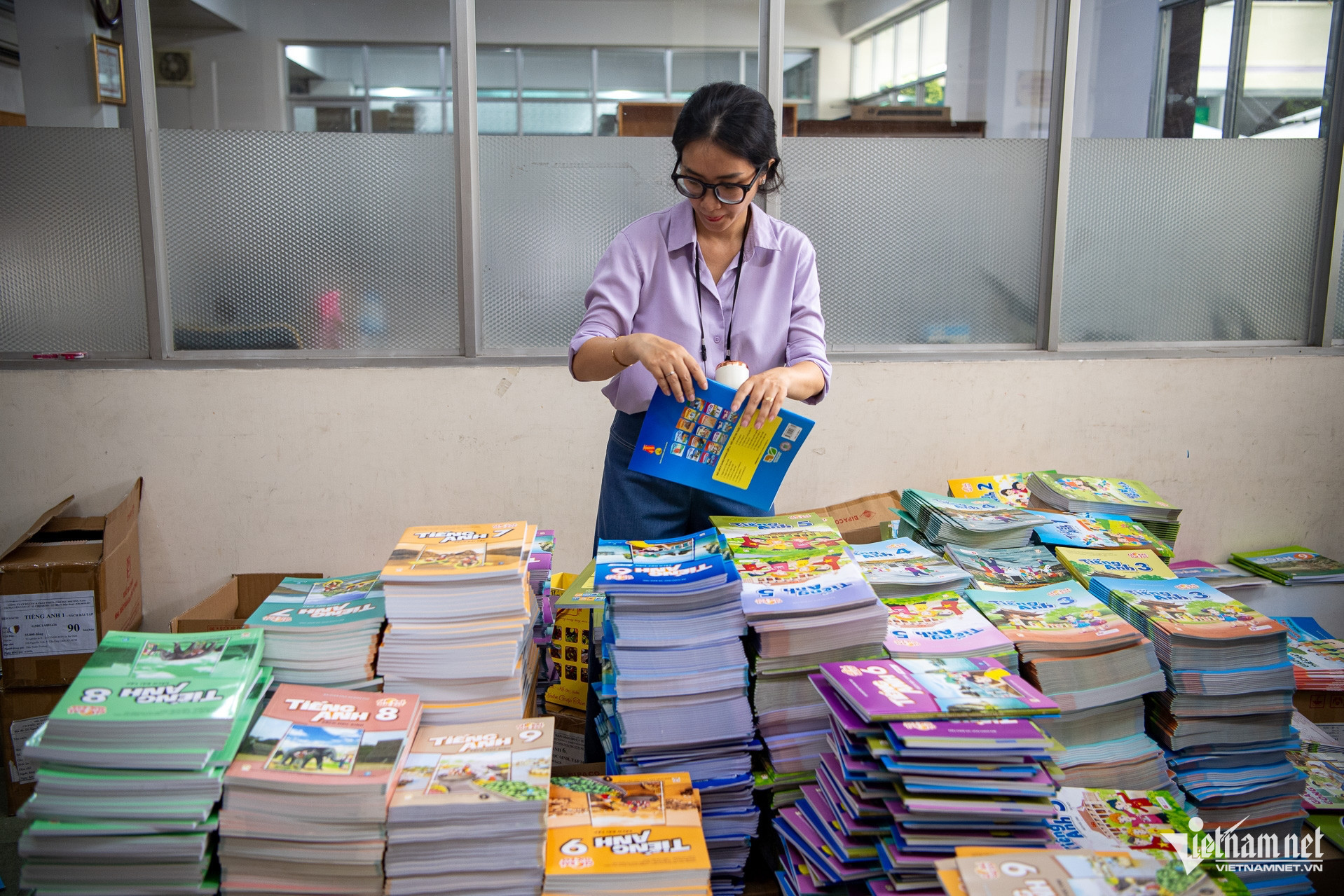
Chairing a September 21 meeting on textbook supplies, a review of the general education curriculum and textbooks, and preparations for a thematic oversight mission on the implementation of the Politburo’s Resolution 71 on breakthroughs in education and training, Prime Minister Le Minh Hung called for major changes to the textbook system, beginning with copyright.
He stressed that textbook copyrights should belong to the state. If the state owns the copyrights and provides textbooks free of charge, the number of intermediaries should be reduced to lower costs to the state budget, he said.
Centralized state management could reduce intermediaries
Nguyen Kim Hong, former Rector of Ho Chi Minh City University of Education and current Rector of Nguyen Tat Thanh University, said state ownership of textbook copyrights would be appropriate if the government decides to assume the sole role in compiling and supplying textbooks.
“If the state is the provider of textbooks for every student, unified state management could reduce the number of intermediaries and thereby lower costs as intended,” he said.
However, Hong said the effectiveness of such a model would need to be carefully assessed rather than judged solely by its ability to eliminate intermediaries.
If the state takes responsibility for the entire process, from compiling and producing textbooks to distributing them, policymakers would need to consider not only the budget implications but also the impact on people currently working in textbook publishing and distribution, he said.
Another education expert said current textbook shortages are concentrated mainly in major cities such as Hanoi and Ho Chi Minh City, and possibly Da Nang, while in many mountainous, remote and disadvantaged areas, affordability is a greater concern.
Textbook shortages should therefore not be viewed as a nationwide problem, the expert said. However, publishers and distributors also need to carefully assess how they forecast demand and organize printing and distribution, as those responsibilities fall within their remit.
On copyright, the expert said state ownership of textbook rights was not entirely new.
“The state holding textbook copyrights has long been the case. The Ministry of Education and Training has also authorized publishers, including the Vietnam Education Publishing House, to print and distribute books,” he said.
Beyond receiving “free” textbooks, he said, what ultimately matters to the public is whether the books are of good quality, used effectively, reasonably priced and, crucially, available in sufficient quantities for students.
“These requirements are entirely achievable,” he said. “The ministry has provided nationwide student statistics, the copyrights are already in place and companies are authorized to print the books. What remains is the responsibility of businesses in production and supply,” he added.
If printed textbooks are temporarily unavailable, digital versions could serve as a supplementary solution, the expert said.
The Vietnam Education Publishing House already provides electronic versions of textbooks, which could be used while students wait for printed copies. “For essential sections, parents or schools could print them out for students to use temporarily,” he suggested.
Clear policy, accurate forecasts and books delivered on time
Hoang Ngoc Vinh, former Director General of the Department of Professional Education under the Ministry of Education and Training, said using the state budget to provide students with free textbooks, particularly those in disadvantaged areas, would have practical benefits.
For the policy to work effectively, however, the government must first clearly define the implementation timeline and who will be eligible, he said.
“The most important requirement is information about textbook demand. But that information depends first and foremost on the clarity of the policy: Which school year will free textbooks begin to be provided? Who will receive them? Which books will each student receive, and how many? If these questions remain unclear, it will be very difficult to accurately plan supplies and allocate the budget,” Vinh said.
Once the policy is clearly defined, demand should be calculated by locality and grade level, including the number of new books required, the number that can be reused and the volume of reserve copies needed.
The data must also be updated promptly, particularly when the restructuring and merger of schools changes student numbers.
For textbook development, the state could either oversee compilation itself or select organizations to do so, pay the associated costs and clearly establish the rights to use and exploit the resulting works.
Once public funds have been invested, Vinh said, the state should ensure that it holds sufficient rights to arrange long-term printing and distribution without incurring unnecessary additional copyright costs.
He stressed the need to separate textbook compilation from printing and distribution, with contractors selected through open and competitive procedures in accordance with the law.
Effective bidding, however, requires reliable information about demand from the outset.
Companies need to know how many books are required, where they must be supplied, delivery schedules and payment terms so they can calculate costs and decide whether to participate.
If demand remains unclear, attracting capable publishers and companies to bid will become more difficult, reducing competition and increasing the risk of delayed textbook deliveries, Vinh said.
Clear communication of the policy is another crucial element.
Parents need specific information about when free textbooks will become available, who will qualify and when the books will be distributed.
Authorities should avoid a situation in which parents assume that all students will immediately receive free textbooks in the current school year and therefore do not buy books themselves, leaving their children without textbooks when classes begin.
“The use of a large state budget for textbooks must be managed transparently to prevent waste, monopolies and misconduct,” Vinh said. “The policy must be clear before planning begins, and information must reach parents before the school year starts. The ultimate goal is to ensure that eligible students receive a complete set of textbooks on time, so their education is not disrupted by book shortages.”
Le Huyen
.svg)
