 Vietnamnet.vn

 Podcast



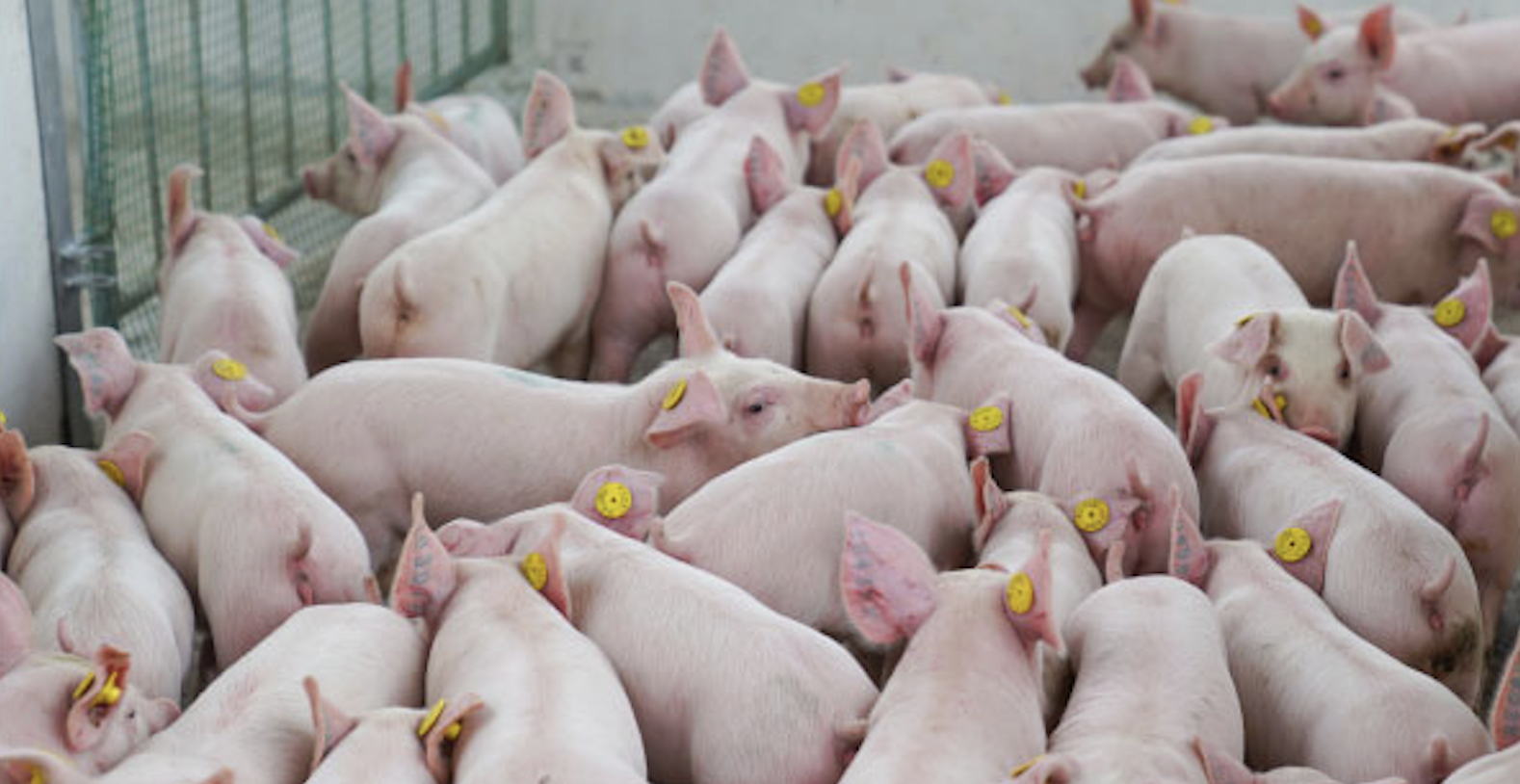
In its report, MAE cited a series of legal documents encouraging use of advanced technology in livestock farming to enhance productivity, quality, biosafety, and environmental protection. These include the Livestock Law, the Livestock Development Strategy for 2021-2030 with a vision to 2045, and the “Development of Industrial Farming and Livestock Waste Treatment by 2030” project.
In 2024, Vietnam issued TCVN 14209:2024 on general requirements for multi-storey pig farms;, breeding processes, veterinary hygiene, biosafety and waste treatment.
Pig farming is a key industry in Vietnam, accounting for 62-65 percent of total live-weight meat production. In 2024, live-weight pork output reached nearly 5.2 million tons, representing 4.3 percent of global pork production, ranking sixth worldwide.
Pork consumption in Vietnam ranks fourth globally, rising from 30 kg of carcass meat per person per year in 2021 to 37.04 kg in 2024.
However, in 2019-2020, small-scale farming still dominated. Economic and technical indicators remained low, failing to meet biosafety and disease control standards. Consequently, the African swine fever outbreak led to the culling of over 9 million pigs, causing losses exceeding VND30,000 billion.
In April 2020, live-weight pork prices peaked at VND105,000/kg, directly driving the domestic CPI up by 6.73 percent.
BAF Vietnam Agriculture JSC and Xuan Thien Thanh Hoa JSC have submitted proposals to MAE for implementing multi-story pig farming models.
BAF Vietnam, in strategic partnership with China’s Muyuan Group, the world’s largest pig farming company, proposes a six-story smart pig farming complex in Tay Ninh. The project, with a capacity for 64,000 breeding sows and 1.6 million commercial pigs annually, has an estimated investment of over VND12,000 billion.
At full capacity, the project could generate annual revenue of VND12,000-13,000 billion for BAF Vietnam, with a projected payback period of 5-5.5 years.
MAE seeks approval from the PM and Deputy PMs to implement multi-story pig farming in Vietnam.
Citing China’s multi-story pig farming model implemented for years, MAE notes that pork is a staple food, accounting for over 60 percent of total meat consumption in the country. China is the world’s largest pork producer and consumer, contributing nearly 50 percent of global production.
The 2018 African swine fever outbreak killed or culled 40-50 percent of its pig population (200-250 million pigs), and about 40 percent of small-scale pig farms closed. As a result, pork supply plummeted from 54 million tons in 2018 to 36 million tons in 2019.
Supply pressure caused pork prices to surge 300 percent in November 2019 compared to 2018. Additionally, limited agricultural land and environmental pollution from farming hindered production expansion. To address these challenges, the Chinese government promoted high-tech solutions and modernization in livestock farming.
In 2018, China began implementing multi-story pig farming. Today, it has over 2,000 models with nearly 4,500 high-rise pig farming buildings, supplying about 2.65 million breeding sows and over 30 million commercial pigs annually. Some ‘pig apartments’ in China have up to 26 stories.
MAE said that multi-story pig farming offers significant advantages over traditional methods.
The complexes employ advanced technologies like AI, blockchain, sensor monitoring, and real-time image and sound collection for individual pigs. The technology analyzes and provides early disease warnings, estimates daily weight gain, and predicts sale weights.
Moreover, biosafety and disease control are enhanced through smart wastewater, solid waste, and emissions treatment systems. The model also saves land and shared infrastructure, shortens land clearance time, increases land use efficiency by up to 4.3 times, and reduces labor, with one worker able to monitor 2,000 pigs, improving farming efficiency.
Reports released in June 2025 indicated that C.P Vietnam Livestock JSC had the largest sow herd in both South and North Vietnam. The Thai livestock company operates in Vietnam under a farmer-linked model, with a sow herd of nearly 350,000 as of June 2025, accounting for over 16 percent of the national sow herd, according to AgroMonitor data.
Ranking second is CJ Vina Agri Co. This South Korean company operates under a closed 3F (Feed – Farm – Food) model. CJ currently manages about 800 contracted pig farms and 80 concentrated pig farms across provinces from North to South. AgroMonitor’s field surveys and consultations showed that CJ has a sow herd of nearly 140,000.
Tam An
.svg)
