 Vietnamnet.vn

 Podcast


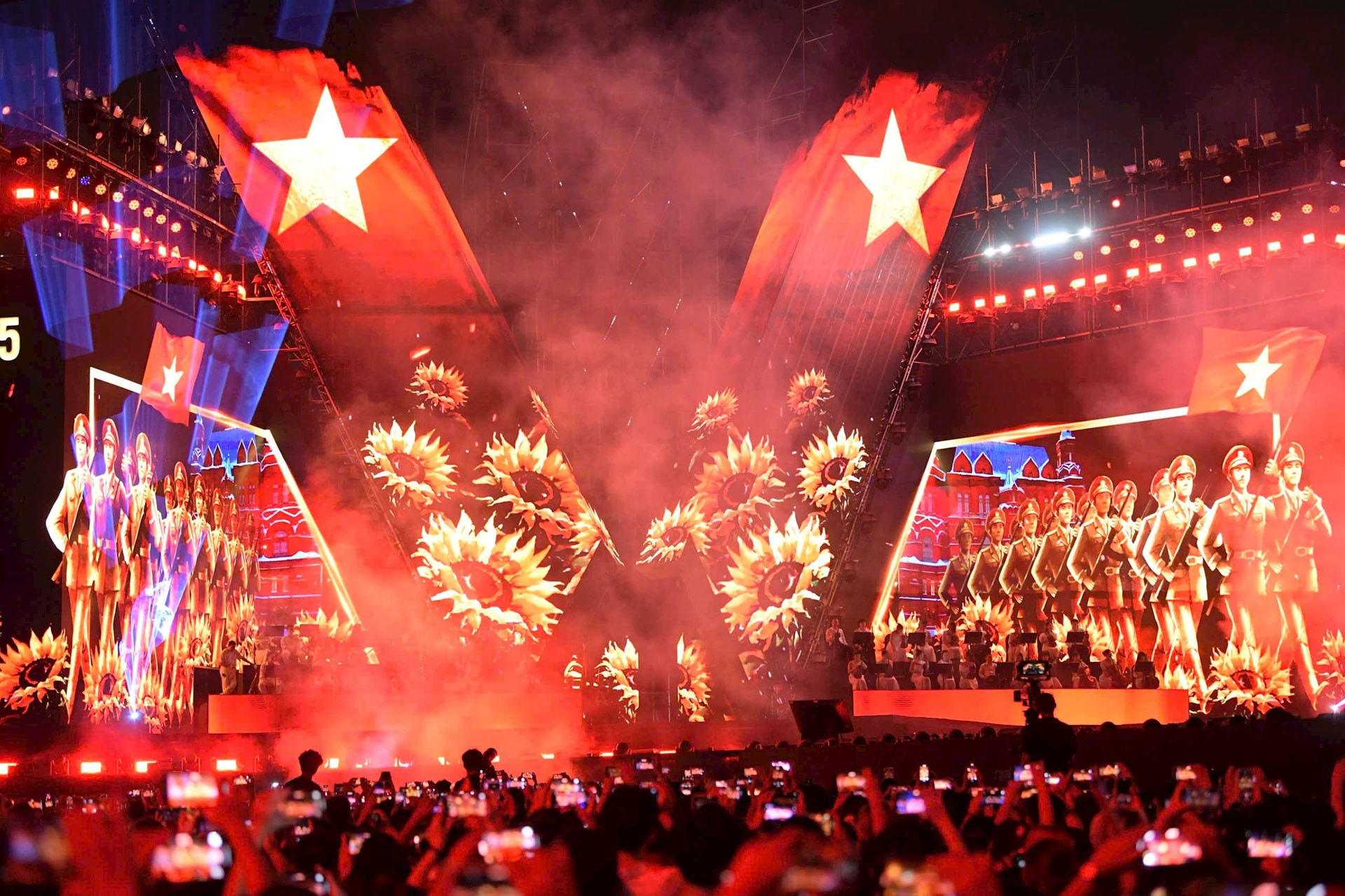
Drawing on the growing appeal of concerts, experts and artists are seeking ways to renew traditional cultural identity, turning young people's emotional experiences into a driving force for the development of cultural activities.
The explosive popularity of concerts has created a new phenomenon in the way young people experience the arts, but has also raised the question of how to turn the emotions generated on stage into sustainable growth.
The increased prominence of concerts in contemporary cultural life is reflected in impressive figures. In 2025 alone, more than 810 music events took place nationwide.
The high point came with major productions such as the national concert "To Quoc Trong Tim” (The Fatherland in Our Hearts), which attracted up to 50,000 spectators. Another record was set in mid-October 2026, when HCMC hosted eight concerts over a single weekend.
This appeal shows that today's audiences, particularly young people, attend concerts not merely to listen to music but also to find a space where they can share emotions and feel part of a community.
Explaining the appeal of large-scale artistic productions, People's Artist Tran Ly Ly said its core must first lie in its underlying ideas and consistent message.
"The Fatherland in Our Hearts", for example, evoked shared emotions and national pride that united the entire production team, from the general director and music and stage teams to the choreographers, around a common artistic language.
As culture is always evolving, Ly noted that creative professionals must know how to distill the essence of tradition and harmonize it with the spirit of the times and international integration, rather than turn heritage into immutable templates.
Musician and producer Nguyen Huu Vuong, who was behind the success of "The Fatherland in Our Hearts" and is preparing for the upcoming concert "Muon Sac Viet Nam” (A Thousand Colors of Vietnam), said the greatest challenge in producing historically themed programs is finding a way to connect emotionally with audiences across generations.
While older audiences can readily relate to such performances through their memories, younger people need a more accessible approach. The production team's solution is to give heroic songs a new look through contemporary arrangements, orchestration and staging, allowing young audiences to see their love for the country through the lens of their own generation.
Large-scale concerts, according to the artist Den, are a new lifestyle for young people in the digital age. As artificial intelligence advances and face-to-face interaction becomes increasingly valuable, music stages offer audiences a place to step away from their screens, immerse themselves in the crowd and become the central characters in their own stories.
For the artist himself, despite having performed before tens of thousands of people, he continues to approach his work with a willingness to learn from previous generations. He chooses to connect with audiences through the simplest, most familiar moments of everyday life, such as the longing for home during Tet captured in his song "Vi Nha" (Taste of Home).
Building a legal framework
Pham Thi Kim Oanh, Deputy Director of the Department of Cultural Industries and Copyright (Ministry of Culture, Sports and Tourism), said the initial success of live performances has been highly encouraging, particularly as the music industry is identified as a key sector in Resolution 80 on cultural development and the Strategy for the Development of Vietnam's Cultural Industries.
However, for these events to become genuine economic drivers rather than one-off spectacles, the live performance sector needs a long-term strategy and a broader approach to unlocking its potential.
Oanh said the value of a concert cannot be measured solely by ticket revenue at a single venue. A major music event can also trigger the movement of millions of people, directly boosting tourism, accommodation, food and beverage businesses, and a range of other supporting services.
To achieve the target of cultural industries contributing around 7 percent of GDP by 2030, the key prerequisite remains artistic quality backed by a robust legal framework.
Oanh said the draft Law on the Development of Cultural Industries, currently under consideration by the National Assembly, together with plans to develop a separate Copyright Law for submission to the legislature next year, would provide an important foundation for protecting the legitimate interests of creators and investors.
Tinh Le

