 Vietnamnet.vn

 Podcast



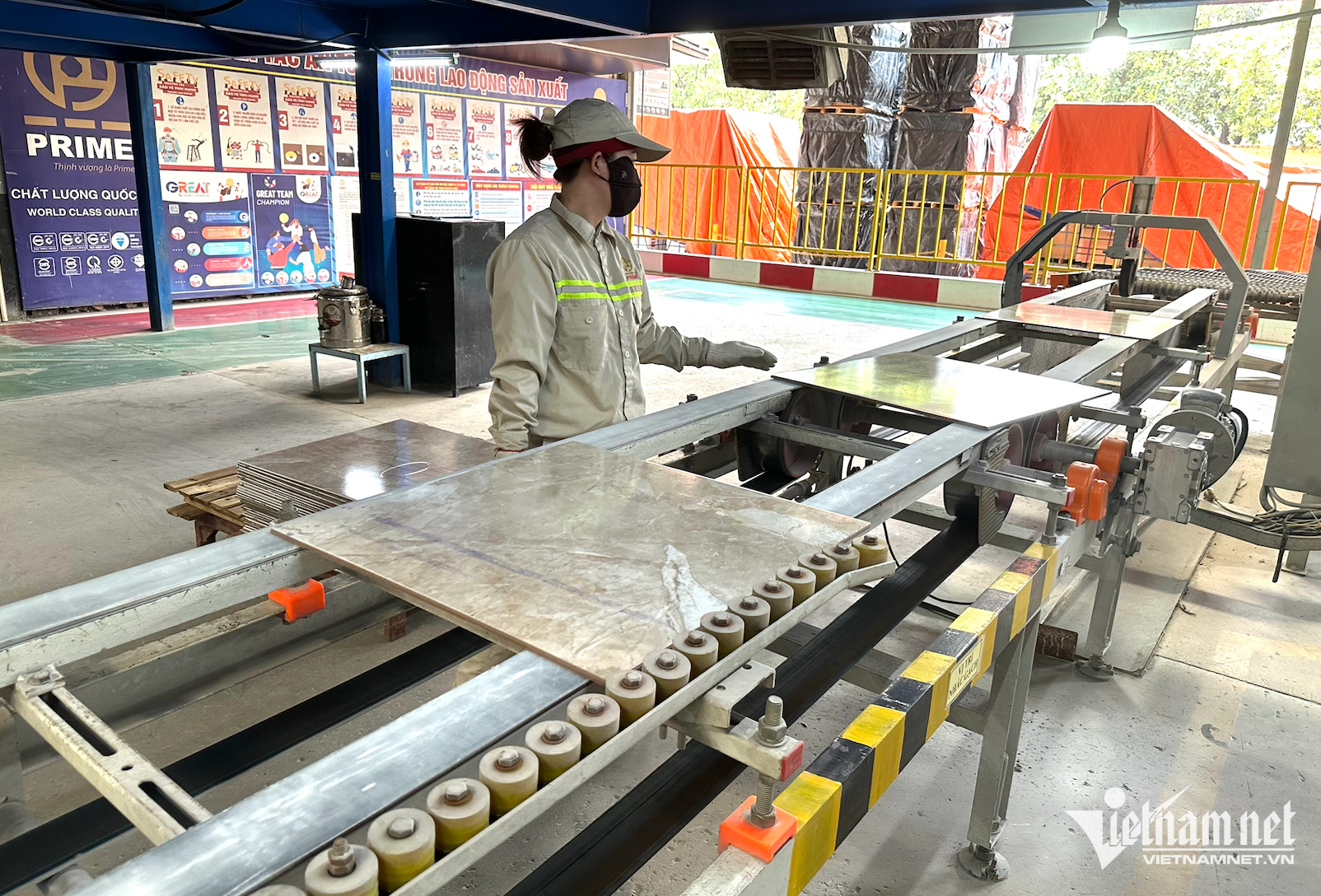
Giang’s company has an inherent advantage because non-fired building materials are already considered environmentally friendly products. Even so, the company pays close attention to conserving and reusing water for washing machinery and cleaning factories, while optimizing energy consumption through solar power.
From a business perspective, Tran Anh Tuan, Director of Energy Management and ID4.0 at Prime Group, acknowledged that increasingly intense competition in the domestic market is pushing companies to pursue green transformation so they can participate more deeply in export markets.
In many cases, green certifications have become a prerequisite for businesses seeking to bring their products to international markets. Tuan stressed that such requirements are creating pressures companies have little choice but to confront, with cost among the biggest challenges.
Companies therefore need to find ways to transform their operations and reduce costs, while fluctuating fuel prices and an unstable supply environment add further risks to production.
Tuan, however, said these pressures should not be viewed in isolation. Customer demand for greener products and more transparent supply chains can, in practice, complement the need to reduce energy and raw-material costs.
For example, reducing defective products not only cuts waste but also saves the raw materials, electricity and fuel that would otherwise have been consumed to manufacture those products. Similarly, improving kiln efficiency can reduce fuel consumption and costs while lowering CO2 emissions per square meter of output.
Don’t go green just because everyone else is doing it
Thai Duy Sam, Vice Chairman of the Vietnam Association for Building Materials, said many companies previously did not fully recognize the need for green transformation.
But as green requirements and standards become clearer and increasingly mandatory, businesses need to act proactively rather than treating the transition as something that can be left for the future.
One encouraging sign is that corporate awareness of green transformation is changing.
Sam cautioned, however, that businesses should not approach the transition simply according to their own preferences or ambitions. Instead, they need to actively understand emerging requirements and prepare appropriate strategies to adapt.
Bui Thanh Minh, Deputy Director for Professional Affairs at the Private Economic Development Research Board’s office, said companies pursuing a green transition need to measure Scope 1 and Scope 2 emissions while also examining their entire supply chains to determine when and where changes are necessary.
The process requires measurement and continuous improvement, allowing businesses to gradually optimize their performance.
Minh pointed out that Vietnam still lacks a strong market for green products because their prices tend to be higher. Green products may therefore struggle to compete in the short term, but could create advantages over the longer term.
The State could act as an initial buyer of green products, helping create a market and encouraging companies to make the transition.
With many SMEs interested in implementing ESG but constrained by limited financial and human resources, Tuan advised companies not to attempt everything at once. He identified three priorities for businesses at the beginning of their ESG journey.
First, companies should establish a baseline by measuring indicators such as energy consumption, carbon emissions, raw-material use and wastage rates. This gives businesses a clear understanding of where they stand and which areas need improvement.
Second, they should analyze and identify opportunities for improvements that can deliver tangible savings. Rather than launching too many projects simultaneously, companies could select around five to 10 highly feasible opportunities with significant potential to reduce CO2 emissions.
Third, businesses should choose two or three relatively easy solutions capable of producing quick results. This is important for building confidence within an organization.
Once companies see that a green transformation project can genuinely reduce costs and improve operations, they will have a stronger basis for investing in larger initiatives at the next stage.
Beyond these measures, Minh said businesses should make use of State resources as a form of support for their transition.
More importantly, companies should not pursue green transformation simply because it has become fashionable. They need to clearly identify their objectives, the problems they are trying to solve and the support policies available to them.
They should also examine their value chains to understand how partners and customers are changing and what those shifts will require of suppliers.
Businesses should actively participate in networks and corporate ecosystems to share experience, find resources and identify opportunities for cooperation.
ESG has many different levels, Minh said. Companies therefore need to think globally while starting with concrete actions that match their own circumstances.
Tam An
.svg)
