 Vietnamnet.vn

 Podcast


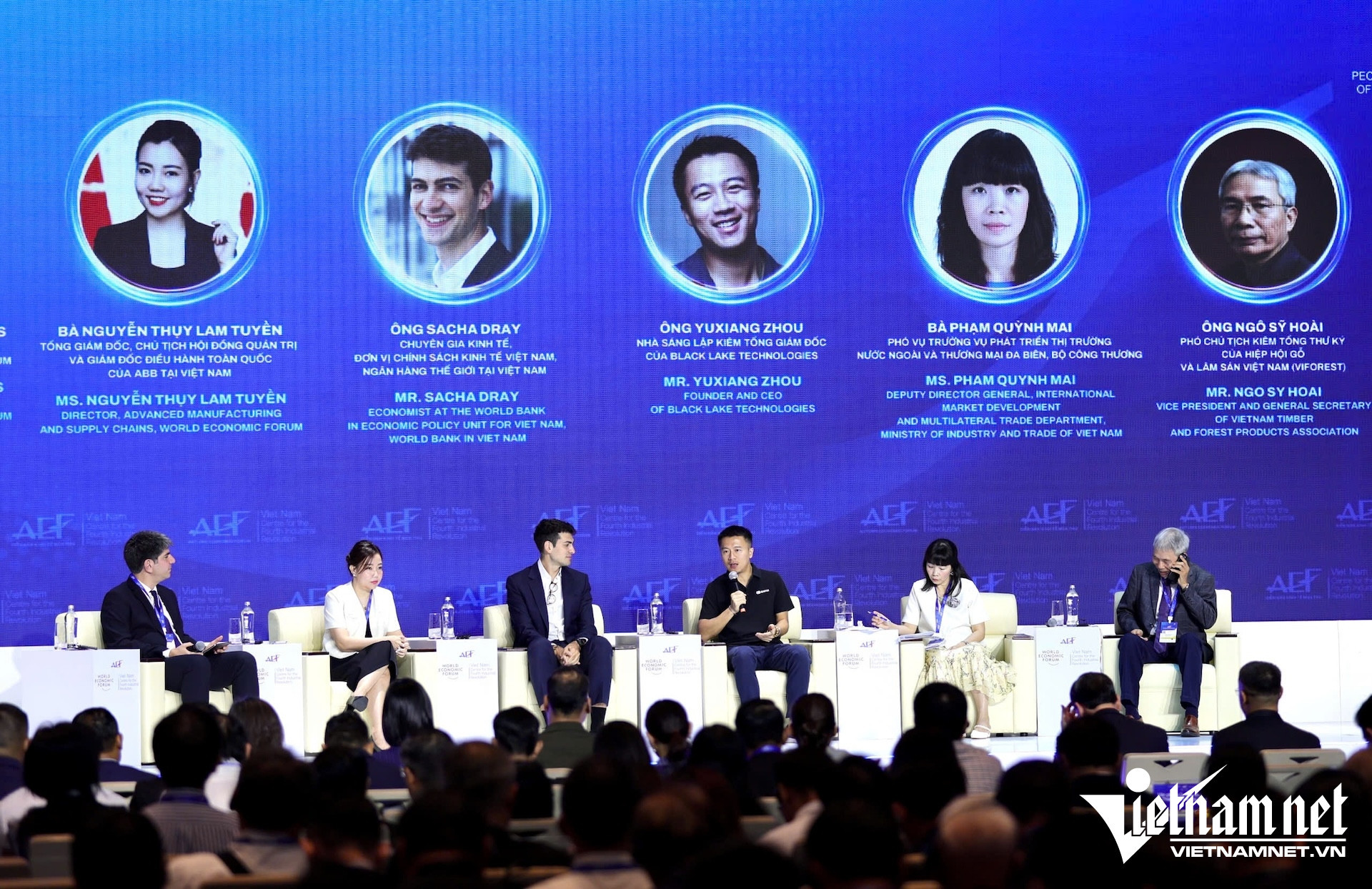
The message emerged during a discussion titled "Repositioning Vietnam and ASEAN in Global Value Chains" on October 27, part of the Autumn Economic Forum 2026 held in Ho Chi Minh City, Vietnam's southern economic hub.
Foreign investment paradox and weak intra-ASEAN trade
ASEAN's economy is worth approximately $4.3 trillion, with a population of 700 million. The region attracted nearly $245 billion in foreign direct investment (FDI) in 2025, up 10% from the previous year, according to figures presented at the forum. Yet trade integration among its member economies remains relatively limited.
Data from the Organisation for Economic Co-operation and Development (OECD) show that the share of foreign value added in Vietnam's exports rose from 33% in 2010 to nearly 50% in 2022, highlighting the country's substantial reliance on imported inputs to produce goods for overseas markets.
That dependence becomes even more concerning when viewed alongside the region's limited internal trade.
Sacha Dray, an economist with the World Bank's Vietnam Economic Policy Unit, said intra-regional trade accounts for only around 22% of ASEAN's total merchandise exports, far below the approximately 60% recorded by the European Union.
One reason is the mismatch between supply and demand across ASEAN economies. Wide income disparities between the bloc's richest and poorest members translate into markedly different consumer needs and purchasing power.
Although ASEAN economies are deeply involved in industries such as automotive manufacturing in Thailand, assembly operations in Vietnam, and semiconductors in Malaysia and Singapore, intra-regional value chains account for only about one-third of the region's overall participation in global value chains.
Drawing on Vietnam's wood processing industry, which exports to 168 markets, Ngo Sy Hoai, Vice Chairman and Secretary General of the Vietnam Timber and Forest Products Association (VIFOREST), warned that manufacturers are facing mounting pressure from US trade defense measures.
He argued that the traditional original equipment manufacturing (OEM) model, in which companies produce goods to specifications set by foreign buyers, is undermining innovation and pushing businesses across the region into fierce price competition.
With product designs widely copied, manufacturers are increasingly forced to undercut one another to secure orders. At times, net profits have fallen to just $1 per product, or even less.
To address these vulnerabilities, the World Bank economist called on ASEAN governments to encourage greater investment between member countries, harness the spillover benefits of FDI and accelerate the harmonization of technical standards to enable mutual recognition across the region.
Building capabilities, not just factories
Jessica Nguyen, Managing Director of ABB Vietnam, stressed that the true value of foreign investment should be measured by the capabilities it helps develop, rather than simply the physical assets it brings.
"Factories and machinery can be purchased and relocated very quickly, but manufacturing and management capabilities take years to build," she said.
According to Nguyen, meaningful technology and knowledge transfer should be assessed across three areas: equipping local workers with global quality management expertise, enabling Vietnamese engineers to solve complex technical challenges, and building trust throughout supply chains involving more than 1,000 Vietnamese small and medium-sized enterprises (SMEs) through consistency, safety and traceability.
She also emphasized the importance of bringing practical industry knowledge into university classrooms to prepare the workforce for future demands.
The ambition for ASEAN, she said, should extend beyond "Make in ASEAN" to "Engineered and Innovated in ASEAN", reflecting a shift from being a manufacturing base to becoming a center of design, engineering and innovation.
Hoai pointed to AA Corporation as an example of how a Vietnamese company can move up the value chain.
The company has evolved from a domestic interior contractor into a business capable of developing its own designs and bidding for complete interior fit-out packages for ultra-luxury hotels overseas, including a Park Hyatt property in the Caribbean.
For Hoai, the lesson is that Vietnamese manufacturers should identify high-value niche markets and use distinctive, original designs to drive their businesses, rather than relying on large volumes of low-margin outsourcing orders.
"ASEAN countries have strengths in forest resources. We need to move from competing against one another to cooperating so that we can improve our competitiveness together," he said. "Transformation will not begin without action, and action will not happen unless we change our mindset. We must believe in our own capabilities and intelligence before expecting the global market to believe in us."
Technology is also opening new opportunities for manufacturers to capture greater value from smaller production runs.
Youxian Zhu, founder and CEO of Black Lake Technologies, described how a Buddhist temple in China used artificial intelligence to design distinctive souvenirs, including wooden lion figurines, before sending digital production data to factories in Vietnam and China.
Instead of producing standardized goods with net profit margins of less than $1 per item, the factories were able to earn between $10 and $20 per product, even as minimum order quantities fell to just 100 units.
The example illustrates how flexible manufacturing, supported by digital technology, can enable factories to handle smaller, more customized orders while generating substantially higher returns.
Flexible manufacturing needs stronger policy support
While individual businesses must adapt, experts stressed that institutional reform and deeper regional cooperation will be essential to sustaining the transition.
Pham Quynh Mai, Deputy Director General of the Department of Foreign Market Development and Multilateral Trade under Vietnam's Ministry of Industry and Trade, said the biggest obstacles to trade are no longer tariffs.
Instead, businesses increasingly face barriers behind national borders, including complex rules of origin, customs procedures and overlapping technical standards.
For SMEs, which account for more than 97% of businesses in the economy, Mai proposed a National Supplier Development Program, a dedicated fund to help smaller enterprises strengthen their capabilities, and a revamped workforce training model based on cooperation among three parties.
She also urged ASEAN to accelerate the development of cross-border industrial clusters in strategic high-tech sectors, including electronics, semiconductors, automobiles and clean energy.
Such clusters would connect multinational corporations, SMEs, universities and research institutions across several countries within integrated value chains.
The approach would allow member economies to build on their respective comparative advantages. Indonesia, for example, could supply raw materials, Malaysia could specialize in flexible component manufacturing, and Thailand could handle vehicle assembly and production.
Cross-border industrial clusters would not only strengthen ASEAN's collective ability to compete with major manufacturing centers such as China and India, but also make the region more attractive to high-quality foreign investment accompanied by technology transfer.
More importantly, they could provide a practical way to expand trade within ASEAN, bringing less-developed areas into more resilient and efficient regional supply chains.
For Vietnam and its neighbors, the broader challenge is clear: moving beyond competition based on low labor costs and production volumes toward an economic model in which local businesses create, design and retain a greater share of the value generated by the products they make.
Thu Ha - Phuoc Sang

